
Tuberculosis (Consumption) Not Contagious (1897)
By Dr Charles Dulles – 20 Q&As – Unbekoming Summary

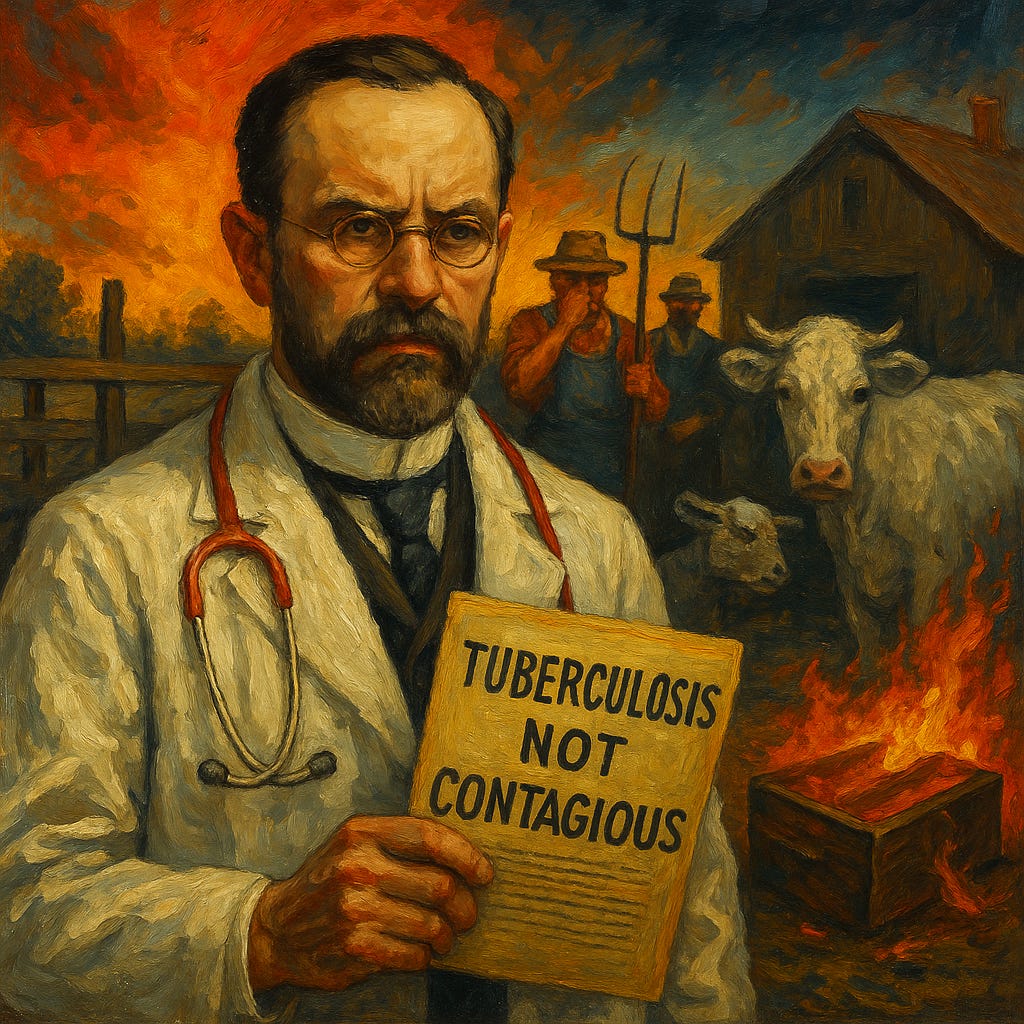
In 1897, Dr. Charles Winslow Dulles, a seasoned physician at Philadelphia’s Rush Hospital for Consumption, challenged the prevailing narrative that tuberculosis—then known as consumption—was a contagious bacterial infection requiring draconian public health measures. His paper, summarized here, drew on clinical observations, statistics, and historical precedents to argue that consumption did not spread readily from person to person, despite alarmist claims by newspapers and overzealous Boards of Health. At Brompton Hospital in London, only four of 500 staff contracted the disease despite constant exposure. In Colorado Springs, a hub for consumptive visitors, only twenty local cases emerged over two decades. Mortality rates had been declining since 1853, long before contagion-based interventions. Dulles dismissed animal experiments injecting tubercle bacilli into “weak and unresisting” guinea pigs as artificial, a view echoed in The Truth About Contagion, which credits sanitation improvements for disease declines. His call for practical precautions, like sputum disposal, clashed with germ theory dogma that labeled bacteria as the cause, when they are “firefighters” responding to disease, not starting it—a flaw also seen in Whooping Cough (Pertussis), where bacteria are blamed despite weak contagion evidence.
This tension resonates in modern contexts, notably for me in the badger-to-cow tuberculosis narrative depicted in Clarkson’s Farm that I have been recently watching and enjoying. The show, while compelling, uncritically accepts, and promotes, the contagiousness of bovine tuberculosis, alleging badgers transmit it to cows, forcing farmers to cull herds and face financial ruin—an assault on private wealth and economic “warfare” based on the germ theory fraud. There is clearly a deeper agenda: badgers, granted more rights than landowners, reflect how animal conservation becomes a tool against sovereign property rights, a subtle form of “oligarchy’s way of control without ownership.” This aligns with Beyond Contagion, which critiques how contagion fears justified excessive controls, alienating patients and disrupting communities, much as farmers face restrictions based on questionable science. Dulles’ rejection of extreme measures, like the “frantic” destruction of patients’ belongings in 17th-century Naples, parallels this modern overreach, suggesting fear trumps evidence.
The badger story’s second prong—an attack on private wealth—further illuminates Dulles’ prescience. In Clarkson’s Farm, farmers cannot sell the asymptomatic “infected” cows once tested “positive,” or buy new ones to replace them, or preserve the value of the remaining cows. Dulles noted that doctors misreported consumption as pneumonia to evade stigma and insurance penalties. This manipulation inflates disease fears to justify control, whether over 19th-century patients or 21st-century farmers. Like the pertussis narrative in Whooping Cough (Pertussis), TB’s bacterial “firefighters” are scapegoated, ignoring nutrition, hygiene, and living conditions. Dulles’ advocacy for rational precautions over “spasmodic and violent measures” offers a framework for questioning such policies, as The Truth About Contagion shows TB declined with sanitation, not isolation. It is but another manufactured crisis to pressure farmers. This introduction sets the stage for Dulles’ summary, inviting readers to interrogate contagion myths and their socio-economic impacts, from 1897 hospital wards to modern farmlands, with a critical eye on who benefits from fear.
With thanks to Dr Charles Dulles1.

Analogy
Imagine a small coastal town where authorities suddenly announce that swimming at the local beach causes drowning at alarming rates. Signs are posted, newspapers publish frightening warnings, and some officials propose banning beach access entirely. However, a lifeguard who has worked at the beach for decades observes something curious: out of thousands of swimmers he's watched daily, year after year, virtually none have drowned despite no special precautions beyond basic swimming safety.
The lifeguard investigates other beaches and finds the same pattern—almost no drownings among regular swimmers. Meanwhile, swimming instructors, who spend their entire careers in the water with others, rarely drown themselves. The lifeguard discovers drowning rates have actually been declining steadily for years, even before the warnings began. Upon closer examination, he finds the scary statistics are flawed—many "drownings" were actually heart attacks near water or happened in dangerous offshore areas, not at supervised beaches. The lifeguard concludes that while water deserves respect and basic precautions (like learning to swim and avoiding dangerous conditions), the beach itself isn't inherently dangerous, and closing it would needlessly deprive people of its benefits. Swimming isn't contagious, and neither, in the practical sense, is consumption.
12-point summary
1. Central argument against contagion theory: Dr. Dulles firmly rejected that consumption (tuberculosis) was contagious in the ordinary sense and questioned whether it was infectious to any meaningful degree. He criticized overzealous medical professionals and Boards of Health for making exaggerated claims in newspapers that alarmed the public unnecessarily, noting that no "conservative and dignified medical body" had recommended compulsory notification of consumption cases.
2. Evidence from consumption hospitals: Multiple hospitals for consumptives showed minimal transmission to staff despite constant exposure. At Brompton Hospital in London, among approximately 500 staff members (including doctors, nurses, and other personnel), only four had contracted the disease. Similar findings came from Victoria Park Hospital, Rush Hospital in Philadelphia, and New York's consumption hospital, all showing virtually no cases among attendants despite years of close contact with patients.
3. Limitations of animal experiments: Dulles argued that experiments on animals provided weak evidence for human transmission. He noted that inoculation studies used "animals of weak and unresisting constitution" under artificial conditions "most favorable to the destruction of their health and life." Unlike laboratory animals being injected with tuberculosis material, humans typically encounter any infectious material through intact skin or mucous surfaces, after filtering through nasal passages in the case of airborne exposure.
4. Evidence from dust studies: Research repeatedly failed to demonstrate significant infection risk from dust in consumption settings. Kirchner found tubercle bacilli in dust from rooms occupied by consumptives in only one instance of many searches. More dramatically, Drs. Heron and Chaplin conducted 100 inoculation experiments with dust from uncleaned areas of Brompton Hospital, producing tuberculosis in guinea pigs only twice, demonstrating "dust possessed but little infective power."
5. Paper mill worker studies: Mr. Clifford Beale's investigation of paper mill workers who were constantly exposed to dust from potentially infected rags showed no increased tuberculosis rates. Despite working in environments with "an enormous amount of dust suspended in the air" at the age when tuberculosis was most easily acquired, and with no attempts to disinfect materials, workers did not show the frequent tuberculosis cases that contagion theory would predict.
6. Health resort experiences: Evidence from tuberculosis health resorts showed no increased disease rates among local populations despite large numbers of consumptive visitors. At Colorado Springs, Dr. Solly reported only twenty local cases in twenty years despite consumptives freely mingling in all public settings without isolation. Similarly, at Davos-Platz in Switzerland, where approximately 1,000 of 1,500 winter visitors had consumption, Dr. Wagner observed no cases of person-to-person transmission.
7. Medical consensus against contagion: The Cambridge Medical Society surveyed its members regarding the communicability of phthisis, with thirty-four of thirty-eight respondents reporting no observed transmission. This aligned with Dr. Ransome's statement that "the universal testimony of physicians of these institutions is that no such conveyance of the disease can be traced in any such institution," and his observation that consumption wards were potentially "the safest places" for susceptible persons.
8. Declining consumption rates: Mortality statistics showed consumption had been steadily decreasing for decades prior to contagion theory and related preventive measures. Dr. Samuel Abbott documented "the comparatively even reduction of the mortality from consumption in Massachusetts in forty years, from 1853 to 1893," decreasing from forty-two to twenty-three per ten thousand population, long before any systematic prevention efforts based on contagion theories.
9. Statistical reporting issues: Dulles identified significant problems with consumption statistics that complicated analysis. Some apparent reductions resulted from changing geographical boundaries in data collection, but more importantly, doctors were increasingly reporting consumption under alternative diagnoses (pneumonia, bronchitis, congestion) to avoid stigma and restrictions, particularly when insurance policies wouldn't pay benefits for consumption deaths.
10. Academic versus popular infectiousness: Dulles endorsed Dr. Russell of Glasgow's nuanced distinction: "In the academic sense it is infectious; in the popular sense it is not." This acknowledged that under certain artificial conditions, transmission might occur, while maintaining that in normal social contexts, the disease did not spread as truly contagious diseases would, thereby justifying a more measured approach to prevention.
11. Reasonable precautions endorsed: Rather than extreme isolation measures, Dulles advocated practical precautions focused on proper handling of sputum. He praised the French Society for the Prevention of Pulmonary Phthisis for stating that a consumptive "is not in the least dangerous by contact or proximity" and that one could "chat with him for hours, live with him for years" without risk if sputum was properly collected and destroyed before drying.
12. Historical perspective on extreme measures: Dulles referenced historical attempts to control consumption in Naples and Rome from two hundred years earlier, where authorities sacrificed patients' clothing and furniture, scraped walls, and tore down woodwork in sickrooms. He presented these as ineffective overreactions comparable to contemporary alarmism, arguing that current extreme measures were similarly "unnecessary and useless" based on both historical experience and contemporary evidence.
20 Questions and Answers
What is Dr. Charles Winslow Dulles' main argument regarding consumption (tuberculosis) in his 1897 paper?
Dr. Dulles argues that consumption (tuberculosis) is not contagious in the ordinary sense of the term, and he doubts it is infectious to any marked extent. He contends that enthusiastic individuals in the medical profession and Boards of Health have been making exaggerated statements about consumption's contagiousness that are "somewhat strained in application." While acknowledging certain coincidences showing frequent occurrence of consumption in certain buildings, Dulles maintains that proper evaluation of these observations requires consideration of all conditions promoting consumption's development.
Dulles presents evidence from multiple consumption hospitals and health resorts showing remarkably low rates of disease transmission to staff and visitors. He believes the current approach of alarming the public is inappropriate, and instead advocates for reasonable precautions like proper disposal of sputum rather than extreme isolation measures. He notes consumption has actually been decreasing steadily in recent decades, contrary to alarmist claims.
How were newspapers and Boards of Health portraying consumption at the time of Dulles' writing?
Newspapers in most cities had been publishing numerous statements intended to convince the public that consumption was contagious. These statements were typically made by "too enthusiastic individuals in the profession" and sometimes by Boards of Health acting officially. The newspapers were portraying consumption as a highly contagious disease requiring aggressive preventive measures, including in some cases compulsory notification of cases.
Some medical authorities were creating what Dr. Arthur Ransome called a "Consumption Scare," distributing alarming leaflets throughout England and America. This approach was causing exaggerated fear of the disorder among the public. Despite these widespread claims in newspapers, Dulles notes that no "thoroughly conservative and dignified medical body" had ever recommended compulsory notification of consumption, even though the matter had been repeatedly discussed by such organizations.
Why does Dr. Dulles question the validity of animal experiments used to support the contagion theory?
Dr. Dulles questions animal experiments because they were conducted under conditions vastly different from natural human exposure. He points out that these inoculation experiments were performed on "animals of weak and unresisting constitution, and under circumstances most favorable to the destruction of their health and life." Such artificial conditions, he argues, cannot be reasonably compared to the situation of humans.
Unlike laboratory animals injected with tuberculosis material, humans typically encounter the "supposed materies morbi" when it contacts unbroken skin or mucous surfaces. For lung exposure specifically, any airborne material would first be filtered "through the nasal passages." Dulles cites Drs. Heron and Chaplin who note there is no experimental proof that tuberculosis bacilli that kill guinea pigs would similarly affect humans, comparing this to how anthrax that kills guinea pigs doesn't necessarily kill an ox.
What evidence from consumption hospitals did Dr. Dulles present to counter the contagion theory?
Dr. Dulles presents extensive evidence from multiple consumption hospitals showing remarkably few cases of staff contracting the disease despite constant exposure. He cites Dr. C. Theodore Williams of Brompton Hospital in London, who found that among approximately 500 staff members (including medical officers, nurses, maids, and others), only four had contracted the disease while working at the hospital. Similarly, at the Chest Hospital in Victoria Park, London, virtually no staff developed consumption despite years of close contact with patients.
The Rush Hospital for Consumption in Philadelphia, where Dulles himself worked, reported the same pattern – no cases of infection among attendants. Dr. Stubbert from the only hospital for consumptives in New York likewise reported no cases of infection among staff. Dulles emphasizes that these consistent findings across multiple institutions directly contradict what would be expected if consumption were truly contagious in the ordinary sense.
What were the specific statistics from Brompton Hospital regarding staff contracting consumption?
At Brompton Hospital, a comprehensive breakdown showed virtually no transmission to staff despite constant exposure to consumptive patients. Of four resident medical men (one who had worked there for twenty-five years), none developed any lung disease. Of six matrons, none contracted consumption. Among 150 resident clinical assistants, eight became consumptive and five died, but in only one case did the disease develop during residence at the hospital.
Since 1867, of 101 nurses, only one died of phthisis, and that occurred after leaving the hospital. Before 1867, six nurses died, three of phthisis, but only one became ill and consumptive while a resident, and she had a consumptive sister (suggesting hereditary factors). Of 32 gallery-maids since 1867, none developed phthisis while at the hospital. Of 20 house-porters, five died, but none from consumption.
How did the experience at Victoria Park Hospital compare to that of Brompton Hospital?
The experience at Victoria Park Hospital (Chest Hospital) closely paralleled that of Brompton Hospital, showing similarly low rates of disease transmission. During the fifteen years prior to Dulles' paper, all five resident medical officers at Victoria Park remained alive and well. Neither of the two matrons developed consumption, and no clinical assistant was known to have developed lung disease while working at the hospital.
Among nurses, only a single case was reported – one nurse out of 50 or 60 employed at the hospital during the previous few years became consumptive while working there and died after a year's illness. This remarkably low rate of transmission at Victoria Park reinforced the findings at Brompton Hospital and further supported Dulles' argument that consumption was not meaningfully contagious among those in constant close contact with patients.
What did research on dust in hospitals reveal about tuberculosis transmission?
Research on dust in consumption hospitals revealed surprisingly little evidence of tuberculosis transmission via this route. Kirchner repeatedly sought tubercle bacilli in the dust of rooms occupied by consumptive patients but found them in only one instance. More significantly, Drs. Heron and Chaplin conducted one hundred inoculation experiments using dust collected from "long uncleaned passages, shutters, pieces of furniture" in the Brompton Hospital, and produced tuberculosis in guinea pigs only twice.
Mr. Clifford Beale's research on the "Dissemination of Tuberculosis by Infected Dust" found that "the dust of a consumption hospital is not especially dangerous to those who must of necessity inhale it, nor does it always set up tuberculous disease in susceptible animals when introduced by way of direct inoculation." These findings contradicted the theory that tuberculosis was readily spread through dust particles and suggested that even in environments with the highest possible concentration of tuberculous material, transmission remained minimal.
What evidence did Dr. Dulles cite from health resorts regarding the spread of consumption?
Dr. Dulles cited evidence from multiple health resorts showing no increase in consumption among local populations despite large numbers of consumptives visiting these areas. At Colorado Springs, Dr. S.E. Solly reported that despite consumptives freely mingling with other residents in churches, theaters, concerts, crowded rooms, hotels, and boarding houses with "no attempt at isolation," only twenty cases of consumption had originated in Colorado Springs over twenty years.
Dr. Clinton Wagner's experience at Davos-Platz in Switzerland was similar, where approximately 1,000 of the 1,500 winter visitors were consumptives. At Wagner's hotel, about 80 of 120 guests had consumption, spending nearly 20 hours daily indoors due to limited winter outings. Yet "no one stood in dread of contracting the disease, and no cases occurred in which it was conveyed from person to person." These health resorts actually saw death rates decrease after consumption hospitals were established.
How did Dr. Dulles explain the observed reduction in mortality rates from consumption?
Dr. Dulles acknowledged that mortality rates from consumption had been decreasing, but challenged claims that this was due to recent preventive measures based on the contagion theory. He presented evidence from Dr. Samuel W. Abbott showing "the comparatively even reduction of the mortality from consumption in Massachusetts in forty years, from 1853 to 1893, from forty-two to twenty-three per ten thousand of the population."
This steady decline had been occurring long before any isolation or disinfection measures were implemented. Dulles argued that the reduction was part of a long-term trend seen "for the last twenty-five or more years" across civilized countries and was happening "quite irrespective of any attempts at isolation of the cases or systematic disinfection of the sputa." He suggested this improvement stemmed from generally better living conditions rather than from treating consumption as contagious.
What issues did Dr. Dulles identify with how consumption cases were being reported in statistics?
Dr. Dulles identified several significant issues with consumption statistics that exaggerated the apparent success of prevention efforts. He noted that apparent reductions in New York City resulted partly from including rural areas in recent statistics that weren't counted in earlier years. More problematically, "restrictive laws adopted by Boards of Health often put too great a strain upon the candor of medical men," leading doctors to report consumption cases under other disease classifications.
Doctors were reporting consumption as pneumonia, bronchitis, or congestion of the lungs to avoid the stigma and restrictions associated with tuberculosis. Additionally, Dulles learned that certain Philadelphia insurance societies refused to pay death benefits for consumption, further motivating misreporting. These statistical distortions made it "impossible to speak very positively as to the exact rate of diminution of consumption" and raised questions about claims that prevention measures targeting contagion were responsible for any actual reduction.
What were Dr. S.E. Solly's observations about consumption in Colorado Springs?
Dr. S.E. Solly, a specialist at Colorado Springs, observed that "the dangers of contagion from a consumptive are so easily controlled that it is by no means necessary to separate consumptives from healthy persons." He noted that in Colorado Springs, consumptives freely interacted with other residents in all public and private settings - attending church services, theaters, concerts, crowded social functions, and sharing accommodations in hotels, boarding houses, and private dwellings. Despite this unrestricted mixing and complete absence of isolation measures, only twenty cases of consumption had originated locally in twenty years.
Solly specifically addressed concerns about poor living conditions, noting that even in less favorable environments - poorly ventilated rooms occupied by consumptives and their families, where careless expectoration and poor cleanliness were common - cases of contagion averaged no more than one per year. This remarkably low transmission rate, even under conditions theoretically ideal for disease spread, strongly supported Dulles' position that consumption was not meaningfully contagious under normal circumstances.
How did the paper mill worker study contribute to Dr. Dulles' argument?
The paper mill worker study provided compelling evidence against tuberculosis transmission through dust exposure. Mr. Clifford Beale investigated workers in large paper mills throughout England and Scotland, focusing particularly on sorting-room employees who were constantly exposed to enormous amounts of airborne dust. These workers, typically in the age group most susceptible to tuberculosis, routinely handled and processed rags that could potentially contain tuberculosis material, as hospitals for consumption did not practice disinfection at that time.
Despite this seemingly high-risk environment, Beale "could not find that there was any frequent occurrence of tuberculosis in the persons exposed to this presumptive danger." He found no cases whatsoever of tuberculosis of the skin, and managers reported that working in this dust-filled atmosphere was not considered a cause of tuberculous disease. These findings strongly countered the dust transmission theory, demonstrating that even in environments with maximum potential exposure, tuberculosis did not spread as the contagion theory would predict.
What historical attempts to control consumption did Dr. Dulles reference, and what was his view of them?
Dr. Dulles referenced historical control measures implemented two hundred years earlier in places as distant as Ireland and Italy, where consumption was regarded as contagious. He specifically mentioned practices in Naples and Rome where authorities took extreme measures that "would hardly be emulated by our zealous American Boards of Health." These included sacrificing the clothes and furniture used by the sick, scraping walls, and tearing down woodwork in chambers where consumptives had been sick.
Dulles viewed these historical practices as frantic and excessive attempts that had ultimately proven ineffective. He presented them as cautionary examples of misguided approaches based on fear rather than sound evidence. By referencing these historical failures alongside modern data showing consumption's steady decline without such extreme measures, Dulles implied that current alarmist approaches were repeating historical mistakes. He characterized these extreme isolation and disinfection methods as "unnecessary and useless" based on both historical experience and contemporary evidence.
How did Dr. Dulles distinguish between "contagious" and "infectious" in relation to consumption?
Dr. Dulles made a careful distinction between describing consumption as "contagious" versus "infectious." He firmly rejected the characterization of consumption as contagious "in the ordinary sense of this term," considering it improper and misleading. Regarding infectiousness, he expressed doubt about "the propriety of considering it as to any marked extent infectious," suggesting a more limited potential for transmission than the term "contagious" implied.
He cited Dr. Russell of Glasgow who articulated this distinction clearly: "In the academic sense it is infectious; in the popular sense it is not." This nuanced position acknowledged that under certain artificial or confined conditions (as in laboratory experiments or institutions like prisons), transmission might occur, but in normal social interactions and typical patient care settings, the disease did not spread readily from person to person. This distinction was crucial to Dulles' argument against extreme isolation measures, as the evidence showed that casual contact with consumptives posed minimal risk.
What was the Cambridge Medical Society's finding regarding the communicability of phthisis?
The Cambridge Medical Society conducted a formal survey of its members regarding their professional experiences with the communicability of phthisis (consumption). All members were asked by post to share their observations, resulting in thirty-eight replies. Of these responses, thirty-four were negative, indicating that the vast majority of physicians had not observed cases of transmission. This overwhelming 89% negative response rate represented a strong consensus against the communicability theory among practicing physicians.
This finding was particularly significant as it reflected the experiences of numerous doctors working independently across different settings, rather than observations from a single institution. The Cambridge Medical Society's survey thus provided a broader, community-based perspective that aligned with and reinforced the institutional data from hospitals like Brompton and Victoria Park. Dulles presented this as additional evidence that the medical establishment's actual experience contradicted the alarmist claims about contagion.
What were the recommendations of the French Society for the Prevention of Pulmonary Phthisis?
The French Society for the Prevention of Pulmonary Phthisis and Other Forms of Tuberculosis took a measured approach that Dulles heartily endorsed. In their circular for general distribution, they stated: "We know further that the consumptive is not in the least dangerous by contact or proximity; that it is never his body nor his breath which is hurtful; and that we can chat with him for hours, live with him for years, and even sleep in his room and give him the most constant care without running any serious risk, provided we take certain precautions."
The key precaution they recommended was proper handling of sputum: "the chief of which is to collect his expectoration, and not to delay the destruction of his sputum until it becomes dry and is disseminated as dust in the air." This balanced approach acknowledged the potential risk from dried sputum while reassuring the public that normal social contact was safe. Dulles praised these "careful and discreet utterances" as superior to the "extreme pronouncements" made in America and elsewhere.
How did Dr. Arthur Ransome's "Consumption Scare" article support Dulles' position?
Dr. Arthur Ransome's article entitled "Consumption Scare" directly supported Dulles' position by criticizing the "alarming leaflets scattered broadcast in England" and countering excessive fears with evidence from clinical settings. As Professor of Public Health at Owens College, Manchester, Ransome carried significant authority when he maintained that consumption hospitals were "not hotbeds of infection" as the contagion theory would predict. He emphasized that "the universal testimony of physicians of these institutions is that 'no such conveyance of the disease can be traced in any such institution.'"
Ransome further strengthened Dulles' argument by noting it "would almost appear from the statistics brought forward, that their wards were the safest places in which susceptible persons could take up their abode." He added his personal confirmation: "my own personal experience after fifteen years at the Manchester Hospital for Consumption would be entirely favorable to this view." This statement from another respected authority with extensive clinical experience provided crucial corroboration for Dulles' central thesis.
What did experiments by Drs. Heron and Chaplin reveal about tuberculosis infection from dust?
Drs. Heron and Chaplin's experiments delivered compelling evidence against dust transmission of tuberculosis. They conducted one hundred inoculation experiments using dust collected from "long uncleaned passages, shutters, pieces of furniture, and so forth" in the Brompton Hospital - environments theoretically containing high concentrations of tuberculous material. Despite these ideal conditions for finding infectious material, they produced tuberculosis in guinea pigs only twice in the entire series of experiments.
The researchers cautiously interpreted their results, acknowledging limitations but concluding the evidence showed that "in the wards and out-patient department of a hospital where a very moderate amount of care is taken to prevent the spread of infection from the expectoration of tuberculous persons, there is... surprisingly little evidence of the escape of tuberculous bacilli to become a source of infection." They also emphasized an important distinction: the fact that tubercle bacilli from dried sputum might infect guinea pigs did not necessarily mean they would affect humans similarly, just as anthrax that kills guinea pigs doesn't necessarily kill oxen.
What was Dr. Russell of Glasgow's perspective on the infectiousness of consumption?
Dr. Russell of Glasgow offered a nuanced perspective that Dulles cited approvingly: "In the academic sense it is infectious; in the popular sense it is not." This concise distinction captured the essence of Dulles' argument by acknowledging that under certain artificial conditions or laboratory settings, infection might be demonstrated, while in everyday life and typical human interactions, the disease did not spread as a truly contagious disease would.
Russell's formulation provided Dulles with a conceptual framework that reconciled the apparent contradiction between laboratory findings and clinical observations. It allowed him to acknowledge the presence of the tubercle bacillus and its potential transmissibility under specific conditions while still maintaining his central argument against treating consumption as contagious in ordinary social contexts. This distinction served as an intellectual foundation for advocating reasonable precautions without resorting to the extreme isolation measures that some were promoting.
What reasonable precautions did Dr. Dulles advocate instead of extreme isolation measures?
Dr. Dulles advocated for reasonable precautions centered primarily on proper handling of patients' sputum rather than isolation or elaborate disinfection. He endorsed the French Society's recommendation that focused on "collect[ing] his expectoration, and not to delay the destruction of his sputum until it becomes dry and is disseminated as dust in the air." This approach recognized the theoretical risk from dried sputum while acknowledging that direct contact with patients posed minimal danger.
Dulles emphasized that with "reasonable and proper precautions, without spasmodic and violent measures," consumption's ravages would naturally continue to diminish. He believed good ventilation, general cleanliness, and proper sputum management were sufficient to address any minimal risk of transmission. His approach contrasted sharply with extreme historical measures like scraping walls or destroying furniture, and with contemporary proposals for mandatory reporting and isolation. Dulles maintained that these modest precautions, aligned with ongoing improvements in general living conditions, would continue the already-established downward trend in consumption rates.
This from Mark Purdey’s wonderful book Animal Pharm
The book provides a comprehensive overview of Mark Purdey's perspectives on bovine tuberculosis (TB), highlighting his disagreement with official theories and advocating for an environmental, multifactorial approach to its cause and control, particularly focusing on the role of iron.
Official View of Bovine TB:
Bovine TB is described as a neurodegenerative syndrome that European livestock farmers dread due to its severe implications, including a ruthless cull of infected cattle and badgers and mandated movement restrictions for healthy cattle, leading to financial meltdown for small farming businesses.
Official procedures for TB control are considered archaic and outmoded, founded on the hypothesis that humans develop TB solely from exposure to TB-infected animals. The official view, as reflected in questionnaires, is that the transmission of the TB agent from infected badgers to cattle is the sole cause of bovine TB, dubbing the badger the culprit before investigative work begins.
Despite these drastic measures, Mark Purdey observed that badger culls in previous years achieved nothing in eradicating TB, and the disease continued to recur irrespective of the slaughter measures. The official "experts" remain privately baffled by the continued appearance of TB epidemics with increasing frequency.
Mark Purdey's Alternative Theory: The Role of Iron: Mark Purdey believed that his farm's TB-free status, despite being surrounded by TB-affected cattle and badgers, suggested that recent changes in his farming practices might have increased his cattle's susceptibility to the TB agent. He argued that a clinical TB epidemic erupts when an anti-TB component of the immune defense is disrupted, enabling the TB agent to opportunistically take hold.
His core hypothesis revolves around the excessive accumulation of available iron as a key factor in TB pathogenesis.
Sources of Elevated Iron:
Soil acidification: A general reduction in the use of lime-based fertilizers (exacerbated by conservation measures banning Cornish calcified seaweed), combined with increased winter rainfall and continued use of artificial fertilizers, acidifies topsoil. This acidification leads to an excessive accumulation of available iron in regions where soil iron is naturally elevated and rainfall is high. His own farm's soil pH dropped to acidic levels, correlating with the TB breakdown.
Dietary intake: Iron is taken up by pasture herbage (especially ryegrass and plantain) and bluebell bulbs, and percolates into local water supplies, which animals then consume. Bluebell bulbs, for example, provide a dietary source of concentrated iron for badgers.
Industrial emissions: High levels of iron in the atmospheres of workplaces (e.g., steelworkers, slum dwellers during the industrial revolution) can induce human TB.
Food additives: The supplementation of foods with iron additives also warrants investigation.
Disrupted iron homeostasis: Environmental chemicals and metals can disrupt the body's capacity to regulate iron uptake, storage, and excretion, leading to elevated iron levels and increased TB susceptibility.
Iron's Role in TB Pathogenesis:
Iron is an essential prerequisite for TB mycobacteria to proliferate, metabolize, and survive within the mammalian biosystem.
Mycobacteria hijack the host's iron supply from transferrin and ferritin molecules, utilizing it for their own proliferation and survival.
This hijacking also disables the host's immune defense by preventing the synthesis of beta-2-microglobulin molecules, which activate killer T-lymphocytes (the main defense against mycobacterial infection). This explains why immunocompromised individuals (e.g., from nutritional deprivation, chemical exposure, or AIDS) are at greater risk of developing TB.
TB is part of an "ironmonger group of pathogens" that depend on host iron for maintenance and growth, including Clostridium botulinum, leprosy, HIV, Candida, Listeria, and malaria.
Evidence Supporting Mark Purdey's Theory:
Geographical correlation: Key bovine TB hotspot zones in the UK (Forest of Dean, Exmoor, Cornwall, Devon, Mendip Hills) correlate with areas where iron has been mined in abundance and rainfall is high.
Michigan study: Spreading lime on farms suffering from high rates of Mycobacterium paratuberculosis infection led to a tenfold reduction in cattle infection after three years.
Iron chelation therapy: Treating TB-infected mice with the iron-chelating lactoferrin protein (a natural component of colostrum milk) resulted in a hundredfold reduction in pathogens.
US EPA practices: A US EPA colleague confirmed that they cleanse land of mycobacteria by spraying the open environment directly with iron microcrystals to chelate the mycobacteria.
His own pilot study: A small pilot study on his farm with "inconclusive" TB-reactor cows, fed an iron-chelating mineral-protein formulation, showed that four out of five treated animals recovered to TB-free status, while an untreated control progressed to full reactor status.
Critiques of the Official Response and Proposed Solutions: Mark Purdey found the government's TB questionnaires simplistic and based on flawed assumptions. He believed that the official inertia and resistance to alternative research stemmed from vested interests of global corporations promoting genetically modified (GM) arable protein products, as livestock reduction benefits their market. He also suggested that previous studies with damning results for government departments might have been suppressed.
He faced significant opposition from the Veterinary Establishment, who dismissed his scientific arguments as lacking "rigour" and being based on "bar-stool ideas" or "amateurish observations," despite referencing reputable international research. He pointed out the hypocrisy of demanding high scientific rigor from outsiders while accepting contradictory or unproven evidence for the official badger theory.
Mark Purdey advocated for low-tech and inexpensive practical control measures to manage TB:
Subsidizing lime fertilizers: Encouraging farmers to spread lime fertilizers in TB-endemic regions would raise soil pH and reduce available iron.
Promoting anti-iron compounds: Encouraging feeding and fertilizing with iron-chelating or anti-iron compounds on farms in TB risk areas. Examples include copper or zinc bicarbonate supplements, foodstuffs containing phytic acids (alfalfa, clover, grains), and inorganic phosphorus in fertilizers or feed supplements.
Boosting natural immunity: Building understanding of how to boost natural immunity to defend against mycobacteria.
He stressed that a radical approach, which reduces the susceptibility of cattle to the TB agent, would offer significant advantages over the existing slaughter system, leading to considerable reductions in TB incidence and major savings for human and animal life, farmers, and taxpayers. He urged investigation into the underlying causes of "iron overload" in the human food chain and ecosystem, including acid rain, industrial emissions of iron particulates, and food iron additives.
I appreciate you being here.
If you've found the content interesting, useful and maybe even helpful, please consider supporting it through a small paid subscription. While 99% of everything here is free, your paid subscription is important as it helps in covering some of the operational costs and supports the continuation of this independent research and journalism work. It also helps keep it free for those that cannot afford to pay.
Please make full use of the Free Libraries.
Unbekoming Interview Library: Great interviews across a spectrum of important topics.
Unbekoming Book Summary Library: Concise summaries of important books.
Stories
I'm always in search of good stories, people with valuable expertise and helpful books. Please don't hesitate to get in touch at unbekoming@outlook.com
Baseline Human Health
Watch and share this profound 21-minute video to understand and appreciate what health looks like without vaccination.
Dr. Charles Winslow Dulles (1850–1921) was a notable American physician, author, and medical educator. Born on November 29, 1850, in Madras (now Chennai, India), he was the son of missionary parents, reflecting his family’s long-standing ties to both medicine and public service15. Dr. Dulles graduated from the Department of Medicine at the University of Pennsylvania and contributed to medical literature throughout his career32.
He authored several works, including critiques on specific medical theories and publications on the pathology and treatment of infectious diseases67. His writings addressed topics such as hydrophobia (rabies), hysteria, and first aid in illness and injury679. Dr. Dulles was also involved in organizing and commemorating medical alumni activities, as seen in his work on class reunion souvenirs for the University of Pennsylvania8.
Dr. Charles Winslow Dulles passed away on May 6, 1921, leaving behind a legacy as a dedicated physician and thoughtful contributor to the medical discourse of his era15.
I learned the true cause of my grandfather's death only after research on another topic led me to his death certificate: TB. Wow. My mother had kept that from me, but then stories she'd told me about TB, living in NYC, started to make sense.
I knew that my grandfather had become very sick. "War injuries," my mother told me. My grandmother took care of him when he became bedridden. He had had to quit his job, so my grandmother went to work. When he became too sick to leave alone, she quit her day job and got a night job. She watched over my grandfather during the day -- and tried to sleep -- while my mother and her younger brother went to school (Mother's older brother in Europe during WWII.)
Finally, that became too much. My mother had to quit high school and become the breadwinner, which she did. My grandmother nursed her husband until it became clear he needed hospitalization. Hospitalized at the Bronx VA hospital, he passed away in Apr 1944.
My mother's family lived in a small Brooklyn apartment. No heat...a "cold water flat," as they were called. Quarters were close, to say the least. Despite all that "exposure" to my ill grandfather, my grandmother didn't "catch" TB. My mother did not "catch" TB. Her younger brother did not "catch" TB.
After seeing my grandfather's death certificate, this story came back around my for reconsideration. This most "deadly," highly contagious disease somehow managed to skip over three other people living in a small Brooklyn apartment with someone dying of this dreaded condition.
Hmmm...funny that.
Contagion. What utter bullshit.
Glad to see that you do not believe the myth that badgers with TB are contagious and can infect cows.
I wonder if you know about the farmer and self-taught scientist Mark Purdey who was investigating bovine TB but was silenced (and eventually died at a relatively young age) after revealing the true cause of mad cow disease (BSE) in Britain? He was shot at, his house was set on fire, his phone was tapped and he was closed down by the UK government vets and agriculture department. Just before he died he had started looking into the real cause of bovine TB and had found that bTB was most prevalent in areas with highly acidic soil and high levels of iron. He realised that the former tradition of putting lime on fields as a way of reducing soil acidity had probably prevented TB in the past but this practice was no longer common and that its decline could be a reason for increases in TB.
After his death he was written off as an amateur and his website was hijacked and directed to a porn site. I think he was a hero and people need to know about him and could learn from his findings. His book, published posthumously, is still in print and worth reading: Animal Pharm by Mark Purdey.
Sally Morrell has also highlighted the link between exposure to high levels of iron and TB in humans in the article below.
Article by Sally Fallon Morell, Weston A Price Organisation:
SOLVING THE MYSTERY OF TB: The Iron Factor
https://www.westonaprice.org/health-topics/solving-the-mystery-of-tb-the-iron-factor/