
Interview with Rebecca Lee
The slow poison that mimics 250 diseases—and the methodical way to get it out


Mercury poisoning can produce over 250 different symptoms across nearly every system in the body—neurological, psychological, immune, endocrine, digestive. Symptoms come and go, migrate, and change character. People cycle through practitioners and diagnoses for years, sometimes decades, accumulating thick medical files and cabinets full of supplements that provide temporary relief but never stick.
Some receive diagnoses they’re told are incurable—multiple sclerosis, lupus, Parkinson’s, chronic fatigue syndrome—and begin the long decline into managed illness. Others never get a diagnosis at all, just the quiet implication that they’re anxious, difficult, or imagining things. Mercury doesn’t kill quickly. It ruins lives slowly, creating what Andy Cutler described as “a long and miserable life of chronic illness, missed opportunities, unsatisfactory relationships and financial difficulties.”
Rebecca Lee spent 25 years in that pattern. After a dentist drilled out eight amalgam fillings and replaced them with fresh amalgam—using no protective measures—she descended into what she calls a nervous breakdown, weeping for weeks. What followed was a quarter century of anxiety, depression, migratory body pain, and fatigue severe enough to flatten her for days.
Practitioners helped intermittently, but nothing held. She tried everything—supplements by the bucketful, various protocols, different providers. Improvement would come, then slip away. It wasn’t until a neurologist noted a “very disturbing” symptom—her sudden inability to navigate familiar streets, to know whether to turn left or right at intersections she’d driven through hundreds of times—that she was tested for heavy metals. The results came back off the charts for mercury and lead.
But the chelation protocol that neurologist prescribed made her worse, not better. Only after finding Andy Cutler’s work—a method based on the half-life chemistry of chelating agents, requiring small doses taken round the clock to maintain stable blood levels—did she begin to recover. Over months of careful, systematic chelation, her health returned. So did parts of herself she’d written off as permanent personality defects: the social awkwardness, the feeling of being a perpetual outsider, the sense that she was somehow wired wrong. These traits, which she’d attributed to her unusual childhood as a foreign service kid moving between countries, simply fell away as the mercury came out. She now co-authors the protocol’s primary manual, The Mercury Detoxification Manual, and runs a support group with 95,000 members.
This interview covers the practical mechanics of the Cutler protocol: what supplements to start immediately, what a chelation round actually looks like hour by hour, how to identify whether you’re thiol-sensitive, what the “dump phase” feels like and how long it lasts, which common “detox” substances are genuinely dangerous, and how people manage the process while holding down jobs and raising children. Rebecca is direct about the obstacles—the dental work that can cost thousands, the years the process requires, the doctors who will tell you this is quackery. She’s equally direct about what’s possible on the other side.
With thanks to Rebecca Lee.

The Mercury Detoxification Manual | Maybeitsmercury
Support Independent Research
This work remains free because paid subscribers make it possible. If you find value here, consider joining them.
What paid subscribers get: Access to the Deep Dive Audio Library — 180+ in-depth discussions (30-50 min each) exploring the books behind these essays. New discussions added weekly. That’s 100+ hours of content for less than the price of a single audiobook.
[Upgrade to Paid – $5/month or $50/year]
Get in touch Essay ideas, stories, or expertise to share: unbekoming@outlook.com
1. Rebecca, please tell us what first led you to investigate heavy metal poisoning as a potential cause of your own health issues, and how long did it take before you connected the dots between your symptoms and mercury exposure?
When I returned to the United States after living for years in Goa, India, my father took me to his dentist. This dentist X-rayed my teeth and said that the work that had been done in India was substandard, and I should have all my fillings redone. He proceeded to drill out eight or nine amalgam fillings, using no precautions whatsoever, and replace them all with new amalgam. After that, though I didn’t put two and two together at the time, I had a “nervous breakdown.” I became deeply despondent and wept all day for about two weeks. For the next 25 years, I suffered from chronic anxiety and depression, poor energy, strange body pains that would come and go and move around and frequent bouts of total exhaustion. I went to all kinds of practitioners and took buckets of supplements. I was often able to get my health back into shape, but I never seemed to be able to make it stick.
Finally, after being treated for my first bout of breast cancer, I consulted a chiropractic neurologist. He said I had some weird neurological disorder, a condition normally found in people under enormous stress, such as air traffic controllers. He gave me loads of supplements and some eye exercises. I started to feel better, as usual but complained to him that I was having trouble finding my way around. I said that I should be able to find my way from X street to Y, but I couldn’t. I should know, when I came to an intersection, whether to turn left or right, but I didn’t. “As a neurologist,” he said, “I find that a very disturbing symptom.” He had me do a DMSA challenge test and it came back off the charts for mercury and lead. (Please note that this is not a safe or informative test to do, but I did not know this at the time.)
He had me go on a chelation protocol of 250 mg of DMSA twice a day, with the amalgam fillings still in my mouth. Once again, I became extremely despondent and wept all the time. Finally, after much poking around on the internet, I learned about “frequent low dose chelation” and the Andrew Cutler protocol. I ordered Amalgam Illness and read it and gave it to my son-in-law who is a chemical engineer, to look at. It sounded true to me, but I know nothing about chemistry. My son-in-law who has a very precise and logical mind said he found it a scientifically sound work. Since then, I have been using this method, which involves low frequent doses of chelating agents, to keep the blood levels stable.

Slowly but surely, as I chelated with the Cutler protocol, my health started improving. About a year in, people would tell me I was “aging backwards.” I was able to do more than one thing a day. I was able to make it through an entire yoga class without collapsing. I wasn’t lying on my back recovering from fatigue all the time.
What was so interesting about detoxing mercury, was that aspects of my personality that I had thought were just that, aspects of my personality, changed. I had always felt rather a shy “outsider.” I had felt weird and inappropriate in social situations. I had thought that this was a function of my being a “foreign service brat” and having changed countries every few years all my childhood. As I chelated these neurotic traits fell away. Nowadays, although I still feel a tad eccentric, I am much more able to function like a normal member of society.
I made several mistakes on my journey and mistakes in this business can be dire. Mercury is an insidious and subtle poison. You want to move it out of your body, but it is quite easy to move it around from place to place and make yourself worse.
2. You’ve written that each toxic metal produces characteristic personality traits—arsenic causing anguish and restlessness, lead causing anger and poor impulse control, mercury producing anxiety and eccentricity. For someone reading this who suspects they might be dealing with metal toxicity, what cluster of symptoms should make them sit up and pay attention?
Non-specific symptoms typical of all heavy metals include headaches, fatigue, restlessness, insomnia, drowsiness, vertigo, listlessness, malaise, abdominal pain, body aches and cognitive decline. The main metal that people get poisoned with, however, is mercury and after that lead. It is not very common for people to get significant exposures to other toxic metals but after enough mercury has accumulated the body’s detoxification systems will stop working properly and the other toxic metals may accumulate from small exposures. The most common of these are aluminium, antimony, copper and lead. All these toxic elements are synergistic and having a mixed metal intoxication will make you exponentially worse. The symptoms overlap so it is difficult to tell what is causing what. The best strategy is to get a hair test, and if there is a toxic element that runs into the red zone, ask yourself about exposures, then read up on the typical symptoms of that toxic element and ask yourself if it sounds as though you have them.
But the main villain in the heavy metal department is mercury, then after that, lead. Many people have both. Mercury can cause over 250 different symptoms involving almost every system in the body. Having symptoms that come and go and change all the time, and multiple seemingly unrelated conditions, should make a person stand up and take notice! Here is a link to “Hair Test Interpretation” that Andy Cutler wrote about toxic elements, what symptoms they cause, how you may get exposed and how to test for toxicity.
3. The book lists four core supplements—magnesium, vitamin C, vitamin E, and zinc—that people should start immediately. What do these specifically counteract, and how quickly might someone notice a difference just from adding these?
Mercury toxicity creates very specific biochemical stresses in the body, and the four core supplements—magnesium, zinc, vitamin C, and vitamin E—directly counteract those effects. This is why they are recommended immediately, even before chelation begins.
Magnesium and zinc are displaced and depleted by mercury in multiple ways. In one situation, mercury displaces these minerals in enzymes. It has a strong affinity for sulfur-containing (thiol) groups which hold magnesium or zinc in the enzymes’ “active sites.” When mercury displaces these minerals, the enzymes become dysfunctional or inactive. As a result, critical biochemical pathways slow down or fail entirely.
A high magnesium or zinc reading on a hair test is suspicious for mercury toxicity. It reflects mineral wasting—the body is losing these minerals faster than they can be retained or utilized. Despite what appears on any test, mercury-toxic individuals are functionally deficient and typically feel worse until magnesium and zinc are replenished. These minerals are involved in hundreds of enzymatic reactions, including energy production, neurotransmitter balance, muscle and nerve function, and immune regulation.
Mercury also causes damage through oxidative stress. It selectively catalyzes the oxidation of cell membranes, damaging essential fatty acids and key membrane components such as phosphatidylserine and phosphatidylcholine. When membrane integrity is compromised, cellular signaling is disrupted, overall cell function declines, and cells become far more vulnerable to additional oxidative and inflammatory damage.
Loss of phosphatidylserine is especially problematic for the nervous system. Deficiency impairs short-term memory and, when severe, contributes to depression, conditions that are extremely common in mercury toxic people.
Vitamins C and E play complementary roles. Together, these antioxidants help stabilize cell membranes, improve signaling, and reduce the oxidative burden created by mercury. Vitamin C acts primarily in the extracellular space, helping neutralize oxidative damage to cell membranes. Vitamin E, which is fat-soluble, works inside the cells, protecting interior structures from lipid peroxidation.
Many individuals report immediate improvements from starting these two minerals and two antioxidants. They report better energy, reduced anxiety, improved sleep, or clearer thinking—within days to a few weeks. These supplements do not remove mercury, but they reduce ongoing damage and restore critical biochemical functions. They are foundational in supporting the body and reducing symptoms while the long-term and tedious process of chelating metals proceeds.
4. For someone who’s never chelated before, can you walk us through what a typical three-day round looks like from start to finish—what you take, when you take it, and how you feel during and after?
Chelators must be taken on a strict schedule that matches their biological half-life. This keeps chelator levels in the bloodstream steady. If levels drop too low, the chelator can release the metal it has already bound, allowing that metal to redistribute to other tissues—sometimes more sensitive ones, such as the brain or nervous system. The goal is to maintain stable binding long enough that more mercury is excreted than redistributed.
A chelation round therefore needs to last a minimum number of hours to achieve a net benefit. For alpha-lipoic acid (ALA)—the primary chelator used in the Andy Cutler protocol—the half-life is approximately 3 to 4 hours, and a minimum round is three days and the two intervening nights.
A typical three-day round might look like this:
If you start on Monday morning, you will take your dose of ALA every three hours, day and night, continuing through Wednesday evening, when you stop at bedtime. This means setting alarms overnight to avoid missing doses. The nighttime interval can be extended to 4 hours twice per night to make sleep more manageable—but doses should never be spaced farther apart than the half-life allows.
Some people choose to extend rounds beyond three days once they are experienced and tolerating chelation well, but rounds should never be shorter than the minimum three days and two intervening nights.
Some people can tolerate relatively higher doses at the outset, while others must start very low. The goal is to find the “sweet spot,” or the dose where you can tell chelation is doing something, but not so much that it disrupts your ability to function. Signs you’ve reached an effective dose might include mild fatigue, irritability, temporary return of old symptoms, mild aches or discomfort. These are signs that mercury is being mobilized—but dosing should never feel overwhelming. Chelation is a long-term process, and pushing too hard will lead to setbacks.
Symptoms will typically intensify gradually over the course of the three days. Chelation can place stress on the adrenal system, so energy may dip, stress tolerance may decrease, and emotional resilience may feel lower than usual. The day after stopping a round when the mercury that has been mobilized but not excreted, is dropped and redistributes is commonly the most uncomfortable. This is when people may feel the most tired, foggy, or emotionally flat. With appropriate dosing and pacing, however, most people return to their baseline within a day or two after finishing a round.
Progress comes from consistency, patience, and respecting the body’s limits. The most successful long-term outcomes come from choosing a dose that allows you to continue living your normal life while steadily moving detoxification forward.
5. What are the most common mistakes you see beginners make when they first start chelating, and how can people avoid them?
Probably the most common mistake I see beginners make is not to respect what a powerful poison this is and try to power their way through and chelate too aggressively. This is an illness that can “make strong men cry.” It must be undertaken with great caution, and the Andy Cutler protocol is certainly the most conservative way to go about it. Also, there is little profit in trying to speed things up. The amount of metal you excrete by raising your dose of chelator is not linear, whereas the degree to which you get side effects and feel awful is!
6. Andy Cutler observed that he had never seen a case of MS where mercury was not involved, and one of your support group moderators lost her MS diagnosis after chelating. For people who’ve been given diagnoses they’re told are incurable, what would you want them to know?
In the book we write: “There are many diseases of unknown origin that can “just be mercury.” These include MS, Alzheimer’s disease, ALS, Parkinson’s disease and many more. If you have a chronic disease for which nobody knows the cause, look closely at the possibility of mercury poisoning. Mercury poisoning is curable whereas these chronic diseases rarely are. Don’t condemn yourself to taking expensive drugs with terrible side effects while you suffer and die. Chelate instead and get better!”
7. The section on thiol sensitivity describes how roughly a third of toxic people react badly to sulfur-containing foods like garlic, eggs, and broccoli—experiencing initial euphoria followed by a crash hours later. How can someone figure out whether they fall into this category, and what should they do about it?
Thiols, or mercaptans, are a form of sulphur but not all sulphurs are thiols. About a third of mercury toxic people react badly to thiol containing foods, another third need more thiols in their diet, and the for the rest of us it makes no difference. The book, The Mercury Detoxification Manual, contains a list of high thiol and low thiol foods and an explanation of how to do a challenge test to figure out your status. If you are sensitive to thiols, stopping eating them will make you feel much better. With enough chelation, this sensitivity will disappear.
8. You describe the “dump phase” as a period six to nine months into detoxification where people feel worse before getting better. What does this actually feel like, and how can someone distinguish between normal dump phase symptoms and a sign that something is actually wrong?
Mercury detoxification follows a unique pattern and understanding this pattern helps explain why people can feel worse partway through the process. When mercury exposure occurs, it does not just circulate in the blood—it accumulates throughout the body, embedding itself in organs and tissues. Initially, both the blood and the organs contain mercury. However, cell membranes act as a barrier, so mercury does not move quickly or freely between the bloodstream and the tissues. Once the last source of exposure is removed—most commonly after dental amalgam removal—the mercury in the bloodstream begins to clear. Blood and urine mercury levels typically drop over the first few months, and many people feel noticeably better. But once the mercury in the blood drops below the level of the mercury in the tissues, because of the equilibrium mechanism between extracellular and intracellular mercury, the mercury stored in the organs and tissues will diffuse out into the blood. As this “dumping” occurs, blood mercury levels rise again. Symptoms will mirror this shift: after an initial period of improvement, people may experience a return or worsening of symptoms. For most people the lowest point of this “dump phase” occurs around six months after their last exposure.
It is hard to say how this is going to play out for any particular person. For some people there is just a lag in improvement and they hardly notice anything. Others struggle enormously through this period, and it is months before they start making progress again. In the book we say about the dump phase, “The symptoms you are experiencing are not new problems; nothing new is suddenly appearing. You need to avoid the mistake of thinking your supplements have stopped working, or that something new is wrong with you or you need to stop chelating. Assume that any bad things that are happening to you are due to the dump phase. Adhere religiously to your diet, drug and supplement regimen. As long as you feel confused don’t make any changes. It is hard to tell what is happening until it is all over.”
9. Many substances marketed as detox aids—cilantro, chlorella, glutathione IVs, zeolite—appear on your “never use” list. What makes these dangerous, and what should someone do if they’ve already been using them?
Let me go over these one by one because they are bad for you in different ways.
Some of the worst stories of injury that we hear, are from people who did cilantro juice or cilantro smoothies to detox. Cilantro appears to have some molecule in it that chelates, and from the horror stories, we guess that it is a fat-soluble chelator that can carry metals into the brain. Chelators need to be taken on their half-life in a systematic way. Nobody knows the half-life of cilantro, and since it is a natural herb, it is hard to find it in any standardized form.
A true mercury chelator has two appropriately spaced thiol groups on its molecule that allow it to latch on to the mercury ion. Chlorella has only one thiol group on its molecule. It picks up the mercury and kind of flings it around without getting it out of the body. Using it can cause a lot of symptoms without detoxing anything.
Glutathione is supposed to be produced inside the cells. When you take it exogenously, it will pick up metals and move them in to the cells rather than out. Andy Cutler reported that the big danger of these IVs is that they can make people feel better until the bad one hits, and that it is not uncommon for people to become bipolar after a bad glutathione IV.
You can take zeolites if you wish. They are not going to hurt you. But they are not going to chelate any metals, either. If people feel better with zeolites, it is possible that it is because they are modulating the gut flora in some way.
10. The book is direct about warning people against following their doctor’s advice on chelation protocols. For someone whose physician is recommending high-dose IV chelation or once-daily alpha lipoic acid, how do you suggest they navigate that conversation?
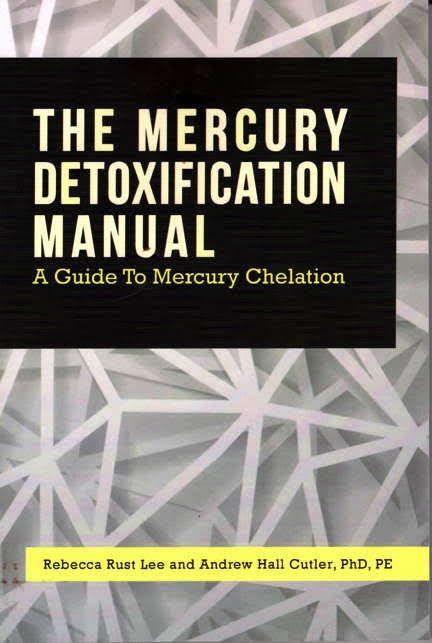
Be careful about taking advice from medical people. They do not have the expertise to advise you about how to detox heavy metals. You should read The Mercury Detoxification Manual and/or you can join the Andy Cutler chelation support group.
It is very difficult to find a doctor or a naturopath for that matter who knows anything about doing this. If you like your doctor, then take their advice about symptom management. They may have a great deal of knowledge that can help you there but be sure to run anything they tell you by our “do not do” list.
11. Dental work is presented as the biggest hurdle—complete removal of all amalgam down to the tiniest fleck, potentially costing thousands of dollars. What options exist for someone who can’t afford this, and what’s the risk of trying to chelate with fillings still in place?
One of the biggest—and most intimidating—hurdles in mercury detoxification is dental work. Proper chelation requires complete removal of all mercury amalgam, down to the smallest remaining fleck. This can be expensive and logistically challenging, but the reason for this requirement is not arbitrary. Even a very small amalgam filling represents a large and ongoing reservoir of mercury. Chelators will mobilize whatever mercury is available and redistribute it throughout the body. This is especially dangerous with alpha lipoic acid (ALA), because ALA is fat-soluble and can cross the blood–brain barrier. If mercury is mobilized while amalgams are still in place, ALA can carry that mercury into the brain and deposit it there, potentially worsening neurological symptoms.
There is no question that dental work can be costly, particularly in the United States. However, people do have options: Dental fees vary widely. It is worth calling multiple offices and comparing costs. Many dental offices offer payment plans that are relatively easy to obtain. Some people choose to remove amalgams gradually as finances allow, completing the process over time. Dental work can be significantly less expensive in other countries.
The key point is this: chelating should not begin until all amalgam is gone, even if removal must happen slowly. In our support group, we consistently see people run into trouble because of residual amalgam—often tiny fragments that were missed during dental work. These small remnants are enough to sabotage the entire chelation process. For this reason, we advise people not to start chelation until dental X-rays have been reviewed and confirmed to be completely free of amalgam. Even one small speck can lead to one of two outcomes: symptoms will worsen as mercury is redistributed, or after an initial improvement, progress stalls entirely. In other words, chelation may appear to work at first, but eventually fails because the source of mercury exposure was never fully eliminated.
It is important to separate dental care from detox guidance. Dentists are trained to perform dental procedures—not to guide detoxification. While many are skilled technicians, they often give poor advice about mercury detox and chelation. Depend on your dentist for their technical expertise but be careful of any detox advice they may give.
The bottom line is you cannot make a move re chelation without doing this due diligence on your teeth. This is not an optional step. It is burdensome and expensive but chelating with residual amalgam in your mouth can be catastrophic.
12. For someone juggling work and family obligations, what does a realistic week of chelating actually look like? How do people handle the nighttime doses while still functioning during the day?
Fortunately, you can set your own pace when you are doing this. You can choose a level to chelate at where you can live your life and meet your obligations. Yes, it is hard to have to get up at night, but most people can train themselves to swallow a pill and go back to sleep. Parents with children in school usually choose to chelate them over the weekend.
Lipoic acid is the main chelator we use because it is fat-soluble. DMPS is an “accessory” chelator. It is not fat-soluble but it has a half-life of 6 to 8 hours and is consequently way easier to use. It will not clear mercury out of your brain and organs, but people do report progress using it and some people use it for months until they feel robust enough to undertake chelating with lipoic acid.
13. The protocol can take years. What symptoms tend to improve first, and what keeps people motivated during the long middle stretch when progress feels slow?
From “The Mercury Detoxification Manual: “Mercury is a strange and powerful poison. It not only interferes with your ability to be healthy, but in a fundamental biochemical way with your ability to be happy. We urge you to chelate and detoxify! Have faith and stick with it! With every round, you will reduce your toxic burden. With every round your memory will improve, your mood brighten, your sleep become deeper, your thoughts come under better control, your guts better able to digest dinner and you will feel less overwhelmed by life.”
I think for many people, the first symptom to improve is anxiety.
14. Andy Cutler died at 60 from heart disease after choosing to pause chelation because the side effects interfered with his research work. What does his story tell us about the real-world trade-offs people face, and what would you advise someone in a similar position?
I think Andy only chelated for about 18 months. He still had allergies and couldn’t eat any thiol foods. But chelating with lipoic acid gave him a lot of brain fog, so he did it until his intellect started working again. He always said that when to stop is a judgment call of the individual. You must decide for yourself when you feel well enough as there are no before and after tests that you can do to see how much you got out or how much you have left.
Heart disease ran in his family, but I feel that if he had chelated more, he wouldn’t have had a heart attack like that. He died before we finished the book. He was just booking his ticket to come to Vermont to finish it up with me. I was devastated but managed to finish with help from all the people he had trained over the years.
Ironically the one chapter we never wrote was how mercury damages the heart.
15. You run a 95,000-member support group and have been at this for decades. For someone just discovering this information today, what’s the single most important first step, and where should they go to learn more?
Start taking “the core four” and buy and read the book!
Here are some links to learn more:
Get a great discount and support me at the same time. If you live in the States buy your supplements here:
https://www.maybeitsmercury.com/supplementsJoin my subscription support group: https://www.maybeitsmercury.com/support-group
Book an appointment for coaching: https://www.maybeitsmercury.com/sign-up-for-coaching
Buy a book by Andy Cutler:
https://shop.maybeitsmercury.com/
Sign up for my online, video-based workshop. It will make everything WAY easier to understand! https://www.maybeitsmercury.com/workshop
𝐆𝐞𝐭 𝐜𝐨𝐧𝐧𝐞𝐜𝐭𝐞𝐝:
Youtube: https://www.youtube.com/@maybeitsmercury4955
Instagram- https://www.instagram.com/maybeitsmercury/
Facebook Page- https://www.facebook.com/maybeitsmercury/
Facebook Group- https://www.facebook.com/groups/acfanatics
Twitter- https://twitter.com/maybeitsmercury
LinkedIn- https://www.linkedin.com/in/rebeccarustlee/
Substack
Book: Medicalized Motherhood: From First Pill to Permanent Patient
Available as a free download. 123 interventions documented across six phases—from pre-conception capture through postpartum surveillance. Includes practical tools: birth plan template, provider interview questions, quick reference card, and a new chapter on interrupting the cascade. Download it, share it with someone facing their first prenatal appointment, their induction date, their cesarean recommendation. The cascade works because women don’t see it coming. This book makes it visible.
Support Independent Research
This work remains free because paid subscribers make it possible. If you find value here, consider joining them.
What paid subscribers get: Access to the Deep Dive Audio Library — 180+ in-depth discussions (30-50 min each) exploring the books behind these essays. New discussions added weekly. That’s 100+ hours of content for less than the price of a single audiobook.
[Upgrade to Paid – $5/month or $50/year]
Get in touch Essay ideas, stories, or expertise to share: unbekoming@outlook.com
Bitcoin: 3Q6BK8x8zjoPaXykQggzvoJxg5FiEbkb3U
Ethereum: 0x4CB0d39d8466a34609318FC1B003B745893788b3
New Biology Clinic
For those of you looking for practitioners who actually understand terrain medicine and the principles we explore here, I want to share something valuable. Dr. Tom Cowan—whose books and podcasts have shaped much of my own thinking about health—has created the New Biology Clinic, a virtual practice staffed by wellness specialists who operate from the same foundational understanding. This isn’t about symptom suppression or the conventional model. It’s about personalized guidance rooted in how living systems actually work. The clinic offers individual and family memberships that include not just private consults, but group sessions covering movement, nutrition, breathwork, biofield tuning, and more. Everything is virtual, making it accessible wherever you are. If you’ve been searching for practitioners who won’t look at you blankly when you mention structured water or the importance of the extracellular matrix, this is worth exploring. Use discount code “Unbekoming” to get $100 off the member activation fee. You can learn more and sign up at newbiologyclinic.com
It would be good to see the two authors (Unbecoming and Ms Lee) get the BAA -- Beautifully Articulate Award, for 2026.
I just made that award up, as the article was crying out for it....
Some items that should be mentioned before someone embarks on this chelation journey.
Number 1 thing, she mentions it but it needs repeating. Make sure all the mercury/amalgam is removed before chelating. This is not as straight forward as it sounds. You have to pick the correct dentist, someone who is trained and skilled at removing amalgam. If your dentist doesn’t wear any protection (he should have on a mask with a separate air supply) and doesn’t provide you with one then he is not properly trained. Also a skilled dentist will use the appropriate x-ray technology to detect any residual mercury. This may sound trivial to some but it may be the difference between becoming healthy or getting worse.