
Heroes Can Be Wrong: A Case Study in Unexamined Frameworks
An Essay

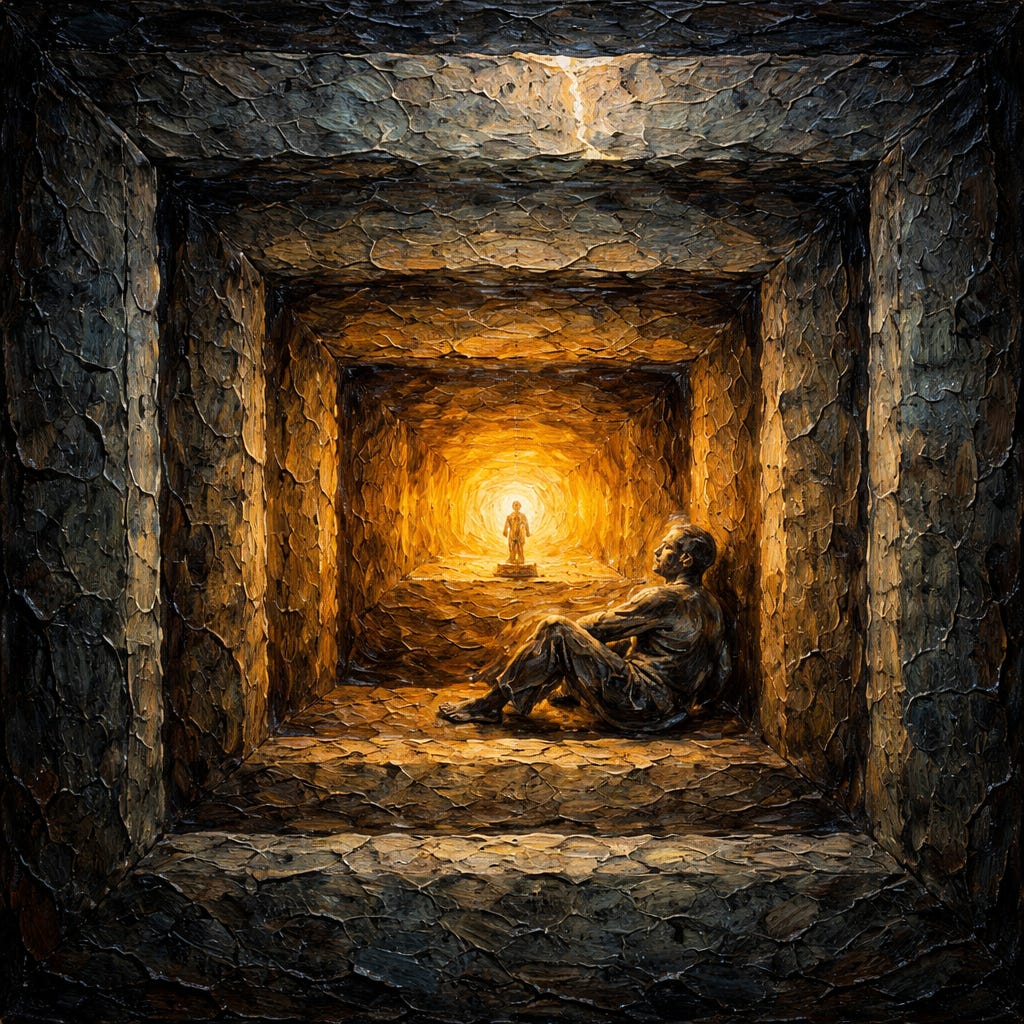
You’ve been following someone for years. You’ve adopted their protocols, recommended them to friends, maybe even argued with family members who didn’t understand. You trust this person. They questioned things that needed questioning. They saw through lies you also saw through. They gave you language for what you already sensed was wrong.
But here’s a question you may never have asked: What does this person actually believe about how disease works? What do they assume about the body, about pathogens, about genetics? Not their conclusions—their premises. The foundational models on which everything else rests.
Most of us never ask. We find someone who questions what we question, and we assume they question everything we’d want questioned. We absorb their entire framework without realising we’re doing it. We inherit their assumptions, their blind spots, their stopping points.
This is hero worship as epistemological failure. And it happens to intelligent people all the time.
Support Independent Research
This work remains free because paid subscribers make it possible. If you find value here, consider joining them.
What paid subscribers get: Access to the Deep Dive Audio Library — 180+ in-depth discussions (30-50 min each) exploring the books behind these essays. New discussions added weekly. That’s 100+ hours of content for less than the price of a single audiobook.
[Upgrade to Paid – $5/month or $50/year]
Get in touch Essay ideas, stories, or expertise to share: unbekoming@outlook.com
The Five Walls
I’ve written elsewhere about the five concentric walls that surround the modern medical extraction system. Each wall serves the same function: to redirect attention from the four actual assaults on human health—poisoning, electromagnetic exposure, chronic stress, and malnutrition—toward explanations that demand medical intervention while protecting industrial interests.
Wall One: Vaccination — mass poisoning marketed as prevention.
Wall Two: Allopathic Medicine — the inversion that suppresses symptoms while ignoring the body’s intelligent healing responses.
Wall Three: Bacteriology — the confusion of firefighters with firestarters.
Wall Four: Virology and Contagion — neither yet proven despite a century of trying.
Wall Five: Genetics — the final fortress, relocating blame from environment to DNA.
Many who escape one wall remain trapped by others. Reject vaccination but accept virology, and you remain inside. Question pharmaceuticals but accept bacteriology, and you remain inside. Grasp terrain theory but believe genes determine disease, and you remain inside.
Escaping all five walls requires examining each foundational paradigm—not just its applications, but its premises. Most health figures, even those who appear radically heterodox, never do this. They question applications while accepting foundations. They redecorate cells rather than escape prisons.

The Case Study
Dr. Jack Kruse is a neurosurgeon who lost 130 pounds, reversed his own health decline, and built a substantial following by challenging mainstream medicine. He questions pharmaceutical interventions, dietary guidelines, the lipid hypothesis, and the primacy of genetics. He emphasises circadian biology, cold thermogenesis, and the role of light in human health. He speaks with confidence about quantum biology, mitochondrial function, and evolutionary medicine.
His followers are drawn to him because he challenges orthodoxy. He’s not afraid to say that mainstream medicine is captured, that research is corrupted by funding, that the dietary advice making people sick is not accidental. He speaks like someone who has seen through the lies.
And in some ways, he has. Kruse has genuinely questioned things that needed questioning.
But here’s what most of his followers don’t know: Kruse remains inside all five walls. His questioning has boundaries that align precisely with the foundational paradigms of the medical extraction system. For readers who want to escape those walls, Kruse will not help them get there.
This essay maps Kruse against each wall to show you what you’ve been absorbing without examination. You can then decide for yourself whether his stopping points are yours, or whether you want to question further than he does.
Wall One: Vaccination
Kruse’s 2013 book does not discuss vaccination at all. His 2024 interview reveals why—he accepts the paradigm.
In that interview, he discussed the SV40 contamination of polio vaccines:
“The polio vaccine, developed in the 1950s, was grown on African green monkey kidney cells. Unknown at the time, these cells were contaminated with SV40, a virus that can cause cancer. This contamination led to millions of people being inadvertently exposed to SV40.”
He also discussed the Cutter Incident of 1955, where vaccines containing live polio virus caused outbreaks, and how these events were “largely covered up by health authorities.”
This sounds like vaccine criticism. But notice the framing.
Kruse isn’t questioning whether vaccines work in principle. He’s saying this particular vaccine was contaminated with a real virus that causes real cancer. The problem, in his framework, is contamination and corruption—not the vaccination paradigm itself. SV40 is a real virus. Polio is a real virus. Vaccines could work if done properly.
This is vaccine reform, not vaccine paradigm rejection. The first wall remains intact.
Kruse’s position: Inside Wall One.
Wall Two: Allopathic Medicine
Here Kruse is most critical—and most convincing.
From his 2013 book Epi-paleo Rx:
“In the early half of the 20th century, physicians wrote dietary prescriptions for certain diseases. That ended in the 1950s and 1960s when medicine allowed dietitians and nutritionists to usurp this process... Today, we believe there is no longer a need for dietary treatment because drugs have replaced them.”
He documents how Columbia Presbyterian Hospital offered more than 50 therapeutic diets in the early twentieth century, and how this knowledge was systematically abandoned. He criticises pharmaceutical capture of medicine, the corruption of research by funding, and the replacement of healing with symptom suppression.
This is genuine critique. But Kruse remains a practicing neurosurgeon. He operates within the allopathic system. He recommends pharmaceutical interventions when he deems them appropriate. He uses antiretroviral drugs for HIV patients. He prescribes thyroid medication. He works inside the very system he criticises.
His position is reformist: allopathic medicine has been corrupted and needs correction. The body’s healing intelligence should be supported, not suppressed. But the framework of medical intervention itself—the idea that external agents (drugs, surgery, medical management) are legitimate responses to disease—remains unquestioned.
Kruse’s position: Straddling Wall Two—critical but still inside.
Wall Three: Bacteriology
Kruse fully accepts that bacteria are real, external pathogens that cause disease.
From Epi-paleo Rx:
“When the body is facing a lipopolysaccharide (LPS) bacterial infection, the medium-chain triglycerides (MCT) in the coconut oil will re-establish brush border integrity.”
He discusses H. pylori infection as a diagnostic concern. He treats SIBO (small intestinal bacterial overgrowth) as a real condition requiring intervention. He accepts Lyme disease as caused by borrelia spirochetes. He recommends antibiotics for bacterial infections when appropriate.
There is no hint anywhere in his work that bacteria might be “firefighters rather than firestarters”—that the organisms found at sites of disease might be responding to damaged terrain rather than causing the damage. The germ theory framework for bacteria is completely intact.
Kruse’s position: Inside Wall Three.
Wall Four: Virology and Contagion
Kruse fully accepts mainstream virology. This is perhaps his most orthodox position.
From Epi-paleo Rx:
On HIV: “HIV is a neurotropic virus that best gains access to our bodies via our GI tract, where it replicates in the mucosa and overwhelms the liver’s defenses. This allows it entry into the circulation, which carries it into the brain.”
On Hepatitis C: “The hepatitis C virus raises the risk of many Neolithic diseases... The protease inhibitors recently approved attack a hepatitis C virus enzyme the virus needs to make new copies of itself. Each of the drugs brings virus replication to a near halt.”
On viral management: “This information is vital to HIV patients, who all have leaky guts, and is a very cheap and easy way for them to increase their levels of glutathione and assist their antiretroviral drugs to keep viral titers low.”
On dormant viruses: “A glutathione deficiency compromises our ability to keep old viruses dormant and fight off bacteria. This is why so many people test positive for Epstein-Barr virus (EBV), cytomegalovirus (CMV), HHV-6 herpes virus, mycoplasma, and Chlamydia Pneumoniae when they have leaky gut or autoimmune disease.”
This is entirely conventional virology. Viruses replicate. They have titers that can be measured. Antiviral drugs suppress them. They can lie dormant and reactivate. The immune system fights them off. Contagion is real. HIV spreads through populations. Hepatitis C is a viral infection.
Kruse doesn’t question whether viruses exist. He doesn’t question whether they cause disease. He doesn’t engage with terrain theory as an alternative to germ theory. He accepts germ theory wholesale and modifies it with terrain considerations—your terrain determines whether the virus makes you sick, but the virus is still real and still the agent of disease.
Eleven years later, in 2024, his position remains unchanged. He discusses COVID-19, viral infections, and methylene blue’s effectiveness against viruses—all within a framework that assumes viruses are real pathogens that cause disease through contagion.
Kruse’s position: Inside Wall Four.
Wall Five: Genetics
Kruse rejects genetic determinism. This is his most heterodox position on the five walls—but even here, he remains inside.
From Epi-paleo Rx:
“Most physicians and patients believe disease risk is set by genetics. This is false, but also the most common excuse doctors give patients when we do not know the answer.”
“Epigenetics is now thought to play a larger role than our genes do. How our genes are expressed has more to do with who we are than the original copy of genes we were born with.”
“Food quality and choices dictate 95 percent of our genetic expression. Diet is that important!”
On super-centenarians: “Studies on people over 100 years old showed they were all found to harbor most of the bad genes we already know about. What was very interesting, however, was that the bad genes were turned off in these people.”
This sounds like a rejection of genetics. But look closer.
Kruse still accepts that genes exist as discrete, causal entities. He still talks about “bad genes” that need to be switched off. He still references genetic testing (23andMe, HLA-DR arrays). He still discusses genetic risk factors like Apo E for Alzheimer’s and VDR polymorphisms for autoimmune disease. He accepts that “approximately 25 percent of the population has a genetic inability to naturally clear biotoxins.”
His position is: genes are real, but expression matters more than the genes themselves. Environment controls expression. Therefore, you are not destined by your DNA.
This is the epigenetic salvage operation.
The Salvage Operation
When a foundational theory fails to deliver on its promises, two things can happen. The theory can be abandoned or fundamentally revised. Or a modifier can be added that absorbs the anomalies while preserving the core.
The second move is what we might call a salvage operation.
Genetics → Epigenetics
The promise of genetics was that the genome was the blueprint. Sequence the genes, understand the disease, cure the patient. The Human Genome Project was supposed to usher in an era of genetic medicine.
The failure: over 700 genome-wide association studies found genetic variation contributing at most 5 to 10 percent to common disease risk—and even this rests on circular reasoning. The genes that were found have individually minuscule effects. A person born with every known “bad” variant for a given disease would have a probability of developing it barely different from the population average.
The salvage: Epigenetics. “It’s not the genes themselves, it’s the expression of the genes.” This allows the genetic model to remain foundational while explaining away its failures. The genome is still the blueprint—we just need to understand the annotations.
But if expression determines everything, and expression is controlled by environment, then what exactly is the gene doing? The explanatory power has quietly shifted from genetics to environment, while genetics retains its institutional prestige and funding.
Kruse has adopted this salvage framework. He hasn’t questioned whether genes exist as causal entities. He hasn’t examined whether the gene itself is a conceptual construct rather than a discovered reality. He’s accepted the modifier that allows the paradigm to survive its own failure.
Germ Theory → Terrain Modification
The same pattern appears with germ theory.
The promise: specific pathogens cause specific diseases. Identify the germ, kill the germ, cure the patient.
The failure: the same pathogen produces wildly different outcomes in different people. Most people exposed to “deadly” pathogens don’t get sick. Antibiotics create resistance. Antivirals don’t cure.
The salvage: terrain modification. “The germ is real, but the terrain determines susceptibility.” This allows germ theory to remain foundational while explaining away its failures.
But if terrain determines everything, and a strong terrain means you don’t get sick regardless of exposure, then what exactly is the germ doing? The explanatory power has quietly shifted from pathogen to host, while germ theory retains its institutional prestige and funding.
Kruse operates within this salvage framework. Pathogens are real. They cause disease. But your terrain—your vitamin D status, your glutathione levels, your gut integrity—determines whether they harm you. Strengthen your terrain and you won’t get sick.
This is not terrain theory. This is germ theory with a terrain modifier. Walls Three and Four remain intact.
The Complete Map
Wall 1 (Vaccination): Inside. Critical of contamination/corruption, not the paradigm.
Wall 2 (Allopathic Medicine): Straddling. Strongly critical, but practices within it.
Wall 3 (Bacteriology): Inside. Fully accepts pathogenic bacteria.
Wall 4 (Virology/Contagion): Inside. Fully accepts viruses cause disease.
Wall 5 (Genetics): Inside. Accepts genes, rejects determinism, uses epigenetic salvage.
Kruse is inside all five walls. His heterodoxy is real—he questions statins, dietary guidelines, the lipid hypothesis, pharmaceutical corruption, the abandonment of nutritional medicine. These are genuine departures from mainstream practice.
But they are departures within the paradigm, not departures from it. He questions applications while accepting foundations. He has moved to a better-decorated cell, but he remains inside the prison.
What This Means for You
If you want to escape the five walls, Kruse will not help you get there.
He will help you eat better. He will help you understand circadian biology. He will help you see the corruption of pharmaceutical medicine and the importance of light exposure. These are real contributions.
But he will also install in you—without your conscious awareness—the foundational assumptions of the extraction system: that viruses are real and cause disease through contagion, that bacteria are external pathogens, that genes exist as causal entities (even if expression matters more), that vaccination could work if done properly, that the allopathic framework is valid.
If you follow Kruse without examining his frameworks, you will absorb these assumptions as your own. You will think you have escaped because you question statins and eat seafood and get morning sunlight. But you will remain inside all five walls, defending germ theory and genetic medicine without realising you ever adopted them.
This is the danger of hero worship: you stop thinking for yourself. You outsource your epistemology to someone you trust, and you never notice where their questioning stops.
The Uncomfortable Truth
Kruse is one example of a universal pattern.
Think of the diet dissident who questions everything about nutrition but never questions whether pathogens cause disease. The biohacker who challenges pharmaceutical medicine but accepts virology wholesale. The functional medicine practitioner who rejects drugs but relies on genetic testing. The carnivore advocate who questions plant toxins but assumes bacteria make you sick.
Every health figure you follow is a bundle of frameworks—some examined, some inherited, some genuinely heterodox, some entirely conventional. Their conclusions rest on premises they may have never questioned.
When you follow them, you absorb the whole bundle. You adopt their conclusions and their premises. You inherit not just their insights but their blind spots. You accept their walls as the edge of the world.
The Choice
You don’t have to question everything Kruse accepts. You can remain at the salvage framework level—epigenetics over genetic determinism, terrain modification over pure germ theory—and still benefit from his insights about light, circadian biology, and the failures of pharmaceutical medicine.
But you should know that deeper questions exist. You should know that the walls are not the edge of the world. And you should know that wherever you stop, it should be because you’ve examined the territory and chosen your position—not because you inherited your hero’s stopping point without realising it.
Conclusion
Kruse remains inside all five walls. He accepts germ theory. He accepts virology. He accepts the genetic model. He accepts that vaccination could work in principle. He criticises allopathic medicine while practicing within it.
The problem isn’t that Kruse has stopping points. The problem is when his followers don’t know where they are—when they absorb his frameworks without examination, when they inherit his boundaries as their own, when they mistake his cell for the outdoors.
You can learn from Kruse without adopting his frameworks wholesale.
But this requires effort—actually examining the frameworks you’re absorbing, asking: What does this person assume? Do I share that assumption? Have I ever thought about it?
Most people don’t do this work. It’s easier to find a hero and let them do the thinking.
Heroes can be wrong—and inside walls they’ve never examined.
The goal isn’t to find the right hero. The goal is to learn to think for yourself.
Book: Medicalized Motherhood: From First Pill to Permanent Patient
Available as a free download. 123 interventions documented across six phases—from pre-conception capture through postpartum surveillance. Includes practical tools: birth plan template, provider interview questions, quick reference card, and a new chapter on interrupting the cascade. Download it, share it with someone facing their first prenatal appointment, their induction date, their cesarean recommendation. The cascade works because women don’t see it coming. This book makes it visible.
Support Independent Research
This work remains free because paid subscribers make it possible. If you find value here, consider joining them.
What paid subscribers get: Access to the Deep Dive Audio Library — 180+ in-depth discussions (30-50 min each) exploring the books behind these essays. New discussions added weekly. That’s 100+ hours of content for less than the price of a single audiobook.
[Upgrade to Paid – $5/month or $50/year]
Get in touch Essay ideas, stories, or expertise to share: unbekoming@outlook.com
Bitcoin: 3Q6BK8x8zjoPaXykQggzvoJxg5FiEbkb3U
Ethereum: 0x4CB0d39d8466a34609318FC1B003B745893788b3
New Biology Clinic
For those of you looking for practitioners who actually understand terrain medicine and the principles we explore here, I want to share something valuable. Dr. Tom Cowan—whose books and podcasts have shaped much of my own thinking about health—has created the New Biology Clinic, a virtual practice staffed by wellness specialists who operate from the same foundational understanding. This isn’t about symptom suppression or the conventional model. It’s about personalized guidance rooted in how living systems actually work. The clinic offers individual and family memberships that include not just private consults, but group sessions covering movement, nutrition, breathwork, biofield tuning, and more. Everything is virtual, making it accessible wherever you are. If you’ve been searching for practitioners who won’t look at you blankly when you mention structured water or the importance of the extracellular matrix, this is worth exploring. Use discount code “Unbekoming” to get $100 off the member activation fee. You can learn more and sign up at newbiologyclinic.com
What a masterpiece! This was a spectacular read, applies to political arena as well.
Wow! This is a great mind map.
I wonder too how people such as Dr Samantha Bailey, Dr Tom Cowan, Dr Andrew Kaufman, et al would be classed for want of a better word, after being interrogated using this map.