
Unavoidably Unsafe (2024)
By Edward Geehr and Jeffrey Barke - 30 Q&As - Book Review and Summary

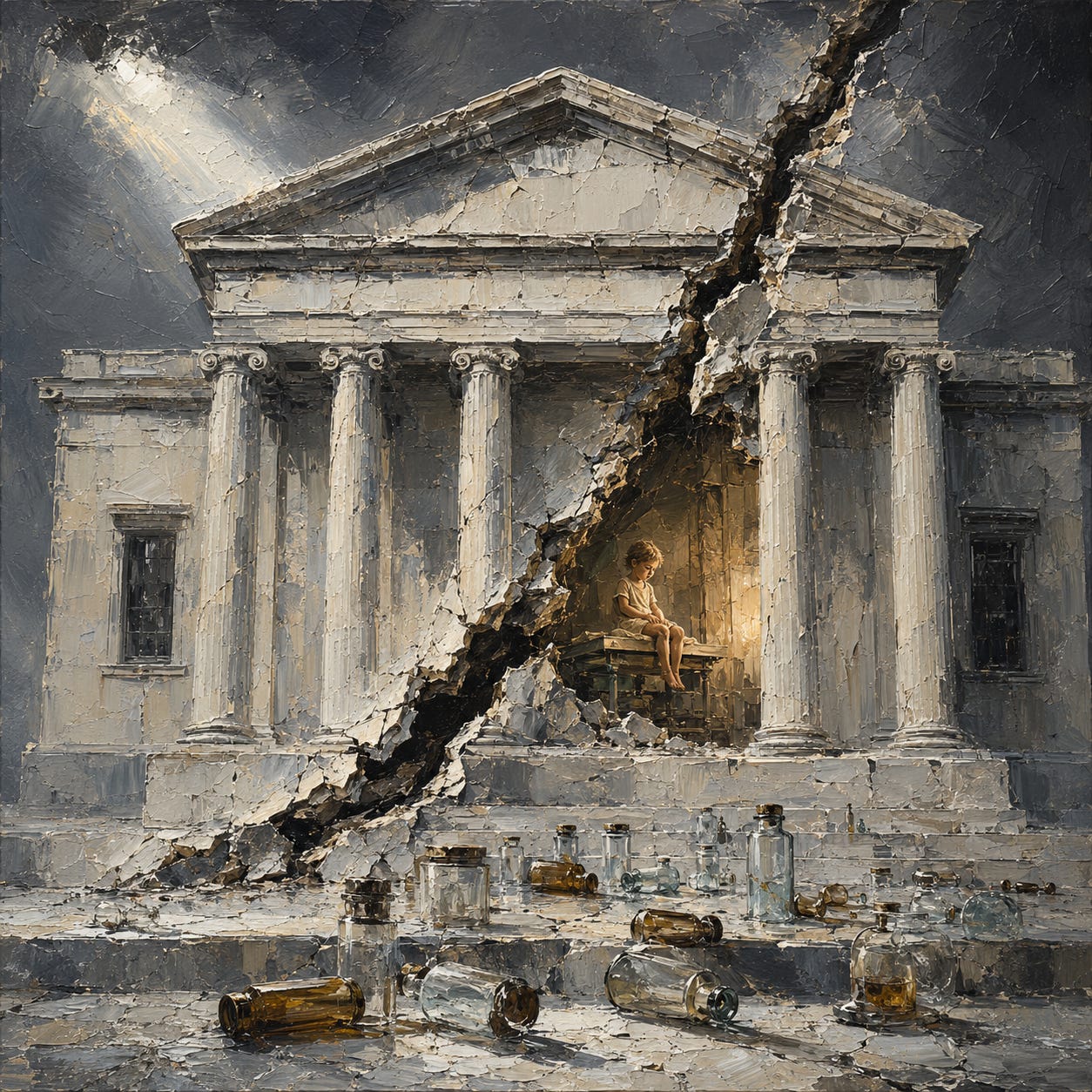
The Supreme Court of the United States has affirmed that childhood vaccines are “unavoidably unsafe” products. The doctrine is not rhetorical. It is the legal foundation on which the 1986 National Childhood Vaccine Injury Act granted vaccine manufacturers blanket immunity from product liability, affirmed and extended in Bruesewitz v. Wyeth in 2011. The schedule that has expanded under this protection now contains seventeen vaccines and eighty-nine doses delivered before age six. Most parents signing consent forms for their children’s vaccinations have never been told the legal classification of what they are agreeing to. Unavoidably Unsafe (Skyhorse, 2024), by physicians Edward Geehr and Jeffrey Barke, grades each vaccine on that schedule against the CDC’s own published criteria and concludes that the legal admission may be the most honest statement in the entire architecture.
Geehr and Barke are conventional American physicians with three decades of medical practice between them. Both hold the MD degree. Barke is a California physician who became publicly visible on May 9, 2020 at a rally in his state — wearing scrubs and a lab coat under dark sunglasses — declaring that “never in the history of this great republic have we quarantined the healthy.” He was among the first mainstream physicians in the country to publicly object to the COVID-19 lockdowns. Both authors operate fully within the conventions of contemporary medicine. They use “germ theory,” “viral pathogenesis,” “antibody response,” “immune system,” and “autoimmune disorders” as the established categories of their profession. They do not challenge that framework. What they challenge is whether the seventeen products administered to American children under its banner have actually been tested, are actually effective, and are actually safe. The book carries a foreword by Del Bigtree of the Informed Consent Action Network.
The book appeared in 2024 amid a particular convergence. The COVID-19 mRNA products had been added to the Childhood Immunization Schedule the year before. A federal court had ordered the release of thousands of pages of Pfizer documents the company had attempted to seal from public view for seventy-five years. The American Academy of Pediatrics and the American Academy of Family Physicians had filed legal briefs supporting government censorship of vaccine “misinformation” in Missouri v. Biden. The pediatric schedule had expanded from four vaccines and eleven doses in 1983 to seventeen vaccines and eighty-nine doses by 2024 — the largest in the world. During the same forty years, the chronic illness rate among American children had risen to 43%, the rate of children officially diagnosed with autism had risen from approximately one in a thousand to one in thirty-six, and ten of the last eleven FDA Commissioners had left federal service to work for the pharmaceutical companies they had previously regulated. Some practicing physicians began asking whether what they had been told about the COVID-19 products applied to the rest of the products on the schedule as well. Geehr and Barke are two of the physicians who asked that question and pursued the answer to a published conclusion.
Geehr and Barke are not in the terrain canon. They do not draw on Béchamp, Bernard, or Shelton. They make no reference to pleomorphism, no claim about the internal environment of the body, no acknowledgment that the conditions their products are designed to prevent might not be what their profession says they are. From inside the establishment, using the establishment’s own documents and standards, they reach overlapping conclusions about the harms of mass childhood vaccination — and that is precisely what makes the book useful from outside it. The full summary unpacks the regulatory architecture that made the expanded schedule possible (the 1986 liability shield, the CDC’s three quiet redefinitions of the word “vaccine,” the revolving door that placed ten of the last eleven FDA Commissioners on pharmaceutical company boards); what is documented to be in the injections themselves (aluminum content varying by 350% between lots of the same vaccine, the NIH unable to produce a single study supporting the safety of injected aluminum adjuvants in infants); and what was known but withheld about exposure during pregnancy (Pfizer’s internal review documenting 51 spontaneous abortions, two newborn deaths, and 41 breastfeeding-exposed infants with adverse events, released only because a federal court broke a seventy-five-year seal). The Hepatitis B vaccine, administered to every American child within twenty-four hours of birth, was followed up for four days in its pivotal clinical trial.
The rest of this summary — the analogy, one-minute elevator explanation, 12-point summary, Q&As, and Golden Nugget — is for paid subscribers.
Your subscription also unlocks every other book summary in the library, the Deep Dive Audio Library, my original books (new ones added monthly), and three series for the moments when a real decision is in front of you: Questions for Your Doctor, Before You Consent, and Package Inserts.
Keep reading with a 7-day free trial
Subscribe to Lies are Unbekoming to keep reading this post and get 7 days of free access to the full post archives.