
Plotkin Under Oath: Nine Hours That Exposed the Vaccine Industry
Aaron Siri’s Deposition – 30 Q&As - Plus a Psychological Profile of Plotkin

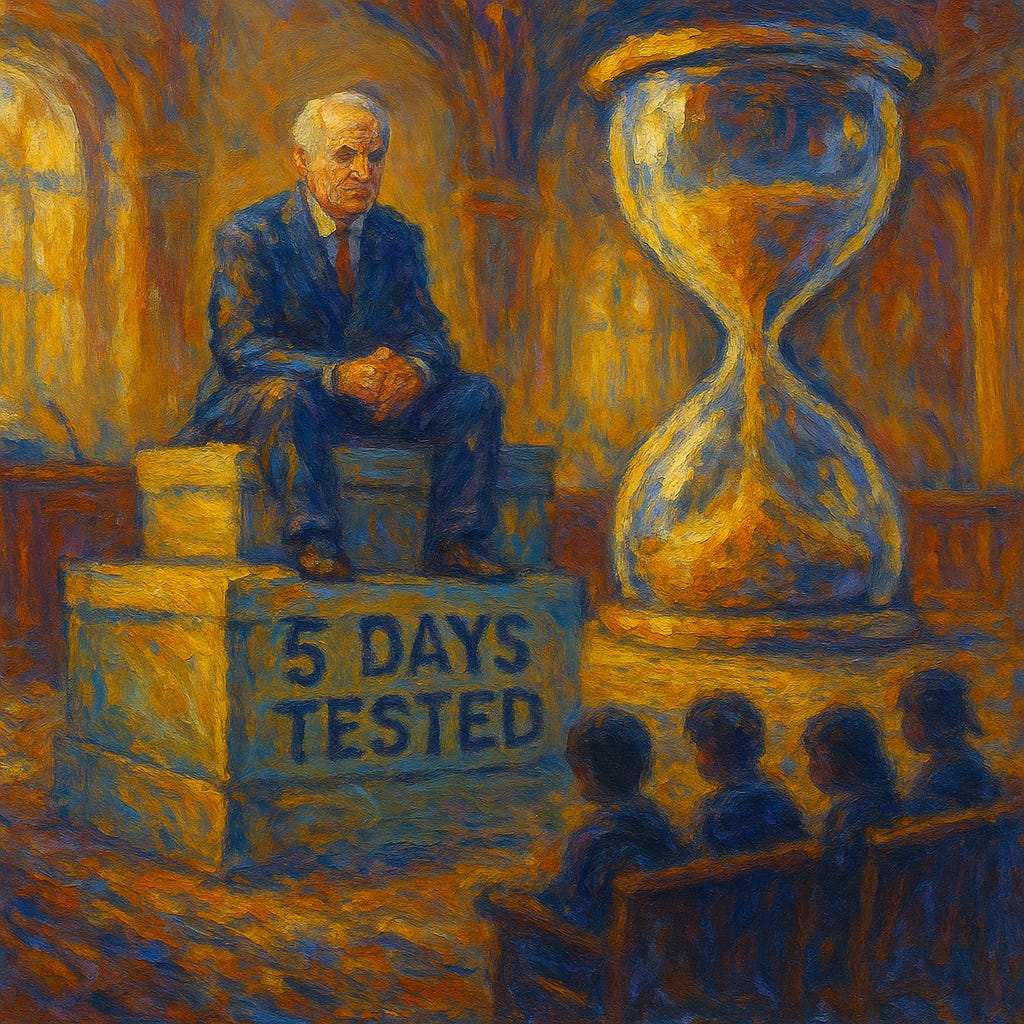
In January 2018, attorney Aaron Siri conducted a nine-hour deposition of Dr. Stanley Plotkin that stands as one of the most revealing insider testimonies about vaccine development ever recorded under oath. Plotkin, widely regarded as the "godfather of vaccines" and developer of the rubella vaccine, was forced to confront the systematic failures, ethical violations, and scientific inadequacies that define modern vaccine science. What emerged was not merely testimony about regulatory shortcuts or financial conflicts of interest, but a window into something far more disturbing. When we judge a man by his actions and their fruits, Plotkin's entire career reveals someone who has been attracted to, nurtured by, and richly rewarded within an evil system. A pathocracy. Listening to his testimony, it becomes hard not to think of witchcraft and satanic ritual. What else describes the injection of a newborn baby with parts of a dead baby? His casual description of harvesting organs from 76 aborted fetuses, his experiments on vulnerable populations deemed "human in form but not in social potential," and his gleeful willingness to "go to hell" for his vaccine work suggest something that doesn't make sense through a scientific worldview but makes perfect sense through a demonic perspective. The systematic suppression of adverse event reporting, the complete absence of basic safety studies, and the contempt for religious conscience all point to forces that transcend mere corporate malfeasance.
Siri's methodical dismantling of Plotkin's credibility over nine grueling hours represents historically important testimony that exposes the fundamental corruption at the heart of vaccine science. Under oath, the world's most prominent vaccine expert admitted that comprehensive safety studies comparing vaccinated to unvaccinated children have never been conducted, that adverse event reporting captures less than one percent of actual injuries, that safety monitoring typically lasts only days after injection, and that financial conflicts of interest permeate every level of vaccine development and regulation. Plotkin's own admissions revealed a man who couldn't remember receiving millions of dollars from vaccine manufacturers, claimed he'd never read basic safety studies about his own products, and showed profound contempt for parents' religious concerns while profiting from vaccines containing aborted fetal tissue. His psychological profile emerges as someone with narcissistic grandiosity, utilitarian dehumanization of vulnerable populations, and an atheistic supremacy that dismisses moral constraints as obstacles to his self-perceived mission to save humanity. The more people who understand what Siri accomplished in those nine hours—forcing the vaccine industry's most respected figure to admit under oath that the entire foundation of vaccine safety is built on willful ignorance, suppressed data, and ethical violations—the better equipped society will be to confront a medical establishment that has prioritized ideology and profits over the health of children.
With thanks to Aaron Siri.

Analogy
Imagine if the automotive industry operated like the vaccine industry. Car manufacturers would only crash-test their vehicles for the first five minutes of driving, never comparing accidents in cars with safety features versus cars without any safety equipment. When crashes occurred, less than 1% would be reported to safety agencies. The manufacturers would be immune from lawsuits - if your car's brakes failed and caused an accident, you couldn't sue the company but would have to petition the government for compensation while the same government agencies that promoted the cars defended against your claim.
The engineers designing the cars would receive millions of dollars from the car companies while also serving on the government committees that decide which safety features should be mandatory. Independent researchers couldn't access crash data to verify safety claims. When asked why comprehensive safety testing wasn't done, officials would say it would be unethical to let people drive cars without the latest safety features, even though they'd never actually studied whether those features were safe or effective long-term. This system would be considered utterly corrupt in any other industry, yet it describes exactly how vaccines are developed, tested, regulated, and monitored.
The One-Minute Elevator Explanation
Vaccines are developed by a handful of pharmaceutical companies that make billions annually while being protected from lawsuits by a 1986 law. The same people who develop vaccines also advise government agencies on which vaccines to recommend, creating massive conflicts of interest. Safety testing is shockingly brief - often just days after injection - and true placebo studies are rarely done. Instead of comparing vaccines to harmless saline, they're compared to aluminum adjuvants or other vaccines, hiding the real rate of side effects.
We've never done the most basic safety study - comparing the overall health of vaccinated kids to completely unvaccinated kids - despite decades of requests. When independent researchers tried to improve injury reporting, government agencies stopped cooperating. The ingredients are concerning: aluminum that can travel to the brain, DNA fragments from aborted fetuses, animal proteins, and contaminating viruses discovered after widespread use. Many serious conditions listed on vaccine inserts have never been properly studied to prove vaccines don't cause them.
The current system prioritizes industry profits over public safety, with inadequate testing, minimal monitoring, and suppressed research. People deserve transparent, independent safety science before injecting products into healthy children.
[Elevator dings]
Research threads to follow:
Institute of Medicine reports on vaccine safety and their "inadequate evidence" conclusions
The Harvard VAERS study showing less than 1% of adverse events are reported
Financial relationships between vaccine advisory committee members and pharmaceutical companies
12-Point Summary
1. Financial Conflicts of Interest Are Extensive: Dr. Stanley Plotkin, one of the world's leading vaccine experts, has received millions of dollars from vaccine manufacturers over his career through consulting fees, royalty payments, and board positions with all major vaccine companies. He continues to receive approximately $200,000 annually from vaccine-related entities while serving as an expert witness promoting vaccination. This level of financial entanglement between vaccine developers, regulatory advisors, and public health officials creates significant potential conflicts of interest in vaccine policy decisions.
2. Vaccine Safety Studies Are Remarkably Short: Prelicensure safety monitoring for vaccines typically lasts only days after each dose - five days for hepatitis B vaccines, 48 hours for polio and Hib vaccines, and four days for some formulations. This brief monitoring period cannot detect autoimmune disorders, neurological conditions, or other serious adverse events that may develop weeks or months after vaccination. The stark contrast with drug studies, which often follow patients for years, reveals a double standard in safety evaluation.
3. True Placebo Controls Are Rarely Used: Most vaccine clinical trials use aluminum adjuvant or other vaccines as control groups rather than inert saline placebos, making it impossible to determine the true rate of adverse events caused by vaccines. When saline placebos are used, the groups are often very small compared to the vaccine recipients. This study design obscures the actual safety profile of vaccines by making adverse events appear similar between vaccine and "control" groups.
4. Comprehensive Vaccinated vs. Unvaccinated Studies Have Never Been Done: Despite decades of requests, no large-scale study has ever compared the total health outcomes of vaccinated versus completely unvaccinated children. A small pilot study found vaccinated children had significantly higher rates of allergies, ADHD, autism, eczema, learning disabilities, and neurodevelopmental disorders, but larger studies are needed to confirm these findings. The absence of this fundamental safety research represents a massive gap in vaccine science.
5. Adverse Event Reporting Captures Less Than 1% of Reactions: A Harvard study funded by HHS found that fewer than 1% of vaccine adverse events are reported to the official VAERS system. When researchers tried to automate reporting to capture more adverse events, the CDC stopped cooperating. This means the vast majority of vaccine injuries go unrecorded, severely undermining post-market surveillance and making vaccines appear safer than they actually are.
6. Aluminum Adjuvants Can Travel to the Brain: Multiple animal studies demonstrate that aluminum injected into the body can travel to and accumulate in the brain, where it may cause neurological damage. Studies have found aluminum deposits in the brains of autistic children at some of the highest levels ever recorded in human tissue, concentrated specifically in immune cells within the brain. Children following the CDC schedule receive several milligrams of aluminum by six months of age, with unknown long-term consequences.
7. Vaccines Contain Concerning Contaminants: Vaccines contain numerous animal-derived components (monkey kidney cells, calf serum, egg proteins, pig gelatin) and human fetal cell lines from aborted fetuses. Human vaccines contain millions of fragments of DNA from other humans, raising concerns about genetic integration and cancer risks. Contaminating viruses like SV40 and porcine circovirus have been discovered in vaccines after widespread use, highlighting ongoing contamination risks.
8. The 1986 Vaccine Injury Act Eliminated Manufacturer Liability: This law gave vaccine manufacturers immunity from lawsuits for vaccine injuries, removing financial incentives to improve safety while ensuring profits regardless of harm caused. Injured families must petition the federal government rather than sue manufacturers, creating a system where the same agencies promoting vaccines also defend against injury claims. This liability protection, combined with government purchasing programs, creates guaranteed markets worth billions.
9. Vaccine Immunity Wanes Significantly Over Time: Many vaccines provide protection for only a few years, with effectiveness dropping substantially over time. Pertussis vaccine effectiveness falls to 30-50% within five years, meaning most adults are not protected by vaccination. Mumps outbreaks occur in vaccinated college populations due to waning immunity. Long-term effectiveness studies are limited, raising questions about the need for lifelong boosters and whether natural immunity might be more durable.
10. Historical Vaccine Research Involved Serious Ethical Violations: Vaccine development included experiments on vulnerable populations including orphans, mentally handicapped children, prisoners' babies, and people under colonial rule. Dr. Plotkin defended using "children and adults who are human in form but not in social potential" for initial vaccine studies. Research involved 76 aborted fetuses whose organs were harvested for cell culture development, with some abortions performed for social and psychiatric reasons.
11. Regulatory Agencies Have Extensive Industry Ties: ACIP committee members, while supposedly conflict-free, rely on working groups that often include industry-funded researchers. A congressional investigation found "overwhelming" industry ties among committee members. Vaccine manufacturers receive special access to speak at meetings while public comment is restricted. The revolving door between agencies and industry, combined with industry funding of research, creates systemic conflicts in the regulatory process.
12. Fundamental Questions About Vaccine Safety Remain Unanswered: The Institute of Medicine repeatedly concluded that evidence was "inadequate" to determine causality for the vast majority of serious conditions allegedly caused by vaccines due to insufficient research. Predisposing factors that make some children more susceptible to vaccine injury are poorly understood. The absence of proper long-term safety studies, combined with short monitoring periods and inadequate adverse event reporting, leaves fundamental questions about vaccine risks unanswered after decades of mass vaccination programs.
The Most Unbelievable Parts of Plotkin's Testimony
1. His Cavalier Attitude Toward Going to Hell
When discussing religious objections to vaccines containing aborted fetal tissue, Plotkin stated: "I think it implies that I am the individual who will go to hell because of the use of aborted tissues, which I am glad to do." This shocking statement reveals an almost gleeful willingness to embrace damnation for his vaccine work, showing complete disregard for the moral concerns of religious families.
2. Defending Experiments on "Subhuman" Children
Plotkin wrote to a medical journal defending experiments on "children and adults who are human in form but not in social potential" rather than "fully functioning adults" and "children who are potentially contributors to society." He acknowledged this "may be objected that this question implies a Nazi philosophy" but defended distinguishing "nonfunctioning persons" from others. This eugenic mindset is chilling from someone whose vaccines are given to millions of children.
3. Complete Financial Amnesia
Despite receiving millions of dollars from vaccine manufacturers over decades, Plotkin claimed he couldn't remember basic financial details. When told his co-inventor Paul Offit received $6 million from RotaTeq sales, Plotkin said he wouldn't remember receiving $6 million himself, stating "I actually do not read my own tax returns." This willful ignorance of massive financial conflicts is either deceptive or demonstrates shocking irresponsibility.
4. Admitting He Never Read Safety Studies
When challenged about the safety of injecting millions of DNA fragments into babies, Plotkin admitted he had "not seen such studies" and "not read such studies" about aluminum traveling to the brain, despite being shown multiple peer-reviewed papers during his deposition. The world's leading vaccine expert apparently doesn't read basic safety research about his own products.
5. Claiming Vaccines Are Safe Without Evidence
Plotkin repeatedly stated vaccines don't cause various conditions, then admitted under questioning that he had no evidence to support these claims. When pressed about whether DTaP causes autism, he acknowledged the Institute of Medicine found evidence "inadequate" to make any determination, yet he continues telling parents vaccines don't cause autism despite the absence of supporting science.
6. The Harvard VAERS Revelation
Plotkin was forced to acknowledge that a Harvard study found less than 1% of vaccine adverse events are reported to the official safety monitoring system. When researchers tried to improve reporting, the CDC stopped cooperating. This means 99% of vaccine injuries go unreported, yet Plotkin continues claiming vaccines are safe based on this fraudulent surveillance system.
7. No Vaccinated vs. Unvaccinated Studies in 70+ Years
Despite being the world's leading vaccine expert, Plotkin admitted that no comprehensive study has ever compared the health outcomes of vaccinated versus unvaccinated children - the most basic safety study imaginable. When shown a pilot study finding vaccinated children had dramatically higher rates of chronic diseases, he agreed "larger studies should be conducted" but couldn't explain why this hasn't been done in decades.
8. Vaccine Trials That Last Only Days
Plotkin confirmed that vaccine safety trials typically monitor adverse events for only 4-5 days after injection, despite vaccines causing immune system changes intended to last a lifetime. When challenged about this absurdly short monitoring period, he claimed longer studies must have been done but admitted he had no evidence to support this speculation.
9. Using Aluminum as "Placebo" Controls
Plotkin defended using aluminum adjuvants as control groups in vaccine trials instead of harmless saline, making it impossible to determine true adverse event rates. When shown that GARDASIL trials found 2.3% autoimmune disorder rates in both vaccine and aluminum "control" groups, but 0% in the tiny saline group, he couldn't explain why the aluminum control wasn't broken out separately.
10. Systematic Use of 76 Aborted Babies
Plotkin casually described experiments using 76 aborted fetuses, all three months or older, whose organs (lungs, hearts, kidneys, spleens, tongues) were "cut up into little pieces" for research. Some came from women in psychiatric institutions who had abortions for "social and psychiatric reasons." His matter-of-fact description of this industrial-scale use of aborted babies for vaccine development is deeply disturbing.
11. Claiming Religious Exemptions Are Invalid
As an admitted atheist, Plotkin stated he "takes issue with religious beliefs" and called people seeking religious exemptions "religious zealots who believe that the will of God includes death and disease." This blanket dismissal of religious conscience rights while profiting from products containing aborted fetal tissue demonstrates extraordinary arrogance and intolerance.
12. Experiments on Colonial Subjects
Plotkin admitted conducting vaccine experiments involving "almost a million people" in the Belgian Congo while it was under colonial rule, visiting locations like Leopoldville and Stanleyville for months. He also experimented on orphans, mentally handicapped children, and babies of imprisoned mothers, yet showed no remorse for these exploitative practices targeting the most vulnerable populations.
The most unbelievable aspect is that this testimony comes from the world's most respected vaccine expert, whose vaccines are mandated for millions of children, yet his own words reveal a system built on inadequate testing, financial conflicts, suppressed safety data, and profound ethical violations. His casual acknowledgment of these systematic failures while continuing to promote mass vaccination represents perhaps the most damning insider testimony about vaccine safety ever recorded under oath.
Plotkin's Psychological Profile Based on His Testimony
Core Psychological Traits
Narcissistic Grandiosity with Messianic Complex Plotkin exhibits classic narcissistic traits combined with a messianic worldview where he sees himself as humanity's savior through vaccines. His willingness to "go to hell" for vaccine development reveals someone who views himself as a martyr for the greater good. He shows no capacity for self-doubt or genuine introspection about potential harm from his work, suggesting pathological certainty in his own righteousness.
Utilitarian Dehumanization His writing about experimenting on people who are "human in form but not in social potential" reveals a deeply utilitarian mindset that categorizes human worth based on perceived social value. This dehumanizing perspective allowed him to rationalize experiments on orphans, mentally handicapped children, and colonial subjects as acceptable sacrifices for his research goals. He demonstrates the same cold calculation that enabled historical medical atrocities.
Relationship with Truth and Reality
Compartmentalized Cognition Plotkin exhibits remarkable cognitive compartmentalization, simultaneously claiming vaccines are safe while admitting he hasn't read safety studies, doesn't know basic financial details despite millions in payments, and acknowledges that fundamental safety research has never been conducted. This suggests either deliberate deception or profound psychological compartmentalization that allows him to hold contradictory beliefs without experiencing cognitive dissonance.
Willful Ignorance as Defense Mechanism His repeated claims of not remembering massive financial payments, not reading safety studies, and not knowing basic details about his own work suggest willful ignorance as a psychological defense. By maintaining plausible deniability about inconvenient facts, he can continue promoting vaccines while avoiding conscious acknowledgment of potential harm or conflicts of interest.
Moral and Ethical Framework
Consequentialist Amorality Plotkin operates from a purely consequentialist ethical framework where any means are justified by what he perceives as beneficial ends. This explains his comfort with using aborted fetal tissue, experimenting on vulnerable populations, and dismissing safety concerns - all justified by his belief that vaccines save lives. He shows no evidence of deontological moral constraints about inherent human dignity or rights.
Religious Contempt and Atheistic Supremacy His self-described atheism combined with contempt for "religious zealots" reveals someone who views religious belief as fundamentally irrational and inferior to his scientific materialism. His dismissive attitude toward religious exemptions and moral concerns about fetal tissue suggests he sees religious conscience as an obstacle to his mission rather than a legitimate human consideration.
Emotional and Interpersonal Patterns
Emotional Detachment from Human Suffering Throughout the deposition, Plotkin shows remarkable emotional flatness when discussing potential vaccine injuries, experiments on vulnerable populations, or ethical violations. His matter-of-fact description of harvesting organs from 76 aborted babies or experimenting on mentally handicapped children suggests either psychopathic emotional deficits or profound psychological numbing to human suffering.
Defensive Hostility Under Scrutiny When challenged about safety data or financial conflicts, Plotkin becomes defensive and hostile, calling questioning "baloney" and suggesting the attorney is trying to "legitimize" anti-vaccine views. This defensive reaction suggests underlying anxiety about his position combined with narcissistic injury when his authority is questioned.
Worldview and Belief System
Scientific Authoritarianism Plotkin embodies scientific authoritarianism - the belief that scientific experts should have ultimate authority over individual choice and democratic governance. His dismissal of parental concerns, religious objections, and informed consent reflects someone who believes expert knowledge justifies overriding individual autonomy and democratic processes.
Technocratic Elitism His attitude throughout the testimony reflects deep technocratic elitism - the belief that technical experts like himself should make decisions for the masses who are too ignorant to understand complex scientific issues. This explains his comfort with paternalistic policies and his irritation at being questioned by non-experts.
Psychological Adaptation Mechanisms
Rationalization and Intellectualization Plotkin extensively uses rationalization and intellectualization to avoid emotional engagement with the human costs of his work. By framing everything in technical, scientific terms, he avoids confronting the moral and emotional implications of experimenting on vulnerable populations or potentially harming children with inadequately tested products.
Identification with the Aggressor His career trajectory from academic researcher to industry insider suggests psychological identification with powerful pharmaceutical interests. Rather than maintaining independent scientific integrity, he appears to have psychologically merged his identity with industry goals, explaining his fierce defense of vaccine policy regardless of evidence.
Overall Assessment
Plotkin's testimony reveals someone with significant narcissistic and potentially psychopathic traits, operating from a utilitarian worldview that dehumanizes vulnerable populations in service of what he perceives as greater goods. His combination of grandiosity, emotional detachment, willful ignorance, and contempt for those who question his authority suggests a personality structure that prioritizes his own sense of importance and mission over genuine concern for individual human welfare.
Most concerning is his apparent lack of genuine empathy or moral constraint when it comes to potential harm from his work. His psychological profile suggests someone who has rationalized away normal human moral intuitions in service of an ideological commitment to vaccination as humanity's salvation - making him psychologically incapable of objectively evaluating vaccine safety or acknowledging legitimate concerns about his life's work.
30 Questions and Answers
1. Who is Dr. Stanley Plotkin and what are his credentials in vaccine development?
Dr. Stanley Plotkin is one of the world's most prominent vaccine developers, often referred to as the "godfather of vaccines." He has authored over 794 scientific articles and serves as editor of the leading vaccine textbook "Plotkin's Vaccines." His career spans decades at prestigious institutions including the University of Pennsylvania, Children's Hospital of Philadelphia, and the Wistar Institute.
Plotkin developed several vaccines currently in use, including the rubella vaccine component of the MMR vaccine and the RotaTeq rotavirus vaccine. He served as medical and scientific director of Sanofi Pasteur from 1991-1997 and executive advisor from 1997-2009. He holds professor emeritus positions at the University of Pennsylvania and Wistar Institute, continues teaching vaccine courses, and serves on scientific advisory boards for numerous vaccine companies worldwide.
2. What financial relationships does Dr. Plotkin have with vaccine manufacturers?
Dr. Plotkin has extensive financial relationships with all major vaccine manufacturers spanning decades. He receives ongoing consulting fees from Sanofi, Merck, GlaxoSmithKline, and Pfizer - the "big four" vaccine companies. In 2017 alone, he received approximately $200,000 from entities involved in vaccine development or sales.
Beyond consulting fees, Plotkin owns a company called Vaxconsult through which he receives payments from pharmaceutical companies. He also serves on the boards of directors for numerous vaccine biotechnology companies including Dynavax Technologies, VBI Vaccines, Inovio Biomedical, CureVac, and others. When pressed for total lifetime compensation from vaccine manufacturers, he acknowledged it could be "a few million dollars" but stated his wife handles the finances and he doesn't track exact amounts.
3. What vaccines did Dr. Plotkin personally develop and what compensation did he receive?
Dr. Plotkin developed the rubella vaccine (RA 27/3 strain) currently used in the MMR vaccine, the RotaTeq rotavirus vaccine, and contributed to rabies and varicella vaccine development. These vaccines generated substantial royalty payments through patent licensing agreements between manufacturers and the institutions where he worked.
For RotaTeq alone, Children's Hospital of Philadelphia sold its royalty rights to Royalty Pharma for $182 million in 2008, and Plotkin received a portion of those proceeds. His co-inventor Paul Offit reportedly received approximately $6 million from this sale. The Wistar Institute also sold partial royalty rights to RotaTeq for $45 million. While Plotkin couldn't provide exact figures, he acknowledged receiving "considerable amounts" and "sizable" payments from these vaccine sales over the years.
4. What are the "big four" vaccine manufacturers and what is their market share?
The "big four" vaccine manufacturers are Merck, Sanofi, GlaxoSmithKline (GSK), and Pfizer. These companies produce virtually all vaccines recommended on the CDC childhood vaccine schedule. Johnson & Johnson is attempting to enter the market but is not yet considered a major manufacturer.
According to Plotkin's estimates, the global vaccine market is approximately $30 billion annually, with the big four accounting for roughly $20 billion of that total. This represents about two-thirds of the global vaccine market. The concentration of vaccine manufacturing among so few companies is attributed to the difficulty and cost of vaccine production, creating significant barriers to entry for potential competitors.
5. What human fetal cell lines are used in vaccine production and how are they obtained?
Two primary human fetal cell lines are used in vaccine production: MRC-5 and WI-38. Both were created from lung tissue obtained from aborted fetuses - MRC-5 from one fetus and WI-38 from another. These cell strains were developed to grow viruses for vaccine production because human cells can support the growth of human viruses more effectively than animal cells.
The fetal tissue was obtained from elective abortions, with Plotkin noting that some came from women in psychiatric institutions and some for "social and psychiatric reasons." One study he co-authored involved 76 fetuses, all three months or older when aborted. The cell strains replicate for about 50 generations before dying, requiring researchers to maintain seed stocks of early passage cells to continue vaccine production.
Dr. Plotkin's Testimony About Aborted Fetuses
Personal Work with Fetuses
When initially asked how many fetuses were involved in his vaccine-related work, Dr. Plotkin first answered "two," claiming these were the only fetuses used to actually make vaccines. However, when pressed further and shown his own published research, he revealed much more extensive fetal experimentation.
In one study alone that he co-authored, Plotkin's team used 76 aborted fetuses, all three months or older when aborted. These were described as "normally developed fetuses" that were aborted for various reasons including "social and psychiatric reasons." Some of the abortions were performed on women in psychiatric institutions.
Organ Harvesting and Experimentation
The research involved systematic harvesting of organs from these 76 fetuses. Plotkin acknowledged that "a whole range of tissues were harvested," including:
Lungs
Kidneys
Hearts
Spleens
Pituitary glands
Skin
Tongues
These organs were then "cut up into little pieces" and cultured to develop cell lines for potential vaccine production. While Plotkin claimed he didn't personally harvest the organs, he was directly involved in the research and experimentation using the harvested fetal tissue.
Cell Lines Currently in Use
Two human fetal cell lines developed from aborted fetuses are currently used in vaccine production:
MRC-5 cells: Created from lung tissue taken from a 14-week-old aborted fetus. The abortion was described as being performed by "maternal choice."
WI-38 cells: Created from lung tissue of another aborted fetus.
These cell lines are used to grow viruses for vaccines including:
Rubella vaccine (part of MMR)
Varicella (chickenpox) vaccine
Hepatitis A vaccine
Manufacturing Process
The fetal cell lines replicate for about 50 generations before dying. To maintain continuous vaccine production, manufacturers keep "seed stocks" of early passage cells that can be used to create new batches. This means vaccines are continuously produced using cells originally derived from aborted fetal tissue.
Plotkin confirmed that these human cells, along with human DNA fragments, remain in the final vaccine products that are injected into children.
Plotkin's Attitude Toward Ethical Concerns
When asked about religious objections to vaccines containing aborted fetal tissue, Plotkin showed remarkable callousness. He stated that the Catholic Church has issued guidance saying people should still receive these vaccines, adding: "I think it implies that I am the individual who will go to hell because of the use of aborted tissues, which I am glad to do."
He suggested that if the mother (in the custody case) has religious objections, "she should consult her priest," showing dismissive contempt for conscience-based concerns about fetal tissue use.
Scale of Fetal Experimentation
When pressed about the total number of fetuses used throughout his career, Plotkin was evasive but acknowledged it was "quite a few" beyond the 76 documented in the single published study. He estimated it was "probably not many more than in this paper," suggesting the total was likely around 100 fetuses used in his vaccine-related research.
Ethical Framework
Plotkin emphasized that "we had nothing to do with the cause of the abortion," attempting to distance himself from the actual killing while acknowledging extensive use of the resulting tissue. However, his research created demand for fresh fetal tissue, potentially incentivizing the abortion industry.
The systematic harvesting of organs from dozens of aborted babies for vaccine research represents one of the most disturbing aspects of modern vaccine development, yet Plotkin showed no remorse and even expressed willingness to "go to hell" for his use of aborted fetal tissue.
Current Impact
Parents today who follow the CDC vaccine schedule are unknowingly having their children injected with products containing cells and DNA fragments from aborted human beings. The vaccines affected include some of the most commonly given childhood vaccines, making it nearly impossible for families with moral objections to avoid these products while following standard medical recommendations.
6. What animal-derived components are found in vaccines and why are they used?
Vaccines contain numerous animal-derived components used in the manufacturing process. These include monkey kidney cells (from which polio vaccine is produced), calf serum (used to nourish cells during production), egg proteins (from chicken eggs used to grow influenza viruses), and gelatin derived from pigs and cows. Some vaccines also contain recombinant GMO yeast.
While manufacturers claim these components are removed during purification, the FDA's official vaccine excipient list shows many remain in final products. For example, calf serum is listed as an ingredient in some vaccines despite claims it's removed because it could cause children to develop allergies to cow products. The presence of these materials raises concerns about potential allergic reactions and the development of antibodies against animal proteins.
7. What is aluminum adjuvant and why is it added to vaccines?
Aluminum adjuvant (often called "alum") is added to vaccines to enhance the immune response to antigens. Without adjuvants, the antigens in killed vaccines produce very weak immune responses. The aluminum binds to antigens and creates a persistent immune stimulation, increasing antibody production and improving vaccine effectiveness.
Aluminum adjuvants can increase production of various inflammatory cytokines including IL-1, IL-2, IL-6, and IL-17. The aluminum and bound antigens are taken up by immune cells called macrophages and dendritic cells. Children following the CDC vaccine schedule receive several milligrams of aluminum by age six months. The aluminum can be recovered from injection sites months or years after vaccination, indicating it persists in the body long-term.
8. What evidence exists that aluminum from vaccines can travel to the brain?
Multiple animal studies demonstrate that injected aluminum can travel to the brain. Studies in rabbits showed aluminum deposits in brain tissue after injection. A 2009 study in mice found that aluminum injections caused motor deficits and motor neuron degeneration. Additional studies in 2013 and 2015 showed pictures of aluminum deposits in the brains of mice that had been injected with aluminum.
Researchers at the University of British Columbia have extensively studied aluminum neurotoxicity and concluded that aluminum adjuvants may disrupt developmental processes in the central nervous system. A 2017 study found some of the highest levels of aluminum ever recorded in human brain tissue - specifically in the brains of autistic individuals who died prematurely, with the aluminum concentrated in immune cells within the brain.
9. How long are vaccines typically studied for safety before licensure?
Vaccine safety monitoring in prelicensure clinical trials is typically very short - often only a few days after each dose. For example, hepatitis B vaccines (Recombivax HB and Engerix-B) monitored safety for only 5 days and 4 days respectively after each dose. The polio vaccine (IPOL) monitored adverse reactions for just 48 hours. The Hib vaccine (ActHIB) monitored for 48 hours in most trials.
This limited monitoring period cannot detect autoimmune disorders, neurological conditions, or other adverse events that may develop weeks or months after vaccination. In contrast, when the same companies study drugs for sick adults (like Enbrel), they follow patients for years. The short monitoring periods mean that longer-term adverse events would not be captured in prelicensure safety data.
10. What types of control groups are used in vaccine clinical trials?
Vaccine clinical trials rarely use true placebo controls (inert saline injections). Instead, they typically use other vaccines or aluminum adjuvant as the "control" group. For example, in GARDASIL trials, the control group received aluminum adjuvant rather than saline, making it impossible to determine the true rate of adverse events caused by the vaccine versus the adjuvant.
When saline placebos are used, the groups are often very small. In GARDASIL trials, only about 600 participants received saline placebo compared to thousands who received aluminum adjuvant controls. This design obscures the true safety profile of vaccines because adverse events caused by aluminum adjuvant appear in both the vaccine and "control" groups, making the vaccine appear safer than it actually is.
11. What is VAERS and how effective is it at capturing adverse events?
VAERS (Vaccine Adverse Event Reporting System) is a passive surveillance system maintained by CDC and FDA where anyone can report suspected vaccine adverse events. However, a Harvard study funded by HHS found that fewer than 1% of vaccine adverse events are actually reported to VAERS. The study identified over 35,000 possible reactions among 376,000 vaccine recipients over three years.
The Harvard researchers wanted to automate VAERS reporting to capture more adverse events, but CDC stopped cooperating and wouldn't partner with them to implement the system. This means the vast majority of vaccine adverse events go unreported. Even so, VAERS contains hundreds of thousands of reports of serious adverse events including deaths, permanent disabilities, and life-threatening reactions following vaccination.
12. What specific adverse events are listed in vaccine package inserts?
Vaccine package inserts list extensive adverse events reported after vaccination, though manufacturers state these don't prove causation. Common serious adverse events include encephalitis (brain inflammation), encephalopathy (brain dysfunction), Guillain-Barré syndrome, seizures, autoimmune disorders, and various neurological conditions.
For example, hepatitis B vaccine inserts list reports of multiple sclerosis, lupus, arthritis, Bell's palsy, and transverse myelitis. GARDASIL's insert shows that 2.3% of trial participants developed systemic autoimmune disorders within six months. MMR vaccine lists extensive adverse events including thrombocytopenia and febrile seizures. The inserts note that because these are voluntary reports, causality cannot be established, but the sheer number and severity of reported events is concerning.
13. What did the Institute of Medicine conclude about vaccine safety and causality?
The Institute of Medicine conducted multiple comprehensive reviews of vaccine safety, examining hundreds of alleged vaccine injuries. In their 2011 report reviewing 158 vaccine-adverse event pairs, they found evidence was "inadequate to accept or reject a causal relationship" for 135 of them - meaning they couldn't determine whether vaccines caused these conditions due to insufficient research.
The IOM found that for the vast majority of serious conditions allegedly caused by vaccines, the science simply hasn't been done to make causality determinations. They noted "many gaps and limitations in knowledge bearing directly and indirectly on the safety of vaccines" and stated that "if research capacity and accomplishment in these areas are not improved, future reviews of vaccine safety will be similarly handicapped."
14. Has there ever been a comprehensive study comparing vaccinated to unvaccinated children?
No comprehensive study comparing the total health outcomes of vaccinated versus completely unvaccinated children has ever been conducted, despite decades of requests from advocacy groups. Plotkin acknowledged this study has never been done, stating it's probably considered "malpractice not to vaccinate a child," making prospective studies unethical.
However, a small pilot study by researchers at Jackson State University compared homeschooled vaccinated and unvaccinated children. The study found vaccinated children had significantly higher rates of allergies (3.9 times), ADHD (4.2 times), autism spectrum disorder (4.2 times), eczema (2.9 times), learning disabilities (5.2 times), and neurodevelopmental disorders (3.7 times). While Plotkin criticized the study's methodology, he agreed larger, better-designed studies should be conducted to confirm or refute these findings.
15. What is ACIP and how does it make vaccine recommendations?
ACIP (Advisory Committee on Immunization Practices) is a committee that makes vaccine recommendations for the CDC. When ACIP recommends a vaccine for universal use, it essentially creates a liability-free market of millions of children for pharmaceutical companies. About 50-60% of pediatric vaccines in the US are purchased with federal money through the Vaccines for Children Program.
ACIP meets in public sessions, but much of the preparatory work occurs in private working groups whose discussions aren't transcribed. These working groups often include members with financial conflicts of interest with vaccine manufacturers, though the final voting members are supposed to be conflict-free. Plotkin noted that the conflict-free requirement sometimes results in committee members who aren't the most knowledgeable about vaccines.
16. What conflicts of interest exist within vaccine advisory committees?
A 1999 House of Representatives Committee on Government Reform report found that "the overwhelming majority of members, both voting members and consultants, have substantial ties to the pharmaceutical industry." The report concluded that ACIP "reflects a system where government officials make crucial decisions affecting American children without the advice and consent of the governed."
Even when voting members are required to be conflict-free, the working groups that prepare recommendations often include members with extensive financial ties to vaccine manufacturers. Additionally, vaccine manufacturers are given special access to speak at ACIP meetings outside of public comment periods, while public members must wait for designated comment times. The revolving door between government agencies and industry creates ongoing potential for conflicts.
17. What is the 1986 National Childhood Vaccine Injury Act and how does it protect manufacturers?
The 1986 Act created the Vaccine Injury Compensation Program and gave vaccine manufacturers immunity from liability for injuries caused by vaccines. Parents cannot sue vaccine manufacturers for design defects - meaning they cannot claim a vaccine could have been made safer. The only exception is for manufacturing defects.
Instead of suing manufacturers, vaccine-injured families must file claims with the federal government through a special court system where HHS defends against injury claims. This system removed financial incentives for manufacturers to make vaccines safer while ensuring they get paid regardless of injuries caused. The Act essentially created a liability-free market for vaccine manufacturers while shifting compensation costs to taxpayers.
18. What ethical issues arose in historical vaccine research?
Dr. Plotkin conducted vaccine experiments on vulnerable populations including orphans, mentally handicapped children, babies of imprisoned mothers, and people under colonial rule in the Belgian Congo. He wrote to a medical journal defending experiments on "children and adults who are human in form but not in social potential" rather than "fully functioning adults" who could "contribute to society."
In one study alone, Plotkin's team used 76 aborted fetuses three months or older, harvesting organs including lungs, kidneys, hearts, spleens, and tongues for cell culture research. He gave experimental vaccines to 13 mentally retarded children and participated in studies involving nearly a million people in colonial Africa. While acknowledging these practices were common in the 1960s, he stated he has "since changed my mind" about the ethics of such research.
19. What contaminating viruses have been found in vaccines?
Several contaminating viruses have been discovered in vaccines after they were already in use. SV40 (Simian Virus 40) was the 40th simian virus found contaminating polio vaccines in the 1950s and 1960s, potentially infecting millions of people. Porcine circovirus type 2 was discovered in rotavirus vaccines after they were already on the market.
These discoveries were unintentional - manufacturers didn't know these viruses were present when the vaccines were released. This raises concerns about unknown contaminants that may still be present in current vaccines. The use of animal and human cell lines in vaccine production creates ongoing risks of viral contamination that may not be detected until years after widespread use.
20. How effective are vaccines over time and does immunity wane?
Vaccine immunity wanes significantly over time for many vaccines. The acellular pertussis vaccine provides protection for only about 2-3 years after the preadolescent dose, dropping to 30-50% effectiveness by five years. This means most adults are not protected against pertussis from vaccination and rely on natural boosting from exposure to the bacteria.
Mumps vaccine effectiveness also diminishes over time, causing outbreaks in college settings where students are in close contact. Studies on long-term immunity are limited - many vaccines haven't been studied for effectiveness beyond 10 years. This waning immunity raises questions about the need for ongoing booster shots throughout life and whether natural immunity might provide more durable protection.
21. What is the difference between whole-cell and acellular pertussis vaccines?
Whole-cell pertussis vaccines (DTP) contain the entire pertussis bacteria and were withdrawn from the US market due to safety concerns, particularly causing significant fever and febrile seizures. They were replaced with acellular pertussis vaccines (DTaP) that contain only selected components of the bacteria and cause fewer immediate reactions.
However, acellular vaccines provide shorter-lasting immunity and may not prevent colonization and transmission of pertussis bacteria as effectively as whole-cell vaccines. Studies in baboons suggest that individuals vaccinated with acellular pertussis vaccines can still become infected and transmit the bacteria to others, even if they don't become ill themselves. Whole-cell vaccines are still used in most developing countries because they're considerably cheaper.
22. What did Peter Aaby's studies in Africa reveal about vaccine effects?
Dr. Peter Aaby, a respected researcher, conducted studies in Africa that found concerning effects from some vaccines. In a randomized study, children who received DTP vaccine in the first six months of life had a death rate ten times higher than children who received no vaccines. This was a properly randomized study where vaccination status was determined by birth date.
Aaby also found that live vaccines like measles vaccine had positive effects, reducing overall mortality beyond just preventing measles. However, his findings about DTP increasing mortality have been controversial. While WHO has reviewed his studies multiple times, they haven't changed their recommendations for whole-cell pertussis vaccines, which are still widely used in developing countries where children's lives may be at stake.
23. What role do aluminum adjuvants play in autoimmune disorders?
Aluminum adjuvants can bind not only to vaccine antigens but also to impurities and byproducts from the manufacturing process, potentially causing the immune system to develop antibodies against these unintended targets. There is a proposed syndrome called autoimmune/autoinflammatory syndrome induced by adjuvants (ASIA), though it remains controversial in mainstream medicine.
In GARDASIL trials, 2.3% of participants developed systemic autoimmune disorders within six months, but this rate was similar in both the vaccine group and the aluminum adjuvant control group. Notably, the small saline placebo group (about 600 people) had zero cases of autoimmune disorders. This suggests the aluminum adjuvant, present in both groups, may have been responsible for the autoimmune reactions rather than the HPV antigens themselves.
24. What concerns exist about human DNA fragments in vaccines?
Vaccines produced using human fetal cell lines contain millions of fragments of human DNA. For example, VARIVAX contains approximately 2 micrograms of human DNA fragmented into about 1 trillion pieces, while MMR II contains about 150 nanograms of human DNA. This DNA is purposefully fragmented to below 500 base pairs in length, but concerns exist about its safety.
The potential risks include insertional mutagenesis - where foreign DNA inserts into the recipient's genome - and the theoretical possibility of causing cancer or other genetic changes. While Plotkin believes the risk is "zero," he acknowledged having no studies to support this claim. The presence of millions of DNA fragments from another human being injected into babies and children represents an unprecedented biological exposure with unknown long-term consequences.
25. How transparent is vaccine safety data to independent researchers?
Vaccine safety data is largely controlled by manufacturers and government agencies with limited access for independent researchers. The Vaccine Safety Datalink (VSD), which contains health records for millions of Americans, is not publicly available. Independent researchers must apply for access and face significant restrictions on what they can study and publish.
Most vaccine safety studies cited in the medical literature are conducted by manufacturers themselves or by researchers with financial ties to the vaccine industry. The Harvard VAERS study showed that when independent researchers tried to improve adverse event reporting, CDC stopped cooperating. This lack of transparency makes it difficult for independent scientists to verify safety claims or conduct unbiased research on vaccine risks.
26. What predisposing factors might make some children more susceptible to vaccine injury?
The Institute of Medicine noted that "most individuals who experience an adverse reaction to vaccines have a pre-existing susceptibility" due to genetic variations, environmental exposures, developmental stage, or other factors. However, very little research has been conducted to identify these predisposing factors before vaccination.
Only a few researchers, primarily at Mayo Clinic, Vanderbilt, and University of British Columbia, are studying genetic and other factors that might predict vaccine injury susceptibility. The 1994 IOM report stated "the committee was able to identify little information pertaining to why some individuals react adversely to vaccines when most do not." This knowledge gap means children are vaccinated without knowing if they're at increased risk for adverse reactions.
27. What is the controversy surrounding vaccines and autism?
The Institute of Medicine reviewed whether DTaP and Tdap vaccines can cause autism and concluded the evidence was "inadequate to accept or reject a causal relationship." This means they found no studies proving vaccines don't cause autism, nor studies proving they do. For MMR vaccine, the IOM found studies that "favored rejection" of a causal relationship with autism.
The key issue is that proper studies comparing autism rates in vaccinated versus unvaccinated children have never been conducted for most vaccines. Without such studies, definitive statements about vaccines not causing autism cannot be scientifically supported. The absence of evidence is not evidence of absence, yet public health officials routinely state that vaccines don't cause autism despite the lack of comprehensive safety studies.
28. How do religious and philosophical exemptions factor into vaccine policy?
Dr. Plotkin strongly opposes religious exemptions, stating "I take issue with religious beliefs" and calling those who refuse vaccines "religious zealots who believe that the will of God includes death and disease." As an atheist, he believes no one should have valid religious objections to vaccination. Medical exemptions are only acceptable for immunocompromised individuals or those with specific contraindications.
The tension between individual conscience rights and public health policy creates ongoing legal and ethical debates. Some families object to vaccines containing aborted fetal tissue on religious grounds, while others have philosophical concerns about vaccine safety or government mandates. The elimination of exemptions in many states has forced families to choose between their beliefs and their children's education or healthcare access.
29. What are the economic incentives driving vaccine recommendations?
When ACIP recommends a vaccine for universal use, it creates guaranteed markets worth billions of dollars for manufacturers. With liability protection from the 1986 Act and government purchasing through the Vaccines for Children Program (50-60% of pediatric vaccines), companies have strong financial incentives to develop new vaccines and lobby for their inclusion in the schedule.
The revolving door between government agencies and industry, combined with the extensive financial relationships between advisory committee members and manufacturers, creates potential conflicts of interest in the recommendation process. The global vaccine market of approximately $30 billion, dominated by just four major manufacturers, represents enormous financial stakes in vaccine policy decisions.
30. What gaps exist in current vaccine safety science and monitoring?
Major gaps in vaccine safety science include the lack of proper placebo-controlled trials, short-term safety monitoring (often just days), absence of vaccinated versus unvaccinated studies, limited research on predisposing factors for vaccine injury, and inadequate long-term follow-up. Most adverse events listed in vaccine package inserts have never been properly studied to determine causality.
The passive VAERS system captures less than 1% of adverse events, while active surveillance systems like VSD are not accessible to independent researchers. Long-term studies on vaccine effectiveness show waning immunity for many vaccines, but corresponding long-term safety studies are largely absent. The IOM has repeatedly noted these knowledge gaps, yet comprehensive safety research remains limited, leaving fundamental questions about vaccine risks unanswered.
I appreciate you being here.
If you've found the content interesting, useful and maybe even helpful, please consider supporting it through a small paid subscription. While 99% of everything here is free, your paid subscription is important as it helps in covering some of the operational costs and supports the continuation of this independent research and journalism work. It also helps keep it free for those that cannot afford to pay.
Please make full use of the Free Libraries.
Unbekoming Interview Library: Great interviews across a spectrum of important topics.
Unbekoming Book Summary Library: Concise summaries of important books.
Stories
I'm always in search of good stories, people with valuable expertise and helpful books. Please don't hesitate to get in touch at unbekoming@outlook.com
Baseline Human Health
Watch and share this profound 21-minute video to understand and appreciate what health looks like without vaccination.
I watched all 9 hours of Aaron Siri’s deposition of Stanley Plotkin. It’s unbelievable. Aaron is a hero. Let’s make his work count.
God Bless you for posting this. I have shared this in the past to anyone who will listen. I'm glad you are keeping the tradition alive.
This man needs to go back from where he came - straight to the pit of Hell!