
Interview with Patrick Coles
Why tumors are the body's most sophisticated defense against modern toxins

Patrick Coles has spent his career as a scientist in physics and computer science, and he is currently Chief Scientist at a tech company. Two years ago, he switched his family to a meat-based carnivore diet and watched problems that conventional medicine had never been able to fix start clearing up on their own. His allergies eased. His joint pain disappeared. His children’s mental health improved. As a trained scientist, he could not let that go unexplained, and he started investigating why a strict diet could succeed where years of medical care had failed. The trail led him to toxins.
That investigation became Toxin Sequestration Theory, or TST. The central idea is that the body is intelligent and strategic. When it becomes overwhelmed by toxins that the liver can no longer handle, it builds tumor tissue to store those toxins safely, away from vital organs. Tumors, in this view, are detox organs. They are the body’s second liver, performing emergency containment work to protect the rest of us. The theory builds on research by MIT’s Stephanie Seneff and Dr. Garrett Smith, and Patrick has spent the past year developing it on his Substack across a wide range of substances: seed oils, iron, copper, estrogen, microplastics, glucose, and glutamine.
Patrick is not the first to argue that tumors are protective rather than pathological. Thomas Cowan, in Cancer and the New Biology of Water, reaches the same conclusion from a different direction. Cowan builds on Otto Warburg, the Nobel laureate who documented that cancer cells shift from oxygen-based respiration to fermentation, and argues that this shift is the cell’s intelligent survival response when its environment can no longer support normal metabolism. The tumor, for Cowan, is what the body produces when cells adapt to conditions that would otherwise kill them. Two investigators working from different starting points, one from cellular metabolism and the other from toxic load, arrive at the same conclusion about what the body is doing when it builds a tumor.
In this interview, Patrick takes us through his thinking from the start. He explains what reactive oxygen species are and why he believes they sit at the root of nearly every chronic disease. He walks through the specific toxins overloading modern bodies and shows how tumors handle each one. He explains why tumors form in certain organs and not others, what spontaneous tumor regression reveals about the body’s wisdom, and where someone who wants to lower their toxic load can practically begin. It is a generous and detailed introduction to a framework that gives the body the credit it deserves.
Patrick publishes his ongoing investigation at patrickcoles.substack.com. Please subscribe to his Substack and support his work.
This work stays free because paid subscribers make it possible. They get the full book library, the Deep Dive Audio Library, and the Questions for Your Doctor, Before You Consent, and Package Insert series. No grants, no gatekeepers — your subscription is what keeps it that way.
1. Before we dig into Toxin Sequestration Theory, can you walk us through how you got here? What’s your background, and what was the moment — or series of moments — that pulled you away from the mainstream view of cancer and into writing this blog series?
Over the past two years, I have been on a meat-based carnivore diet, and I managed to cure some personal health problems (allergies, tendonitis,& other joint pain) as well as my kids’ health problems (mental issues) with this diet. This was a wake-up call for me, as conventional medical treatment never once helped my family heal those issues, while the alternative, diet-based approach magically fixed everything.
Meanwhile, I have been a scientist my whole adult life, mostly working in physics and computer science, and I’m currently the Chief Scientist at a tech company. So my scientific mind had me wondering why strict diets were so powerful at healing health problems.
This led me down a path of investigating toxins, where I basically found that the typical standard diet has poisons in it. In contrast, strict diets cut out these poisonous chemicals that otherwise would drive disease. This made sense to me, since I already had a conspiratorial view of the world. Hence, I just assumed that there was a conspiracy to poison us with toxic chemicals, largely via food.
So I started to develop a toxin-based theory of disease. And I was already aware of some toxins that a carnivore-style diet cuts out (such as plant defense chemicals like oxalate). But as I continued to gather information about toxins I came to Stephanie Seneff’s work on deuterium as a toxin, and she also had a new view on cancer that was very different from the mainstream view. So it was her work connecting deuterium to cancer that got me thinking about cancer in a different way.
2. You’ve credited Stephanie Seneff’s work on deuterium as the spark for your theory. Can you tell us a bit about her ideas and how they shaped your own?
Deuterium is relatively low on a carnivore diet. So Stephanie Seneff’s work on deuterium resonated with me, as it could be a factor in why the carnivore diet works well.
I remember listening to her interview with Anthony Chaffee, where she presented her theory of cancer. She stated that cancer cells provided a service to the body, by hoarding deuterium and exporting deuterium-depleted nutrients to their surroundings. Hearing that was mind-blowing, because she was arguing that cancer cells were unselfish team-players that try to heal the body from toxicity.
It was so interesting that I reached out to her over email, and I asked if we could collaborate on trying to understand the chronic disease epidemic. She was very gracious, she sent me some of her research papers, and encouraged me to keep thinking about these ideas.
A month later, I was listening to a podcast where Dr. Garrett Smith essentially repeated the same theory about cancer, but from the perspective of toxic metals (heavy metals and excess copper). He argued that the body uses cancer tissue to store toxic metals. Now hearing the same theory twice, from two different people, I decided to formulate my own theory of cancer, trying to unify their perspectives.
3. For someone who has never heard of Toxin Sequestration Theory before, what’s the simplest way you’d explain it at a dinner party — without the biochemistry, just the core intuition?
Mainstream medicine tries to convince us that our bodies are broken and poorly constructed. We have faulty genetics. We have malignant, selfish tissue. Our body attacks itself. That’s what they say.
But the reality is that the body is amazing, brilliant, and strategic. It knows exactly what it’s doing. Anytime the body builds extra tissue, it’s doing it for a very good reason.
And the reason the body builds cancer tumors is to store toxins. Toxins are the root cause of every disease - from Alzheimer’s to autism to heart disease to kidney disease.
But cancer is not a disease, it’s a defense mechanism. The body builds cancer tumors, on purpose, to act as a prison cell for toxins, so that toxins cannot roam freely and damage the vital organs.
The body constructs a large amount of infrastructure to support tumors, including new blood vessels (to supply blood for the detox process) and a mechanical scaffold (to physically support the tumor). Common sense implies that the body would not invest so much effort into that infrastructure if the tumor was the enemy.
The body is doing its best to manage a toxic situation. The body knows that it’s being poisoned. It can sense the modern toxic overload. And our bodies don’t just sit by idly while being poisoned – they defend themselves.
Cancer tumors represent the body’s most sophisticated, most advanced strategy to deal with toxins. They are best viewed as detox organs that the body carefully constructs to detoxify the body fluids and prevent toxins from causing actual diseases.
4. You keep coming back to the analogy of a tumor as a “second liver.” Can you unpack that for readers? What does the liver normally do, and how do tumors mirror that work?
In TST, tumors often function as a “second liver” when the real liver becomes overwhelmed by toxic load. The liver’s main job is to process and neutralize toxins — it takes in harmful substances (like fructose, ethanol, ammonia, seed oils, heavy metals, etc.), metabolizes them, packages waste into bile, and tries to clear them safely.
When this primary system can’t keep up, the body brilliantly escalates to building tumor tissue that mirrors many of these functions.
Tumors increase lipid droplet storage for lipophilic toxins (that otherwise would be stored by the liver). They also boost antioxidant systems, and even upregulate specialized enzymes to process toxins the liver can no longer handle efficiently.
In particular, they act as a “second liver” for:
Fructose: pulling it in via upregulated GLUT5 and metabolizing it to limit systemic damage.
Ammonia: importing glutamine and converting it in ways that detoxify excess ammonia.
Estrogen: sequestering and metabolizing excess estrogen to prevent widespread hormonal disruption.
This emergency detoxification and sequestration role explains why tumors are so metabolically active — they are not just growing randomly; they are performing critical protective work on behalf of the rest of the body. This also explains why simply trying to kill them without lowering the toxic burden often leads to recurrence elsewhere.
5. You argue that reactive oxygen species — ROS — are behind nearly every chronic disease we face today. Can you walk us through what ROS actually are, and why you believe they sit at the root of so much of what goes wrong in the body?
Reactive oxygen species (ROS) are highly reactive small molecules that contain oxygen. They include superoxide, hydrogen peroxide, and especially the hydroxyl radical, which is the most damaging and dangerous molecule in the body. As their name suggests, they indiscriminately react with everything in their path. They damage proteins, lipids, and DNA, essentially acting like tiny sparks that burn cellular structures over time.
In my theory, ROS sit at the center because every modern toxin ultimately generates them. Seed oils, fructose, excess glucose, heavy metals, PFAS, oxalates, microplastics, and many others all drive ROS production. When the body cannot clear or neutralize these ROS-generating compounds fast enough, it experiences widespread cellular damage.
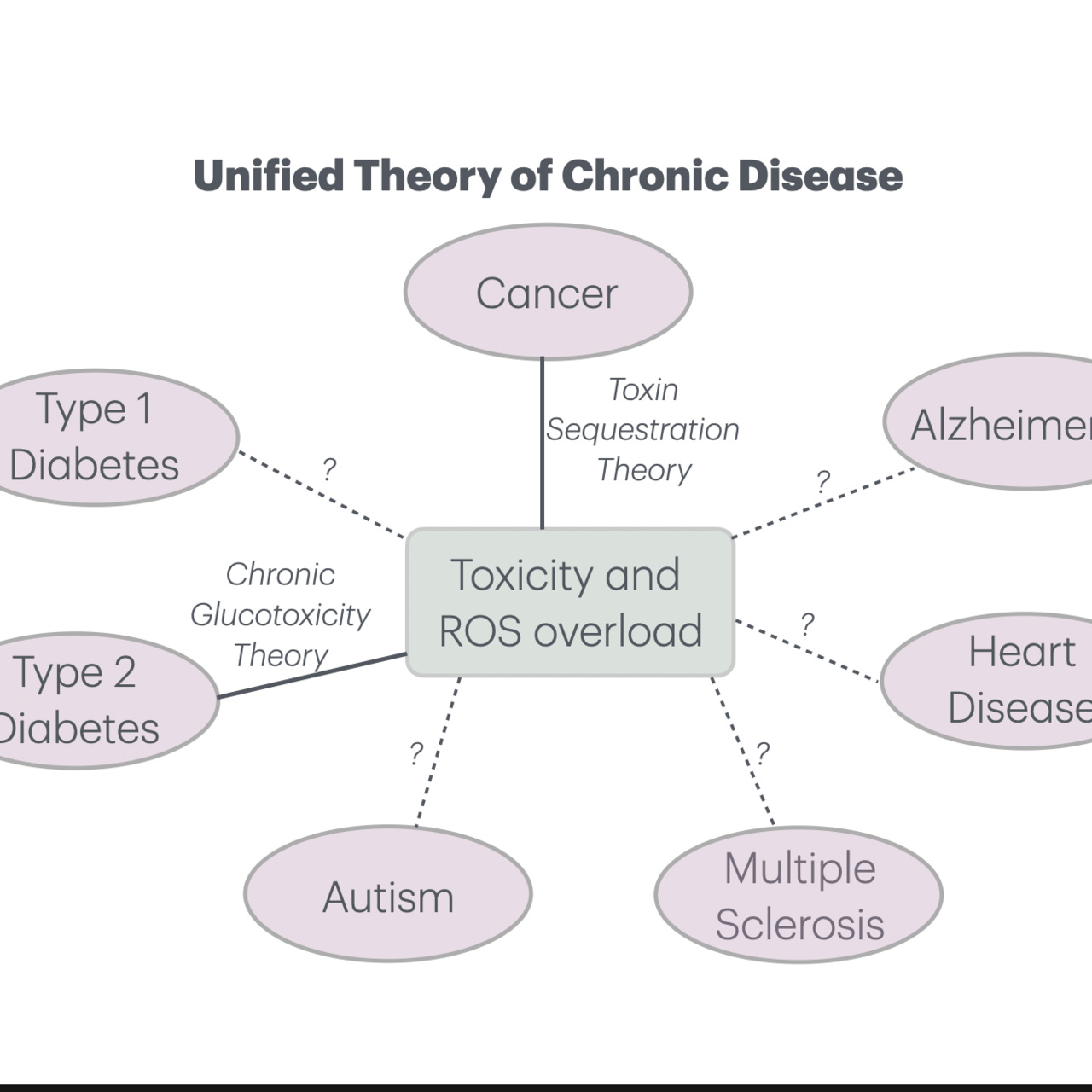
All chronic diseases are the visible result of this ongoing oxidative assault. Even diseases like Hashimoto’s and Type 1 diabetes, which have been falsely labeled as “autoimmune conditions”, are in fact diseases of ROS overload due to toxin exposure. We give the disease a different name when the ROS overload occurs in different tissues. If the ROS overload occurs in the brain, the disease is called Alzheimer’s or autism. If it occurs in the arteries, it’s called cardiovascular disease.
My view here agrees perfectly with that of Dr. Thomas Levy, who wrote a book called “The only cause of disease”. In that book, he identified oxidative damage, from toxins, as the ONLY cause of disease. I arrived at this view independently of Dr. Levy - great minds think alike.
6. One of your most surprising posts argues that high-dose vitamin C can actually behave as a toxin. Can you explain how something so widely seen as healthy could be doing harm at high doses?
Vitamin C is an antioxidant at low doses, but at high supplemental doses it flips and becomes a potent pro-oxidant.
This happens through its interaction with iron. Free iron is a toxin, but it needs some help to repeatedly act as toxin, and vitamin C provides that help. Vitamin C puts iron in the right form so that it can go off and act as a toxin. Namely, vitamin C puts iron in the form needed to catalyze the Fenton reaction, which directly generates hydroxyl radicals — the most destructive form of ROS.
In addition, some fraction of vitamin C will always degrade, inside the body, into oxalates, and oxalate is a well known toxin.
This phenomenon is very common for antioxidants. Many antioxidants become pro-oxidant when you megadose them as a supplement. In addition to vitamin C, this same phenomenon occurs for EGCG, melatonin, and vitamin E. They all behave as antioxidants at low doses and pro-oxidants at high doses.
This is why cancer works very hard to sequester vitamin C. Cancer’s job is to protect us from toxins. Sure enough vitamin C has been found in high concentrations inside cancer cells, and cancer cells are known to increase their uptake of vitamin C when the body is overloaded with vitamin C. In that sense, high-dose vitamin C is no different from some of the other toxins I’ve discussed (microplastics, heavy metals, etc.).
7. Mainstream medicine treats glucose and glutamine as fuel sources that cancer cells crave. You reinterpret both as toxins. Can you walk readers through how you arrived at that flip in perspective?
The conventional view sees cancer cells as metabolically deranged cells that have “learned” to consume massive amounts of sugar (glucose and fructose) for energy and growth. In TST, I see the relationship in reverse: glucose and fructose are stressors the body must manage, and tumors arise in part because they help perform that management.
Glucose and fructose drive glycation and generate ROS. When intake chronically exceeds what the liver and other systems can safely process, the body experiences “glucotoxicity”, where sugar damages the vital organs.
Glucotoxicity is very well documented in the medical literature. The easiest way to see that sugar is a toxin is that diabetics often have damage to their retinas, their kidneys, their nerves, and their arteries. This damage is called “diabetes complications”, and it’s a direct result of sugar’s toxicity.
It’s well known that cancer loves sugar. But I knew that cancer was an unselfish team player. So in my research, I was just trying to reinterpret the reason for why cancer loves sugar. I found that it’s NOT because cancer wants to grow. Rather, it’s because sugar is a potent toxin, and cancer’s job is to protect the body from toxins. I was very excited when I made this discovery, because it showed that sugar is no different from the other toxins I considered in my theory.
A similar story holds for glutamine, but it’s more subtle because glutamine itself is not a toxin. Rather, it is a carrier of a toxin, namely it carries the ammonia toxin.
Ammonia is a dangerous toxin found in certain cleaning products. It’s also produced in our muscle cells and then sent to the liver for detoxification. However, the muscle cells cannot just dump the ammonia into the blood, as it would damage the arteries. So these muscle cells have to package the ammonia in a “safe envelope” called glutamine, and then send the glutamine off into the blood. Once the glutamine reaches the liver, the liver rips off the ammonia and detoxifies it.
But many people who have cancer also have liver damage. After all, cancer acts as the body’s 2nd liver. In this case, cancer cells pick up the slack for the damaged liver. These cancer cells pull in glutamine, and rip the ammonia off the glutamine, as part of the ammonia detox process.
So now we can understand why cancer cells “love glutamine”. It’s not that they want to use glutamine to grow - in fact glutamine is a poor substrate for growth. Rather, they are working hard to detoxify ammonia, acting as the body’s 2nd liver. Pulling in glutamine is just a necessary step to get access to that ammonia.
This also helps to explain why eating animal meat is not unhealthy. After all, animal meat is high in glutamine. If you believe that glutamine causes cancer, and that cancer is a disease, then you should be afraid of eating animal meat. But in my theory, cancer is not a disease, and the only reason cancer likes glutamine is because it’s the body’s carrier of ammonia. So my cancer theory (unlike other cancer theories) makes it safe to eat animal meat.
8. You point out that primary tumors almost never form in the heart or spleen. What does that tell us about how the body chooses where to build these “storage vaults”?
The fact that primary tumors almost never form in the heart or spleen, while they commonly appear in organs like the prostate, breast, skin, brain, and lungs, reveals something important about how the body makes strategic decisions about where to build its protective “storage vaults.”
The body appears to follow a clear set of priorities when choosing locations for sequestration. It favors tissues that have high lipid content (which can safely trap lipophilic toxins), sufficient physical space or structural capacity to contain damage without immediately threatening vital functions, and proximity to major detox organs that can offload some of the burden. It also seems to avoid locations where building a vault would create an unacceptable risk to immediate survival.
The heart and spleen are rarely chosen for primary tumors because they have better alternatives. The heart sits right next to the liver — the body’s primary detox and processing organ — so toxins can often be shuttled there instead. The heart can also develop some protective fat around itself. The spleen is a highly active filtering and immune organ with good clearance capacity through other routes. In both cases, the body has safer or more efficient ways to handle toxic load without needing to build a dedicated vault in those specific tissues.
In contrast, the prostate is frequently chosen because it is rich in lipid tissue and is a site where certain toxins — particularly seed oils, copper, and excess estrogen — tend to accumulate. It has the structural capacity to form a localized vault without immediately compromising core life functions. Similarly, breast tissue is lipid-rich and heavily involved in estrogen metabolism and storage, making it a logical site for sequestration when those specific toxins build up.
The skin is another common location for tumors because it is the most peripheral tissue (farthest away from the vital organs). It’s also one of the body’s major elimination and detoxification organs. It constantly interfaces with the external environment and uses sweating as a clearance mechanism. When the toxic burden exceeds what normal skin clearance can handle, the body can form localized containment structures there. This is why we see patterns of skin-related growths in people with high oxidative or lipophilic toxin loads.
The brain is an interesting special case. It has very low safe storage capacity and is protected by the blood-brain barrier. When toxins (such as PFAS, seed oil byproducts, heavy metals, or others) successfully cross that barrier, the body has few good options left. Tumors can then become a last-resort vault because allowing those toxins to remain diffuse in brain tissue would be even more damaging.
Overall, tumor location is not random. It reflects the body’s attempt to isolate toxins in places where the cost-benefit calculation is most favorable — tissues that can physically contain the damage, have the right biochemical environment (often lipid-rich), and allow the rest of the body to continue functioning with the least possible disruption. The heart and spleen are usually spared because better alternatives exist; the prostate, breast, skin, and brain are used when the specific toxins and the tissue characteristics make them the most practical sites for containment.
9. Metastasis is one of the most frightening words in medicine. How do you reframe it in TST, and what would you want readers facing that diagnosis to understand?
My theory brings hope, optimism, and agency to the case of metastasis. In Toxin Sequestration Theory, metastasis is not the cancer “spreading” like an invading army. It is the body building new protective vaults in additional locations when the original sequestration sites are no longer sufficient.
When the toxic load remains high or the primary tumor vault becomes overwhelmed (or is surgically removed), the body may escalate by forming additional vaults elsewhere. This is the body’s attempt to continue protecting vital organs from systemic toxin circulation and ROS damage. It is not a sign of the disease “winning,” but rather evidence that the underlying toxic burden is still pressing and the body is doing everything it can to contain it.
For readers facing this situation, I want them to understand two things: First, the appearance of new tumors is often the body’s intelligent response, not random failure. Second, the most powerful approach is to focus on lowering the overall toxic load while supporting the body’s natural clearance pathways. Reducing the pressure that forced the body to build vaults in the first place can decrease the need for new ones and allow existing ones to become less necessary over time.
10. Iron and copper are both essential nutrients, yet you describe them as some of the most overlooked toxins in modern life. What are the everyday sources people don’t realize are adding to their burden?
Iron and copper are probably the most misunderstood of all the metals. In their free form (the metal form), they are purely toxins. It’s very dangerous to have free iron and free copper floating around in the body - they directly damage the body’s vital organs.
That’s why the body tries very hard to keep them in a bound form. The body makes specific proteins whose sole purpose is to usher around iron and copper and safely carry them to the desired destinations.
That’s also why free iron and copper are so heavily connected to cancer - the body uses tumor tissue to store them, so that they can’t roam freely and cause damage. For example, there are iron balls, made of roughly 4000 iron atoms and wrapped up by a protein shell, that are stored for safe keeping inside of cancer cells. Similarly, copper is actively pulled in by cancer cells. It’s crucial to note that both iron and copper are consistently found in very high concentrations inside cancer cells, supporting my TST theory, as the cancer cells are actively trying to protect the body by sequestering these toxins.
Iron overload largely comes from plant-based eating. The form of iron found in veggies, like spinach, is the toxic form (the free form). Moreover, eating veggies together with Vitamin C increases the absorption of this toxic (free) iron in the intestines. So a “great” way to get iron overload is to eat fruits together with veggies (imagine a spinach salad mixed with mandarin oranges and strawberries).
Another great way to get iron overload is eating fortified foods. In the US, the government fortifies breakfast cereals, grains, and oatmeal with free iron (metal shavings of iron). This is one of the most disastrous public health policies in human history. The standard American breakfast, of fortified cereal combined with fruit and fruit juices, is a recipe for iron overload. Sadly, many American children are being poisoned via this type of breakfast.
The body can carefully regulate heme iron in the diet, which is the form of iron found in meat. The absorption of heme iron is carefully controlled signals sent from the liver to the intestine. In contrast, the body has no regulatory system for free (non-heme) iron. In other words, eating iron-containing meat is safe, whereas eating iron-containing veggies is unsafe.
Similarly, for copper, it is high on the plant-based diet and relatively low in animal muscle meat. Many people get copper overload from plant-based eating. Moreover, there is a widespread zinc deficiency in humanity - billions of people have dangerously low zinc levels, and part of zinc’s job is to prevent copper overload. Plant-based eating also contributes to zinc deficiency due to plant defense chemicals that chelate zinc. Beyond dietary exposure, many people get copper overload from: copper water pipes in their homes, copper from IUDs and birth control, copper water bottles, copper cookware, and copper jewelry. High estrogen also leads to copper overload, as estrogen forces the body to retain copper.
11. Estrogen is another one you reframe as a toxin in excess. What are the main drivers of estrogen overload today, and what can people do about them?
Perhaps the most important toxin for breast cancer is excess estrogen. But we can understand this from the view that the breast tissue is well equipped to sequester and detoxify estrogen. So the body chooses breast tumors to handle the toxic burden of excess estrogen for strategic reasons.
The most common source of excess estrogen is obesity, as fat tissue expresses an enzyme that produces estrogen. Exogenous hormones, found in oral contraceptives and hormone replacement therapy (HRT), are other key sources of excess estrogen.
Finally, liver damage is a key cause of excess estrogen, since the liver’s job is to detoxify estrogen under normal circumstances. Of course, many toxins contribute to liver damage (ethanol, fructose, seed oils, iron, copper, etc.).
12. Microplastics are everywhere now and nearly impossible to avoid. Given that, what’s your practical advice for someone who wants to reduce their exposure without going off the grid?
I generally recommend that people focus on eliminating the dietary toxins that I’ve covered (seed oils, oxalates, sugars, etc.), since those are very easy to eliminate. People should focus on the toxins they can easily eliminate. I also believe that microplastics are not the worst toxin - for example seed oils are more harmful than microplastics in my view.
Microplastics are practically impossible to eliminate. For example, car tires release microplastics. So every time a car drives on the road, it’s releasing microplastics into the air we breathe. Anyone who lives in a city will be breathing in microplastics everyday.
Nevertheless, here are a few steps to reduce exposure to microplastics: (1) Use a high quality water filter for drinking water. (2) Avoid plastic water bottles, drink out of glass bottles. (3) Never heat food in plastic, (4) Avoid plastic tea bags. (5) Avoid polyester or other synthetic clothing, only wear clothes with natural materials like wool.
Fortunately, cancer cells do sequester and store microplastics. So cancer cells do protect the rest of the body from microplastics, by engulfing them and preventing them from roaming freely. I do find that remarkable, since microplastics are a relatively new toxin, and yet cancer cells are equipped to deal with them.
This also highlights that, when people attack their cancer tumors (say with chemo or radiation therapy), this will release microplastics back into circulation since the body had them nicely stored up in the tumor.
13. A lot of your writing points back to diet as the leverage point. For someone curious but not ready to go full carnivore, what’s the single highest-leverage change they could make tomorrow morning?
The muscle meat of ruminant animals appears to be the lowest toxin food on the planet. So I encourage people to increase their consumption of beef. A simple approach is what I call the “steak challenge”, where you have to eat at least one steak per day. The steak will be satiating enough that it will prevent people from eating other more toxic (junk) foods.
In addition, I encourage people to eliminate all high-oxalate foods from the diet. This means cutting out spinach, almonds, beets, and sweet potatoes, for example.
Furthermore, I strongly encourage people to connect with the keto / carnivore community on social media. The keto / carnivore community is very welcoming, friendly, and supportive. Having a supportive community is crucial for keeping on track.
14. Spontaneous tumor regression is one of the most hopeful threads in your writing. Can you explain what it is, what we know about why it happens, and what it tells us about the body’s intelligence?
To clarify, the reason why Spontaneous Tumor Regression (STR) appears hopeful is because we have been conditioned to believe that our goal is to fight tumors, whereas our true goal should be to not die and live as long as we can. I ask people to think carefully about the brainwashing that we’ve been subjected to. Imagine instead that a tumor is a detox organ that is detoxifying the body. From this view, worrying about tumor regression seems frivolous.
Nevertheless, STR does give people hope, in practice. STR describes case studies where patients receive a cancer diagnosis, then they abstain from conventional medical treatment, and instead focus on improving their diet, lifestyle, and environment to reduce toxin exposure. It has been documented in the medical literature that many of these patients witness a reduction in tumor size or complete disappearance of their tumors. For example, there was a 1956 medical paper reviewing 176 case studies of STR.
From the perspective of my TST theory, the body can decommission its toxin storage vault whenever it’s not needed anymore (whenever the toxic load has been dramatically reduced). The body has the ability to sense the local toxicity levels, so when it realizes the toxins are gone, it can dismantle it’s toxin storage vault, and that’s what STR represents. This suggests that there is a “natural way” to encourage tumor regression: simply reducing the toxic load by getting on a low-toxin diet and keeping oneself in a low-toxin environment.
Interestingly, another correlation with STR is the patient experiencing a high fever. In the alternative medicine space (e.g., doctors like Tom Cowan and Garrett Smith), high fevers can be viewed as detox events where the body is mobilizing large amounts of toxins for excretion. So this observation, that STR can occur after a high fever event, appears to be consistent with my theory, since it may be reducing the body’s toxic load.
15. To close — what are you focused on right now, what’s coming next in the series, and where should people go if they want to follow your work or get in touch?
In the past month, I have focused on extending my TST theory beyond cancer. I have shown that obesity is also not a disease, just like cancer. The body creates fat tissue to store lipophilic (fat soluble) toxins. So obesity is a key strategy the body uses to protect the vital organs from toxicity.
I have also shown that skin growths are toxin storage vaults. Some skin growths, including pimples, skin tags, lipomas, cherry angiomas, store lipophilic toxins. Pigment-based skin growths, like moles and age spots, are specialized for storing toxic metals.
Most recently, I have highlighted that stones, including kidney stones and gallstones, act as toxin storage vaults as well. So they also fit nicely into my TST theory.
All of these extensions suggest that TST is a very powerful theory. It was designed purely to explain cancer, and yet it also explains so many other things. No other cancer theory has this kind of explanatory power, highlighting that TST appears to be on the right track.
If people want to follow my work further, here are my social media accounts:
YouTube:
https://www.youtube.com/@OxalateWarrior
Substack:
https://substack.com/@nutritionalphysicist
Facebook:
https://www.facebook.com/people/Toxin-Sequestration-Theory/61591136455322/
Instagram:
https://www.instagram.com/patrickc_tst/
The view from a different point is so enlightening. This broader viewpoint encompasses so much more as the body is a totality and not an island of unrelated events. It is the wonder and beauty of an organism that treats offenses to it protectively, not as something to be viewed as being flawed.
Thank you for this amazing article and interview. Most of what is related makes sense, and I do believe the body has the unique ability to heal itself. I write this sitting in a room at the Ronald McDonald House where my young grandson has undergone major surgery. No one, including us, knows how he got so sick. Healthy as a horse one day and then BAM! critically sick. He is a mystery and an anomaly. Every day I search for answers to help him (something I have done for the past 2 plus years without success) which is why I love your articles.
On another issue, my experience is the complete opposite of Dr. Cole. Twenty years ago,I took my family off a meat-based diet, and we had amazing results wherein our bodies responded with healing qualities similar to what was related. We became healthier.
Immediately. Back then the decision was more protest against the CAFOs.
Fast forward 20 years and Capitalism has raised its ugly head (it always interfers when there is money to be made) to capture and destroy most of the vegan market we grew to appreciate. As a result, we are moving to a more meat inclusive diet. I am going to re-read this wonderful interview. Thank you again.