
Wild Fermentation (2003)
By Sandor Ellix Katz - 30 Q&As - Book Summary

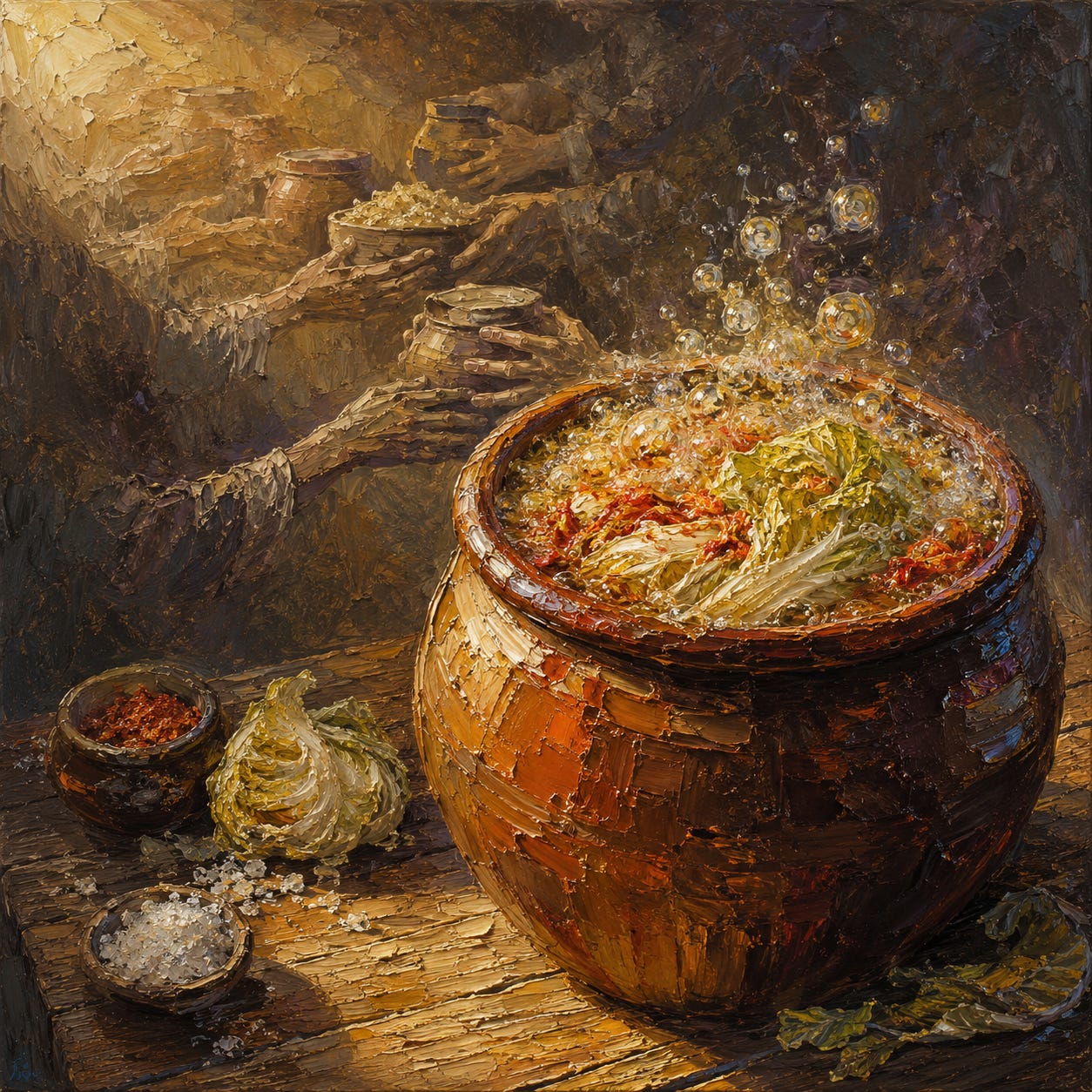
Every kefir grain in every kitchen on earth descends from the original kefir grains of the Caucasus mountains. No laboratory has ever produced one from scratch. The same applies to kombucha SCOBYs, sourdough starters, vinegar mothers, and the world’s heirloom yoghurt strains — Bulgarian, Caspian Sea, Matsoni, Viili. These are not products. They are living organisms propagated through unbroken hand-to-hand transmission stretching back centuries or millennia, and they exist now only because someone in each generation kept them alive and gave some away. Sandor Ellix Katz’s Wild Fermentation, published in 2003, is the manual that rebuilt this knowledge for a generation of readers who had never been taught it.
Katz writes from a specific position. He was politically active in ACT UP in the late 1980s and 1990s, tested positive for HIV in the early 1990s, and moved from New York City to Short Mountain Sanctuary, a queer rural land community in Tennessee within the radical faerie tradition. After his diagnosis, he turned toward foods that support the body — sauerkraut daily, kefir, kombucha, miso, tempeh, homemade yoghurt — alongside whatever conventional treatment he was using. The volume of cabbage he was fermenting for the community earned him the nickname Sandorkraut. His book is a manual, a memoir, and a manifesto written by someone working out, in his own life and his own kitchen, what it means to eat in a way that supports the body rather than fighting it.
The book appeared at a moment when industrial food consolidation, antibacterial hygiene culture, and the criminalisation of small food producers had stripped fermented foods almost entirely from daily life in the United States. Pasteurisation laws made it illegal to sell raw milk across state lines. Food safety regulations raised the cost of small-scale traditional production beyond what most farmers could meet. Antibacterial soaps, sanitisers, and shelf-stable sterilised products had become the default, and a generation had grown up never having tasted a living food. The Weston A. Price Foundation and the wider traditional foods movement were beginning to articulate the cost of this shift. Wild Fermentation gave that movement a practical foundation — the actual technique, in plain language, with the political argument woven through.
The book’s framework is terrain-compatible at its foundation: bacteria are partners rather than enemies, the body is sustained by the microbial life it hosts, industrial food strips out the living organisms human bodies have eaten for as long as there have been human bodies, and reclaiming fermentation is a return to how eating used to work. The full summary unpacks the three meanings of “culture” — bacterial, agricultural, social — that share a single Latin root and a single fate when transmission breaks; the mechanism by which sourdough fermentation breaks down phytic acid and transforms grain nutrition; and the political reality that selling traditional foods has been criminalised in ways that protect industrial dairy and industrial food production from competition by the practices that fed humanity for thousands of years. A jar of cabbage and salt on a kitchen counter does in two weeks what no supermarket can do at all.
The full summary continues below for paid subscribers
To finish reading this book, become a paid subscriber.
Your subscription unlocks the rest of this summary — the analogy, one-minute elevator explanation, 12-point summary, Q&As, and Golden Nugget — along with the premium content for every other book summary in the library. It also unlocks the full Deep Dive Audio Library of in-depth conversations and my growing library of original books. New content is added every month.
I do this work independently, outside the institutions these books so often describe. No foundation grants, no academic approval, no editorial gatekeepers deciding what’s acceptable to publish. Your subscription makes that independence possible.
Keep reading with a 7-day free trial
Subscribe to Lies are Unbekoming to keep reading this post and get 7 days of free access to the full post archives.