
What Is Tuberculosis?
An Environmental Illness Misdiagnosed for 140 Years

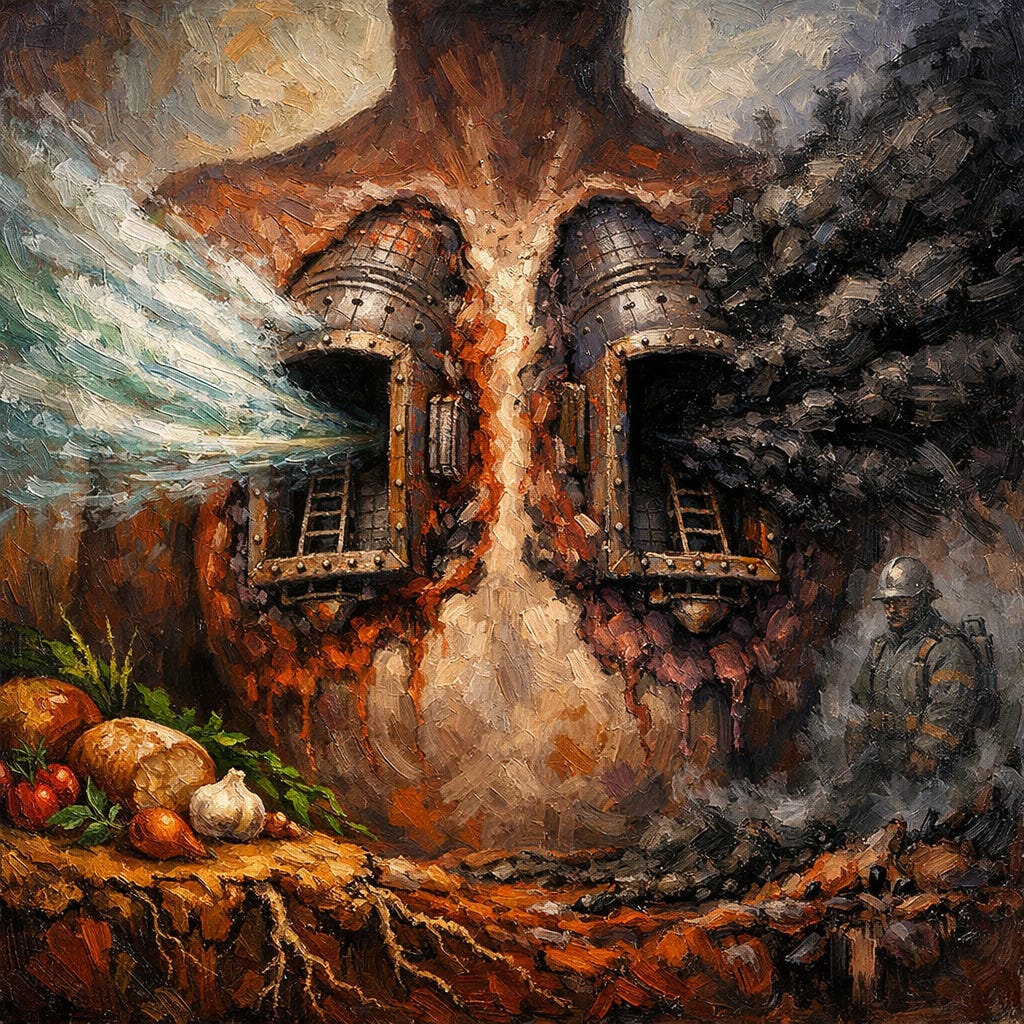
Tuberculosis remains one of the leading causes of death worldwide—approximately 1.6 million people annually, according to the WHO. Nothing in this essay should be read as advice to abandon treatment in an acute crisis. The question examined here is not whether people die from the condition called tuberculosis, but whether the explanatory model that has dominated medicine for 140 years—that a bacterium causes the disease and spreads it through airborne contagion—adequately accounts for the observed patterns.
This essay argues that tuberculosis is not a contagious bacterial infection, but a condition arising from environmental toxicity, nutritional deficiency, and the body’s attempt to eliminate accumulated poisons through the lungs. It examines four categories of evidence: historical hospital and health resort data demonstrating remarkably low transmission rates; the failure of Robert Koch’s bacterial theory to satisfy its own postulates; the steady decline of TB mortality decades before antibiotics or vaccines; and alternative physiological frameworks that explain the patterns germ theory cannot. The bacterium associated with tuberculosis is present at the scene, but the evidence shows it is responding to damaged tissue, not causing it.
Support Independent Research
This work remains free because paid subscribers make it possible. If you find value here, consider joining them.
What paid subscribers get: Access to the Deep Dive Audio Library — 170+ in-depth discussions (30-50 min each) exploring the books behind these essays. New discussions added weekly. That’s 100+ hours of content for less than the price of a single audiobook.
[Upgrade to Paid – $5/month or $50/year]
Get in touch Essay ideas, stories, or expertise to share: unbekoming@outlook.com
Part One: The Evidence Against Contagion
At Brompton Hospital in London, approximately 500 staff members—doctors, nurses, maids, and porters—worked in constant close contact with consumptive patients throughout the late 19th century. Only four contracted the disease.
This statistic comes not from terrain theory researchers, but from Dr. C. Theodore Williams, a physician at the hospital itself, cited in an 1897 paper by Dr. Charles Winslow Dulles of Philadelphia’s Rush Hospital for Consumption. The breakdown was meticulous: of four resident medical men (one who had worked there for twenty-five years), none developed any lung disease. Of six matrons, none contracted consumption. Among 150 resident clinical assistants, eight became consumptive and five died, but in only one case did the disease develop during residence at the hospital. Of 101 nurses since 1867, only one died of phthisis, and that occurred after leaving the hospital. Of 32 gallery-maids since 1867, none developed phthisis while at the hospital. Of 20 house-porters, five died, but none from consumption.
Victoria Park Hospital showed identical patterns. During the fifteen years prior to Dulles’s paper, all five resident medical officers remained alive and well. Neither of the two matrons developed consumption. No clinical assistant was known to have developed lung disease while working at the hospital. Among 50 or 60 nurses, a single case was reported—one nurse became consumptive while working there and died after a year’s illness.
Rush Hospital in Philadelphia, where Dulles himself worked, reported no cases of infection among attendants. The only hospital for consumptives in New York likewise reported no cases of infection among staff. Dr. Arthur Ransome, Professor of Public Health at Owens College, Manchester, summarised the evidence: “The universal testimony of physicians of these institutions is that no such conveyance of the disease can be traced in any such institution.” He added that consumption wards appeared to be “the safest places in which susceptible persons could take up their abode.”
These were not terrain theory advocates. These were mainstream physicians of their era, reporting what they observed in their own hospitals.
Beyond the Hospitals
If tuberculosis were contagious through airborne transmission, health resorts where consumptives congregated should have become epicentres of infection. The opposite was documented.
At Colorado Springs, Dr. S.E. Solly reported that consumptives freely mingled with other residents—attending church services, theatres, concerts, crowded social functions, sharing accommodations in hotels, boarding houses, and private dwellings. Despite this unrestricted mixing and complete absence of isolation measures, only twenty cases of consumption originated locally over twenty years. Even in less favourable environments—poorly ventilated rooms occupied by consumptives and their families, where careless expectoration and poor cleanliness were common—cases of transmission averaged no more than one per year.
At Davos-Platz in Switzerland, Dr. Clinton Wagner observed that approximately 1,000 of the 1,500 winter visitors were consumptives. At his hotel, about 80 of 120 guests had consumption, spending nearly 20 hours daily indoors due to limited winter outings. “No one stood in dread of contracting the disease,” Wagner reported, “and no cases occurred in which it was conveyed from person to person.”
The Cambridge Medical Society, as Dulles reported, surveyed its members regarding the communicability of phthisis. Of thirty-eight responses, thirty-four were negative—89% of practising physicians had not observed cases of transmission.
The Dust Theory Under Examination
If tuberculosis spread readily through airborne particles, hospital dust should have contained significant infectious material. Drs. Heron and Chaplin tested this directly. They conducted one hundred inoculation experiments using dust collected from “long uncleaned passages, shutters, pieces of furniture, and so forth” in the Brompton Hospital—environments that would be expected, under a simple airborne model, to be heavily contaminated.
They produced tuberculosis in guinea pigs only twice in the entire series.
The researchers concluded that “in the wards and out-patient department of a hospital where a very moderate amount of care is taken to prevent the spread of infection from the expectoration of tuberculous persons, there is surprisingly little evidence of the escape of tuberculous bacilli to become a source of infection.”
Dulles cited Kirchner, who repeatedly sought tubercle bacilli in the dust of rooms occupied by consumptive patients but found them in only one instance.
Clifford Beale investigated workers in large paper mills throughout England and Scotland, focusing on sorting-room employees constantly exposed to enormous amounts of airborne dust. These workers, typically in the age group most susceptible to tuberculosis, routinely handled and processed rags that could potentially contain tuberculosis material—hospitals for consumption did not practise disinfection at that time. Despite this seemingly high-risk environment, Beale “could not find that there was any frequent occurrence of tuberculosis in the persons exposed to this presumptive danger.” He found no cases whatsoever of tuberculosis of the skin, and managers reported that working in this dust-filled atmosphere was not considered a cause of tuberculous disease.
The Koch Problem
Robert Koch announced in 1882 that he had discovered the cause of tuberculosis—the bacillus Mycobacterium tuberculosis. He was awarded the Nobel Prize in 1905. This is commonly cited as proof that the bacterial cause of TB was established. The Nobel Prize presentation speech tells a different story.
Professor Count K.A.H. Mörner’s speech, as documented by researcher Mike Stone, revealed that at the time of Koch’s work:
The causal relationship between bacteria and diseases was “obscure”
There were “grounds for supposing that certain other diseases were caused by micro-organisms, yet detailed knowledge concerning this was lacking, and experimental findings were very divergent”
“The question still remained open as to whether bacteria observed in a disease were also its cause, or whether their development should rather be considered a result of the pathological process”
“Investigators had to look in vain for bacteria in the organism while only some found them”
Bacteria “were often of a different appearance which gave reason for doubting that they were the specific and genuine cause of the disease”
“The same bacteria was found in widely differing types of disease”
The speech acknowledged that before Koch’s work, it was already possible to create experimental tuberculosis by inoculating animals—but “it was not proven that it was caused by a bacterium. This interpretation of a micro-organism as a cause was contested by very distinguished investigators.”
A paper celebrating the 100th anniversary of Koch’s Nobel Prize, published in Trends in Microbiology, admitted that “the laudation did not mention his discovery of the etiologic agent of tuberculosis specifically.” Koch was awarded for his work with TB, not for proving causation.
The reprinting of Koch’s 1882 paper contains an even more revealing admission: “It should be noted that in this paper he does not have a final proof that the organism he has isolated in pure culture is really the cause of human tuberculosis. This could only be done by making inoculations in humans. Since this cannot be done, we can only infer that the isolated organism causes the human disease.”
Koch’s Own Postulates
Koch established criteria—now known as Koch’s Postulates—that he considered necessary to prove a microorganism causes disease:
The microorganism must be found in abundance in all hosts suffering from the disease but should not be found in healthy hosts.
The microorganism must be isolated from a diseased host and grown in pure culture.
The cultured microorganism should cause the same symptoms of disease when introduced into a healthy host.
The microorganism must be re-isolated from the inoculated, diseased experimental host and shown to be identical to the original causative agent.
These postulates remain the logical foundation of germ theory, and TB’s relationship to them is not a minor exception but a fundamental challenge.
The first postulate requires that the organism not be found in healthy people. As Mike Stone documents in his analysis of Koch’s work, a 1937 paper in the American Review of Tuberculosis recorded that Koch himself found the TB bacterium in healthy individuals. This finding should have prompted serious doubt about the causal claim.
The problem extends far beyond Koch’s original findings. The WHO states that “about one-quarter of the world’s population has a TB infection” but “people infected with TB bacteria have a 5–10% lifetime risk of falling ill.” The CDC confirms: “About 90% of those infected with M. tuberculosis have asymptomatic, latent TB infections, with only a 10% lifetime chance that the latent infection will progress to overt, active tuberculous disease.”
In standard medical terminology, “infection” here means immunological evidence of exposure, not clinical illness. Nonetheless, the scale of this discrepancy demands examination: two billion people carry the bacterium, ninety percent never develop disease, and only five to ten percent ever become ill.
The mainstream explanation is that the immune system controls the infection in most people, with disease occurring when immunity is compromised. But this explanation effectively concedes the central terrain theory point: the bacterium’s presence does not determine who becomes ill. Something else does—nutritional status, toxic burden, living conditions, immune function. If bacterial presence alone were sufficient to cause tuberculosis, a far higher proportion of infected individuals would progress to disease, especially among the impoverished populations where latent infection is most prevalent.
The absurdity of the standard model becomes apparent when examining who carries these latent infections. The overwhelming majority live in developing countries—India, Pakistan, Nigeria, Bangladesh—where populations suffer from poverty, malnutrition, inadequate sanitation, and limited healthcare. These are precisely the conditions that should, under any model, make immune control most difficult. Yet these populations demonstrate the highest rates of “controlled” latent infection.
The germ theory answer requires believing that the bacterium is simultaneously deadly enough to kill 1.6 million people annually, yet harmless enough to coexist indefinitely in two billion others. The terrain theory answer is more parsimonious: the bacterium is not the determinant. Environmental and nutritional factors are.
The Decline Before Medicine
What determined the decline of tuberculosis? The historical record provides a clear answer: not medical intervention.
Roman Bystrianyk documents that TB deaths in Massachusetts plummeted from 375 per 100,000 in 1874 to just 2.4 per 100,000 by 1970—a 99.4% drop. This decline began decades before any medical intervention.
Epidemiologist Thomas McKeown calculated that approximately 96.8% of TB’s decline occurred before the introduction of antibiotics (Streptomycin, 1947) or the BCG vaccine (1954). His analysis: “Chemotherapy reduced the number of deaths in the period since it was introduced (1948-1971) by 51 per cent; for the total period since cause of death was first recorded (1848–71) the reduction was 3.2 per cent.”
The antibiotics and vaccines credited with conquering tuberculosis arrived after the disease had already declined by more than 90%. The introduction of these interventions produced only modest additional decline against an already-established downward trend.
Harvard physician Edward Kass, founding member and first president of the Infectious Disease Society of America, stated: “The overall decline in deaths from tuberculosis was not altered measurably by the discovery of the tuberculosis bacillus, the advent of the tuberculin test, the appearance of BCG vaccination, the widespread use of mass screening, the intensive anti-tuberculosis campaigns, or the discovery of streptomycin.”
This historical consensus—that improved living standards, nutrition, housing, and reduced crowding drove TB decline—is widely accepted even by mainstream historians of medicine. Antibiotics played a modest, late role. The implication is significant: environment and terrain overwhelmed any effect of medical attack on bacteria for most of the decline.
As Roman Bystrianyk documents, a 19th-century editorial in the New York Medical Journal recognised what actually mattered: “With the progress of civilization all classes of people live more hygienically. There is less bad water drunk, and drainage conditions have been improved in a manner that is wonderful. When it is remembered also that there is less crowding, less exposure to cold, and that men in general eat better food than formerly, there is little occasion for surprise that consumption of the lungs should decrease.”
If TB does not behave like a contagious airborne disease, if its decline occurred independent of medical attack on bacteria, and if the bacterium’s presence fails to predict who becomes ill, then the germ theory model is insufficient as an explanation. The real story lies in what was changing in people’s bodies and environments. That is where terrain theory, and older physiological observations, become relevant.
Part Two: What Tuberculosis Actually Is
The Lungs as Emergency Exit
Dr. Henry Bieler, in Food is Your Best Medicine, described a physiological process that conventional medicine does not emphasise but that aligns with basic principles of organ function:
“Toxic blood must discharge its toxins or the person dies, so nature uses substitutes. The lungs and skin help the kidneys and liver respectively. From the irritation caused by the elimination of poison through this vicarious channel, we get bronchitis, pneumonia or tuberculosis, as is determined by the particular chemistry of the poison being eliminated.”
This concept—vicarious elimination—frames tuberculosis as a symptom rather than an infection. When the liver and kidneys become overwhelmed or damaged, the body recruits the lungs to expel toxins. The coughing, sputum production, and respiratory distress that define tuberculosis represent the body’s attempt to discharge poisons through an alternative pathway.
Conventional physiology does not describe bronchitis, pneumonia, and TB as “detox” events. But the concept of organs sharing excretory burdens under stress is documented in medicine—compensatory renal and hepatic function, for example. The lungs routinely handle environmental burden: occupational pneumoconiosis, smokers’ lungs retaining and clearing particulates.
Dawn Lester and David Parker elaborate in What Really Makes You Ill: the lungs serve as a backup elimination system when primary organs are congested. The chemistry of the specific toxin determines whether the result manifests as bronchitis, pneumonia, or tuberculosis.
Dr. John Tilden explained the connection to dietary factors: “I recognize the disease as coming from perverted nutrition brought on from crowded digestion.”
This framework explains patterns that germ theory cannot. Tuberculosis appears in wealthy nations consuming processed foods laden with chemical additives and in impoverished nations suffering from malnutrition and environmental contamination. In both cases, the body accumulates substances it cannot adequately eliminate through normal channels. The lungs become the emergency exit.
Nutrition and Physical Degeneration
Weston A. Price, a dentist who travelled the globe studying traditional populations in the 1930s and 1940s, documented patterns that germ theory could not explain.
Swiss villagers living on traditional diets of raw dairy products, sourdough rye bread, and organ meats had no tuberculosis—at a time when TB was the number-one killer in Switzerland. Inhabitants of Lewis Island in the Outer Hebrides, living in thatched houses with no chimneys, breathing smoky air day and night in close quarters, were free of TB. Their diet consisted of seafood, fish liver oil, oat porridge, and oatcakes.
When modern foods arrived—sugar, white flour, canned foods, vegetable oils—tuberculosis followed. Health workers blamed the smoky air of their cottages and made them install chimneys. It made no difference. Only Price was curious about why the well-nourished islanders had been immune even while living in smoke-filled houses.
Thomas Cowan summarises Price’s conclusions in The Contagion Myth: Price “rejected the notion that TB was inherited or caused by a microorganism, transmittable by droplets released into the air in the coughs and sneezes of the infected; he surmised that the root cause was a malformation of the lungs, similar to the narrowing of the facial structure and ‘dental deformities’ in those born to parents eating processed foods.”
In a visit to a paediatric TB ward in Hawaii, Price noted that every patient had dental deformities. These deformities did not cause TB, but Price believed the same nutritional conditions that prevented optimal formation of the facial bones also prevented optimal formation of the lungs. “It was the dead and dying tissue in the lungs that attracted bacteria, nature’s cleanup crew, and not the microorganism that caused the disease.”
African tribesmen living on traditional foods seemed immune to diseases even though they went barefoot, drank unsanitary water, and lived in areas swarming with mosquitos. Europeans visiting Africa needed to cover themselves completely and sleep under protective netting. Once processed foods made inroads into these populations, disease proliferated.
The Iron Factor
Mark Purdey, a farmer and self-taught scientist whose investigations into BSE (mad cow disease) brought him into conflict with UK authorities, turned his attention to bovine tuberculosis before his untimely death in 2006. His observations, documented in Animal Pharm and summarised by Sally Fallon Morell, identified a pattern the establishment had overlooked. Purdey’s work was met with systematic harassment—arson attacks on his property, funding denials, phone tapping, and media censorship—yet his findings have never been refuted.
Purdey’s farm remained TB-free despite being surrounded by cattle and badgers allegedly infected with tuberculosis. This should have been impossible according to official theory. He began investigating what made his farm different.
His core hypothesis: excessive accumulation of available iron enables TB mycobacteria to proliferate. Iron is an essential prerequisite for mycobacteria to metabolise and survive within the mammalian body. The bacteria hijack the host’s iron supply from transferrin and ferritin molecules, using it for their own proliferation. This hijacking also disables the host’s immune defence by preventing the synthesis of beta-2-microglobulin molecules, which activate killer T-lymphocytes—the body’s primary defence against mycobacterial infection.
As Morell notes, iron availability is widely recognised in mainstream microbiology as critical for many pathogens, including mycobacteria. Iron-chelation as adjunct therapy has been investigated in peer-reviewed literature. Purdey extended this established observation to environmental and soil chemistry.
The sources of elevated iron include:
Soil acidification: Reduced use of lime-based fertilisers, combined with increased rainfall and artificial fertiliser use, acidifies topsoil. This leads to excessive accumulation of available iron in regions where soil iron is naturally elevated.
Dietary intake: Iron is taken up by pasture herbage (especially ryegrass and plantain) and percolates into local water supplies.
Industrial emissions: High levels of iron in workplace atmospheres—steelworkers, populations in industrial areas—correlate with TB incidence.
Purdey noted that key bovine TB hotspot zones in the UK—the Forest of Dean, Exmoor, Cornwall, Devon, the Mendip Hills—correlate with areas where iron has been mined in abundance and rainfall is high.
Supporting evidence is consistent with the hypothesis. Sally Fallon Morell, summarising the research in her Weston A. Price Foundation article “Solving the Mystery of TB: The Iron Factor,” cites a Michigan study that found spreading lime on farms suffering from high rates of Mycobacterium paratuberculosis infection led to a tenfold reduction in cattle infection after three years. Treating TB-infected mice with the iron-chelating lactoferrin protein resulted in a hundredfold reduction in pathogens. A US EPA colleague confirmed to Purdey that they cleanse land of mycobacteria by spraying iron microcrystals to chelate the bacteria. Purdey conducted a pilot study on his farm with “inconclusive” TB-reactor cows, feeding them an iron-chelating mineral-protein formulation. Four out of five treated animals recovered to TB-free status; an untreated control progressed to full reactor status.
Purdey advocated practical, low-cost solutions: subsidising lime fertilisers to raise soil pH in TB-endemic regions, promoting iron-chelating compounds in feed (copper or zinc supplements, foods containing phytic acids like alfalfa and clover), and boosting natural immunity rather than relying on slaughter programs. These interventions address the environmental cause rather than treating the bacterium as an invader to be eradicated.
These studies point toward environmental and nutritional interventions that germ theory does not predict.
Bacteria as Cleanup Crew
The terrain theory framework recasts bacteria not as attackers but as responders. Dr. Mark Bailey explains that bacteria exist within us symbiotically as a “cleanup crew.” In nature, bacteria are saprophytic—they decompose decaying material. Fungi and parasites function similarly: they are capable of cleaning things up, which is why they exist in humans.
If bacteria are found at the scene, that indicates an underlying issue or toxicity they are assisting with. Firefighters appearing at the scene of a fire does not imply that firefighters caused the fire.
The bacterium Mycobacterium tuberculosis is recognised to be pleomorphic—its form changes according to environmental conditions. As Dawn Lester and David Parker document in What Really Makes You Ill, a 2010 article entitled “Pleomorphic appearance in Mycobacterium tuberculosis” acknowledged that “this organism exhibits extreme pleomorphism in certain circumstances.” This observation bridges the gap between the “bacterium” and the “terrain” by showing how the same organism can be inactive in one environment and active in another. The culture medium Koch used was agar, derived from algae—not a natural constituent of the human body. Bacteria grown in artificial laboratory conditions bear little resemblance to their form and function within living tissue.
Dr. Peter Duesberg stated the logical conclusion: “Simply finding a microbe is not enough to convict it of causing a disease.”
If tuberculosis represents the body’s attempt to eliminate toxins through the lungs, if nutritional status determines susceptibility regardless of bacterial exposure, and if environmental chemistry (particularly iron) enables mycobacterial proliferation, then the condition called tuberculosis is better understood as an environmental illness than an infectious disease. The bacterium participates in the process, but it is not the root cause.
This reframing has significant implications for how TB is prevented, diagnosed, and treated—implications that become clearer when examining modern medical practice.
Part Three: Modern Implications
Vaccination and Tuberculosis: A Forgotten History
The connection between vaccination and tuberculosis is not a modern discovery. Throughout the 19th century, physicians documented cases of consumption following smallpox vaccination—testimonies that have been systematically forgotten.
Roman Bystrianyk compiled these accounts:
Dr. Alexander Wilder, Professor of Physiology at the United States Medical College and editor of the New York Medical Times, stated: “Vaccination is the infusion of a contaminating element into the system, and after such contamination you can never hope to regain the former purity of the body. This tainted the body is made liable to a host of ailments. Consumption follows in the footsteps of vaccination as certainly and as unequivocally as effect follows cause.”
Dr. William Job Collins, a public vaccinator for 25 years in London, wrote: “Five hundred thousand deaths occur annually in England alone, about one-half are occasioned by consumption, pneumonia, convulsions, atrophy, and other strumous diseases which are more or less in my opinion occasioned, or super-added by vaccination... Consumption, scrofula, and other blood diseases were comparatively unknown before Small-pox and Cow-pox inoculation were introduced.”
Dr. Henry G. Hanchett observed: “Erysipelas, scrofula, syphilis, tuberculosis, typhoid, diphtheria, Bright’s disease, relapsing fever, septicemia and cancer, in exchange for smallpox, doesn’t seem like a very good bargain.”
Dr. William Forbes Laurie of Edinburgh wrote to Members of Parliament: “Being anxious not to do mischief to my fellow-creatures... I asked them to come here and see for themselves the dismal results of vaccination in cases of paralysis, blindness of both eyes, hip-joint disease, consumption, and frightful forms of skin diseases.”
These physicians were not fringe figures. They were public vaccinators, professors, consulting surgeons. Their observations were consistent: vaccination introduced contaminating elements that preceded consumption and other diseases. The pattern they documented—vaccination followed by systemic deterioration and eventual tuberculosis—represents an early recognition that medical intervention could create the very conditions it purported to prevent.
Modern Treatments: Toxicity and Efficacy
The BCG vaccine, still administered in many countries, has failed to demonstrate consistent efficacy.
A large field trial conducted by the WHO in India between 1968 and 1971 vaccinated approximately 364,000 people in 309 villages while leaving an equal population unvaccinated. The results: more cases of tuberculosis occurred in the vaccinated area than in the unvaccinated area.
The UK NHS acknowledges: “There’s no evidence the BCG vaccine works for people over the age of 35.” The US CDC does not routinely recommend the vaccine because “BCG does not always protect people from getting TB.”
Standard treatment for active tuberculosis involves six months of multiple toxic drugs. Isoniazid, one of the primary antibiotics, causes nausea, vomiting, dizziness, inflammation of the nerves, psychotic episodes, blood disorders, raised blood sugar, peripheral nerve damage—and severe, sometimes fatal liver damage.
The WHO’s Global Tuberculosis Report acknowledges “safety concerns exist, mainly related to the development of hepatotoxicity.”
In mainstream practice, short-course antibiotic therapy can be life-saving in advanced TB. The contention here is not that antibiotics never help in acute crisis, but that they treat end-stage manifestations while ignoring the conditions that created susceptibility—and that their toxicity may worsen the underlying terrain.
Consider the implications through the terrain framework: if tuberculosis represents the lungs serving as emergency elimination organs when the liver is overwhelmed, then damaging the liver with hepatotoxic drugs addresses the symptom while exacerbating the cause. The body, struggling to expel toxins, is given additional poisons that impair its primary detoxification organ.
Treatment for multidrug-resistant TB (MDR-TB) has a success rate of only 54% and involves drugs of even greater toxicity over periods often extending to two years. Extensively drug-resistant TB (XDR-TB) treatment has a success rate of only 30%.
The medical establishment attributes these failures to bacteria developing “resistance” to drugs. A 2011 article admitted the alternative explanation: “Even though tubercle bacilli were identified nearly 130 years ago, a definitive understanding of pathogenesis of this disease is still defective.”
Diagnostic Expansion
The WHO recommends extending antibiotic treatment to people diagnosed with “latent TB”—the two billion people carrying the bacterium who show no symptoms. The mainstream rationale is preventing reactivation in high-risk groups. The risk-benefit profile of this approach deserves scrutiny.
The tests for latent TB do not detect the presence of bacteria—they indicate “the presence of an immunological response to TB bacteria.” A positive test transforms a healthy person into someone “infected” who might develop disease. This status justifies prophylactic antibiotics despite the acknowledged hepatotoxicity and despite the 90-95% probability that the person will never develop symptoms.
The WHO admits these tests “cannot determine whether a person is likely to progress to active TB disease or not.”
This diagnostic expansion creates massive pharmacological demand regardless of whether treatment benefits the asymptomatic individual. The manufacture of antibiotics for almost two billion people would represent an extraordinary market. The consequences for recipients would be liver damage from drugs treating a condition that, in the vast majority of cases, never manifests as disease.
Dulles observed in 1897 that doctors were reporting consumption under alternative diagnoses—pneumonia, bronchitis, congestion of the lungs—to avoid stigma and insurance restrictions. Certain Philadelphia insurance societies refused to pay death benefits for consumption deaths, incentivising misreporting.
The pattern continues in different form. Lester and Parker document that a diagnosis of TB with a negative HIV test result remains tuberculosis; a diagnosis of TB with a positive HIV test result becomes AIDS. TB is an AIDS-defining illness by WHO/CDC criteria, which by definition moves TB deaths into the AIDS category. This reclassification shifts cases between disease categories based on a test result rather than symptoms, affecting both statistics and treatment protocols.
The Bovine TB Case Study
The same germ theory logic that struggles to explain human tuberculosis drives agricultural policy with devastating consequences for farmers.
Official UK policy holds that badgers transmit Mycobacterium bovis to cattle, justifying culling of both badger populations and “infected” herds. The mainstream assumption is that wildlife reservoirs plus cattle-to-cattle spread explain the geographical pattern. Farmers face mandatory slaughter of cattle that test positive, movement restrictions on remaining animals, and inability to sell “reactor” cows or purchase replacements. The financial destruction is systematic.
Mark Purdey observed that badger culls achieved nothing in eradicating TB—the disease continued to recur regardless of slaughter measures. His own farm remained TB-free despite being surrounded by allegedly infected cattle and badgers. This anomaly should have prompted investigation into what made his farm different.
Purdey’s research pointed to iron and soil pH rather than badger transmission as a competing explanation that also accounts for geographical clustering. His practical recommendations—subsidising lime fertilisers to raise soil pH and reduce available iron, promoting iron-chelating compounds in feed and fertiliser—were ignored by authorities.
The testing procedure reveals circular logic. TB Hub, supported by the UK’s Department for Environment, Food and Rural Affairs, explains that the skin test “relies on measuring the immune response of the animal to injections of tuberculin. Tuberculin is a complex mix of proteins extracted from cultures of M. bovis grown in the laboratory and killed by heat.”
Tuberculin tests are immunological, not direct bacterial detection. False positives can arise from non-pathogenic mycobacteria or prior exposure. A reaction to the vaccine is claimed to indicate immunity. A reaction to the test is claimed to indicate infection. Both use bacterial antigenic material. The distinction exists only in interpretation.
As Bette Overell documented, cattle rejected by the Ministry of Agriculture as tubercular have, after natural treatment, subsequently been readmitted to the herd as sound and continued to pass the tuberculin test regularly. A reaction to the test is not indicative of fatal infection.
The official questionnaires sent to farmers, Purdey noted, were based on the assumption that badger-to-cow transmission was the sole cause—”dubbing the badger the culprit before investigative work begins.” Environmental factors, soil chemistry, and nutritional status were excluded from consideration by the structure of the inquiry itself.
Conclusion
At Brompton Hospital, 500 staff members worked in constant contact with consumptive patients. Four contracted the disease. At Colorado Springs, consumptives mingled freely with residents for twenty years. Twenty local cases emerged. In paper mills, workers breathed dust from potentially infected rags throughout their careers without elevated tuberculosis rates.
Robert Koch won the Nobel Prize for his work on tuberculosis, but even the award ceremony acknowledged that the causal relationship between bacteria and disease was “obscure.” Koch found the bacterium in healthy people, failing his own first postulate. Today, two billion people carry Mycobacterium tuberculosis—and 90% will never develop disease.
Tuberculosis mortality declined by approximately 96.8% before antibiotics and vaccines arrived. The BCG vaccine trial in India showed higher TB rates among the vaccinated. Modern treatments cause liver damage in patients whose condition may represent the lungs compensating for an already-overwhelmed liver.
The physicians of Dulles’s era documented what they observed: consumption did not spread readily from person to person despite constant exposure. The vaccination critics of the 19th century documented what they observed: consumption followed vaccination with disturbing regularity. The terrain theorists document what the patterns reveal: tuberculosis tracks with toxicity, malnutrition, and environmental degradation—not with bacterial exposure.
Swiss villagers eating traditional diets had no tuberculosis while it was the leading killer in their country. Outer Hebrides islanders living in smoke-filled houses remained free of the disease until processed foods arrived. The iron-rich soils of former mining regions correlate with TB hotspots. Lime spreading reduces cattle infection.
If terrain theory is correct, it predicts patterns that germ theory does not: TB incidence should correlate with soil pH, iron availability, and nutritional status more strongly than with bacterial exposure. Nutritional restoration should outperform antibiotics in mild cases. Environmental remediation should reduce TB without isolation or pharmaceutical intervention. Drug toxicity should worsen long-term outcomes by damaging elimination organs.
These predictions are testable. The historical and observational evidence presented here indicates they would be confirmed.
The evidence indicates that tuberculosis is better understood as an environmental illness—a condition arising from accumulated toxicity, nutritional deficiency, and the body’s attempt to eliminate poisons through the lungs when primary pathways are compromised. The bacterium found at the scene is responding to damaged tissue, not causing it.
The germ theory of tuberculosis has failed to satisfy its own postulates, failed to explain the historical decline, failed to produce consistently effective vaccines, and produced treatments that damage the organs needed for recovery. A century and a half after Koch’s announcement, the medical establishment admits that “a definitive understanding of pathogenesis of this disease is still defective.”
Perhaps the understanding was available all along, in the observations of physicians who watched 500 colleagues work among the consumptive without falling ill, in the records of health resorts where no transmission occurred, in the testimonies of doctors who linked vaccination to consumption, in the research of scientists who traced the disease to iron and soil chemistry rather than bacterial contagion.
The question was never whether a bacterium could be found in diseased lungs. The question was whether that bacterium was the fire or the firefighter.
References
Bailey, Dr. Mark and Dr. Samantha. “A Farewell to Virology.” 2022.
Bailey, Dr. Sam. “Koch’s Postulates: Germ School Dropout.” Video presentation.
Bailey, Dr. Sam. “TB: Cows, Lies & Koch-Ups.” Video presentation.
Bieler, Dr. Henry. Food is Your Best Medicine.
Bystrianyk, Roman. “Tuberculosis: The Latest Microbe Fear Campaign.” Roman Bystrianyk Newsletter, May 12, 2025.
Cowan, Thomas S. and Sally Fallon Morell. The Contagion Myth. Skyhorse Publishing, 2020.
Dulles, Dr. Charles Winslow. “Consumption Not Contagious.” 1897.
Gober, Mark, et al. An End to Upside Down Medicine. Waterside Productions, 2023.
Kass, Edward H. Address as first president of the Infectious Disease Society of America.
Lester, Dawn and David Parker. What Really Makes You Ill: Why Everything You Thought You Knew About Disease Is Wrong. 2019.
McKeown, Thomas. The Role of Medicine: Dream, Mirage, or Nemesis? Princeton University Press, 1979.
Morell, Sally Fallon. “Solving the Mystery of TB: The Iron Factor.” Weston A. Price Foundation.
Overell, Bette. Animal Research Takes Lives.
Price, Weston A. Nutrition and Physical Degeneration. 1939.
Purdey, Mark. Animal Pharm: One Man’s Struggle to Discover the Truth about Mad Cow Disease and Variant CJD.
Roytas, Daniel. Can You Catch a Cold?: Untold History and Human Experiments. 2024.
Shelton, Herbert. Orthopathy.
Stone, Mike. “TB or not TB? Where is the infection?” ViroLIEgy Newsletter, January 28, 2023.
Terrain Therapy. 2022.
Tilden, Dr. John. Various works on toxaemia.
Unbekoming. “Animal Pharm: One Man’s Struggle to Discover the Truth about Mad Cow Disease and Variant CJD — 50 Q&As.” Lies are Unbekoming, June 20, 2025.
Virus Mania. Engelbrecht, Köhnlein, and Bailey. 2021.
WHO. “Tuberculosis” fact sheet.
WHO. Global Tuberculosis Report 2017.
Support Independent Research
This work remains free because paid subscribers make it possible. If you find value here, consider joining them.
What paid subscribers get: Access to the Deep Dive Audio Library — 170+ in-depth discussions (30-50 min each) exploring the books behind these essays. New discussions added weekly. That’s 100+ hours of content for less than the price of a single audiobook.
[Upgrade to Paid – $5/month or $50/year]
Get in touch Essay ideas, stories, or expertise to share: unbekoming@outlook.com
New Biology Clinic
For those of you looking for practitioners who actually understand terrain medicine and the principles we explore here, I want to share something valuable. Dr. Tom Cowan—whose books and podcasts have shaped much of my own thinking about health—has created the New Biology Clinic, a virtual practice staffed by wellness specialists who operate from the same foundational understanding. This isn’t about symptom suppression or the conventional model. It’s about personalized guidance rooted in how living systems actually work. The clinic offers individual and family memberships that include not just private consults, but group sessions covering movement, nutrition, breathwork, biofield tuning, and more. Everything is virtual, making it accessible wherever you are. If you’ve been searching for practitioners who won’t look at you blankly when you mention structured water or the importance of the extracellular matrix, this is worth exploring. Use discount code “Unbekoming” to get $100 off the member activation fee. You can learn more and sign up at newbiologyclinic.com
Cheers for another great article.
I'd like to add an anecdote.
In recent years my mum had a chest x-ray. The consultant asked when had she contracted TB due to the scarring pattern he observed. Mum had no idea she had this "infection" until then.
She could only relay that she'd been diagnosed many years before as having the russian flu. She'd be severely ill. My father nursed her at the time and visitors came and went without contracting anything. No prescription given and she recovered without medical intervention.
My mum was also a Salk vaccine victim as a child. On the first vaccination she nearly died and developed acute and chronic asthma. The following year they decided to dose her again, orally this time, in the hope she wouldn't react so badly, again she was very ill. She was advised never to get any vaccines thereafter. Travelled the world without getting infected and had exemption status for countries that had mandatory requirements.
To date, no one has contracted TB from her.
The environmental argument makes sense - especially as people would get better once they changed their environment. Seeking places of higher UV and cleaner mountain air with more sunlight would often clear up issues. Here in Prescott AZ a whole community of veterans and cowboys would come to heal from TB, and the healing arts are still strong here for that reason. Light is the key disinfectant in my opinion.