
What Is Syphilis?
The Great Imitator, the Great Deception

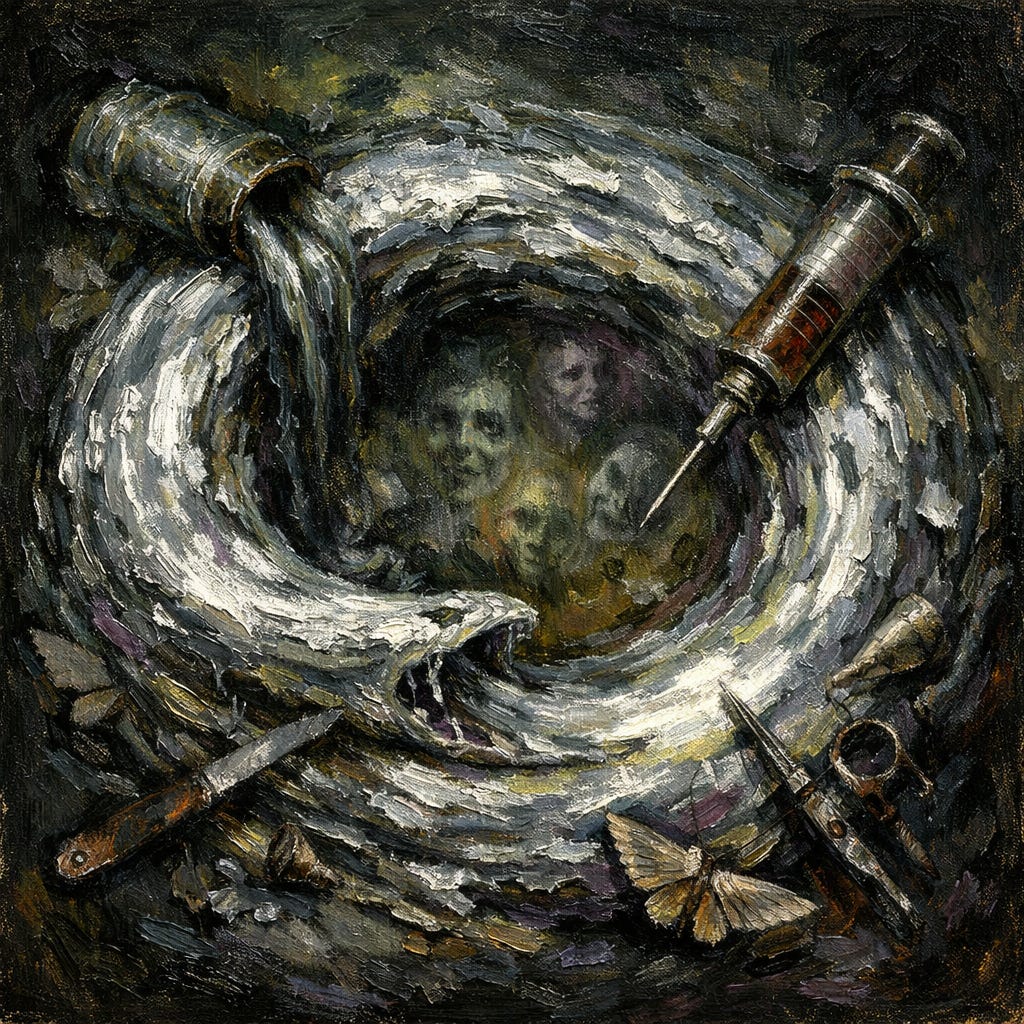
This essay argues that the modern diagnosis of syphilis rests on non-specific testing, experimentally unproven transmission assumptions, and four centuries of treatment-driven pathology—making it a fundamentally unfalsifiable medical category. The argument proceeds through five strands: the revelation of what Tuskegee data actually showed; the failure of controlled transmission experiments; the diagnostic impossibility of the “Great Imitator”; the unproven status of the claimed pathogen; and the iatrogenic history of mercury, arsenic, and vaccination-transmitted disease. This is written for readers willing to revisit canonical medical scandals and ask what they really prove.
A few years ago, Walter Winchell told of a prospective groom who received a notice that his blood was “positive.” This meant that he would be denied a license to marry. He was now a branded man. He committed suicide. Several days after his suicide, the laboratory forwarded a corrected “negative” report with an apology for the error it had made.
Herbert Shelton recorded this case in his 1962 book Syphilis: Is it a Mischievous Myth or a Malignant Monster. The test in question was the Wassermann, developed after the 1905 discovery of Treponema pallidum, the bacterium said to cause syphilis. A positive result meant diagnosis. Diagnosis meant social death—denial of marriage licenses, exclusion from employment, institutionalization. For this man, a laboratory error cost everything.
The tragedy extends beyond one death. The Wassermann test was not specific to syphilis. Shelton documents that it produced positive results for leprosy, malaria, diabetes, and pregnancy. Smallpox vaccination also triggered positive results. A 1953 WHO study confirmed serological cross-reactivity between syphilis and leprosy tests. A test that cannot distinguish disease from health, pregnancy from pathology, syphilis from leprosy, is not a diagnostic tool. It is a mechanism for generating cases.
This essay examines what lies beneath the syphilis diagnosis: a disease that may never have been coherently defined, treatments that produced the symptoms they claimed to cure, experiments that failed to demonstrate transmission through natural routes, and a diagnostic apparatus that could not identify what it claimed to detect. The man who killed himself over a false positive was not an anomaly. He was a casualty of four centuries of medical confusion.
Support Independent Research
This work remains free because paid subscribers make it possible. If you find value here, consider joining them.
What paid subscribers get: Access to the Deep Dive Audio Library — 170+ in-depth discussions (30-50 min each) exploring the books behind these essays. New discussions added weekly. That’s 100+ hours of content for less than the price of a single audiobook.
[Upgrade to Paid – $5/month or $50/year]
Get in touch Essay ideas, stories, or expertise to share: unbekoming@outlook.com
The Tuskegee Files
The Tuskegee syphilis study, conducted by the U.S. Public Health Service from 1932 to 1972, is remembered as a medical atrocity: 399 African-American men with syphilis denied treatment, watched as they sickened and died. The standard narrative holds that withholding penicillin caused preventable deaths from a deadly disease. President Clinton apologized in 1997. The story serves as a cautionary tale about medical racism and the necessity of informed consent.
In October 2023, the U.S. National Library of Medicine released the original study files for public access. The primary documents tell a more complex story than later summaries suggest.
Mainstream accounts typically report 28 men dying “from syphilis” and 100 from “related complications.” But the 1969 internal report on the study documented autopsies performed on 160 of the 276 syphilitic patients who died. Of those autopsied, syphilis was diagnosed at autopsy in only 83 cases—51.9 percent. Among these 83, syphilis was recorded as the primary cause of death in just seven cases. That is 4.4 percent of total deaths in the syphilitic group.
The distinction matters. Later summaries counted deaths as “syphilis-related” using broader criteria. The autopsy data—the most direct evidence available—attributed primary causation to syphilis in fewer than one in twenty cases.
The seven deaths attributed primarily to syphilis were ruptured aneurysms and aortic valve problems—conditions also associated with smoking, hypertension, and congenital factors in a population living in poverty. Cardiovascular disease was the leading cause of death in both the syphilitic group (55.8 percent) and the control group (55.7 percent). The rates were virtually identical.
By 1968, fifty-one of the fifty-three surviving syphilitic patients were diagnosed with “latent syphilis”—meaning no symptoms. One had “neurosyphilis,” one “cardiovascular.” As Dr. Sam Bailey observes, the surviving syphilitics comprised a group in which syphilis was “a relatively innocuous disease.”
There is a further complication for the standard narrative. By the time penicillin became available in the 1940s, many of the men had carried their diagnosis for over a decade, placing them in the “latent” stage where penicillin’s impact on late-stage outcomes is statistically difficult to measure. The assumption that penicillin would have saved them rests on extrapolation, not demonstration.
The men in Tuskegee were treated appallingly—deceived, denied information, used as subjects without consent. But the released data does not support the narrative of a rampaging disease killing the untreated. It suggests that syphilis, left alone, was not the deadly pathogen medicine claimed.
The Failed Transmission Experiments
If syphilis is sexually transmitted, it should be possible to demonstrate transmission experimentally. Between 1946 and 1948, the U.S. Public Health Service attempted exactly this in Guatemala.
The Guatemala experiments were extensive and ethically indefensible—over 1,300 people were deliberately exposed to STDs through various methods. What matters here is the specific attempt to demonstrate sexual transmission.
The researchers induced syphilis in two commercial sex workers through intracervical injection of infected rabbit tissue—a procedure that caused visible cervical damage and positive blood tests. Twelve male volunteers from a penitentiary then had unprotected sexual intercourse with these women. The CDC’s official report records the outcome: “Despite the absence of condoms or chemoprophylaxis, none developed clinical infection.” Based on incomplete serologic follow-up, the researchers estimated that “at most one or two were asymptomatically infected.”
Zero clinical cases from direct sexual contact with women whose cervixes had been injected with syphilitic material. The researchers recorded some “asymptomatic infections” based on subsequent test results, but no one developed disease.
Because sexual transmission failed, the researchers escalated to invasive inoculation. They abraded men’s penises with hypodermic needles just short of drawing blood, introduced cotton pledgets soaked in syphilitic emulsion from ground-up rabbit testes, and held the material against the wounded tissue for one to two hours. These procedures did produce positive serological results in some subjects. But they demonstrated nothing about natural transmission—only that invasive introduction of foreign biological material into abraded tissue can produce detectable immune responses.
An earlier study at Sing Sing Prison in the 1950s was similarly uninformative. Researchers injected “infected rabbit testicle mixtures” into prisoners’ forearms and observed skin reactions. The methodology—injecting ground animal tissue into human arms—had nothing to do with establishing how syphilis supposedly transmits between people.
A 2015 review in the journal Sexual Health acknowledged these experiments but noted it is “difficult to draw many conclusions about syphilis transmission probabilities from these efforts given the methods used.” The review found no controlled experimental studies demonstrating natural transmission. All evidence consists of epidemiological correlations—people who had sex with people who had syphilis and later tested positive. Correlation treated as causation.
The CDC’s syphilis fact sheet states that the disease “spreads from person to person by direct contact with a syphilitic sore.” No primary experimental citation is provided. Wikipedia cites a textbook. The textbook cites other textbooks. The circular reference chain does not terminate in a reproducible experimental demonstration of transmission through natural routes.
The Great Imitator
Shelton identified the central paradox: syphilis “not only imitates every other known disease, so that no man, in the absence of reliable serologic tests, can possibly diagnose the ‘disease’ from its symptoms and pathology alone (a fact that makes it difficult to understand how physicians of the past ever discovered that there is such a disease), but also imitates health.”
A disease that imitates every other disease. A disease that imitates health. The CDC acknowledges that approximately 50 percent of people with syphilis are asymptomatic. The primary symptom—the chancre—is described as often painless and frequently hidden, leading many people never to notice it. The chancre heals on its own without treatment. Secondary symptoms (rashes, fever, weight loss) also resolve spontaneously. Then follows “latent” syphilis, which is defined by the absence of symptoms and can last for decades or permanently.
The CDC states that “most people with untreated syphilis do not develop tertiary syphilis.” The terrifying late-stage symptoms—neurological damage, cardiovascular destruction, insanity, death—occur in a minority of untreated cases, and typically ten to thirty years after supposed infection. In Tuskegee, after decades without treatment, only one of fifty-three survivors had neurosyphilis.
This raises a question that Shelton posed in 1962: how did physicians ever discover that syphilis existed as a distinct entity? The symptoms overlap with leprosy, tuberculosis, lupus, Lyme disease, and dozens of other conditions. Historical accounts describe early “syphilis” with pustules covering the body from head to knees, flesh falling from faces, death within months—descriptions that match leprosy or severe poisoning more than modern syphilis. As Shelton noted, “The original ‘syphilis’ and what is called ‘syphilis’ today are not the same symptom-complex at all.”
The designation “Great Imitator” has been applied to an expanding list of conditions: leprosy (the original), syphilis (from the 1530s), tuberculosis (designated “the second great imitator” in 1961), lupus, Lyme disease. Stone’s research traces this lineage, noting that each condition shares overlapping symptoms—ulcers, skin eruptions, neurological damage, multisystem disease. Each produces cross-reactive serological tests. The pattern suggests not a series of distinct pathogens that happen to produce identical symptoms, but a diagnostic category that absorbs conditions medicine cannot otherwise explain.
To be clear: the suffering is real. Genital ulcers, systemic syndromes, neurological damage—these occur and can be serious. The dispute is not whether people suffer, but whether “syphilis” coherently describes a single disease entity with a specific cause, or whether it functions as a classification that obscures more than it reveals.
The Unproven Pathogen
In 1905, German zoologist Fritz Schaudinn and dermatologist Erich Hoffmann announced the discovery of Treponema pallidum, the spirochete bacterium claimed to cause syphilis. This discovery occurred during a period of intense competition to identify bacterial causes for diseases. Schaudinn’s was not the only candidate—at the same time, John Siegel proposed Cytorrhyctes luis as the causative agent. The president of the Berlin Medical Society grew so embarrassed by the competing claims that he closed a session by announcing it would remain closed “until a new etiologic agent is found for syphilis.”
Within six months, Schaudinn’s spirochete was accepted by majority vote—not because it satisfied the scientific requirements for proving causation, but because other researchers observed similar spirochetes in syphilitic cases. As researcher Mike Stone has documented, Schaudinn himself admitted the difficulties. In a personal communication quoted in A System of Syphilis (1908), Schaudinn confessed that “he had difficulty in finding these spirilla, as he had actually at times only found a single example after a whole day’s search.” He acknowledged having “no definite proof” that his spirochete differed from other spirochetes naturally present in the genital tract.
Robert Koch had established four postulates for proving a microorganism causes disease: the organism must be found abundantly in all cases; it must be isolated and grown in pure culture; the cultured organism must cause the same disease when introduced into a healthy host; and the organism must be re-isolated from the experimentally infected host. As Mike Stone has detailed in his ViroLIEgy research series, Treponema pallidum does not fully satisfy these classical requirements.
The bacterium is not found abundantly in all cases—Schaudinn’s single spirochete after a full day’s search demonstrates this. It cannot be grown in pure culture; a 1981 WHO review confirmed that “despite many attempts with various methods over 75 years, cultivation of T. pallidum remained unsuccessful.” When researchers claimed success, “independent reproducibility could not be achieved.” No animal model faithfully reproduces the full human disease—rabbit models approximate some stages but cannot recreate late-stage manifestations. Mice do not develop lesions at all. As one researcher admitted in 1912, “the only missing link was that a pure culture of this organism should be able to produce the pathologic changes in experimental animals similar to those found in human syphilis.” That link was never forged.
Modern molecular methods—PCR, genomic sequencing—can detect T. pallidum DNA in lesions. This is sometimes offered as settling the causation question. But detection of an organism does not establish causation. The same organism is found in people without disease. The correlation between presence and pathology remains imperfect. And the fundamental questions—why can’t it be cultured? why doesn’t it reliably produce disease in animals? why do transmission experiments through natural routes fail?—remain unresolved by the ability to sequence its genome.
Stone’s research reveals a further complication. The same year Schaudinn announced his discovery, Aldo Castellani found an identical spirochete in patients with yaws—a different disease. He named it Spirochaeta pertenuis and admitted it was “morphologically indistinguishable” from Schaudinn’s bacterium. The distinction between the two was maintained not because the organisms differed, but because the diseases were presumed different. As one researcher later observed, “the identity of some members of this group depends more upon certain features of the diseases they produce than upon specific characteristics of the organisms themselves.”
The leprosy bacillus presents the same problem. Sir William James Moore argued in 1890 that leprosy was inherited syphilis. The bacilli of the two conditions were described as “nearly identical”—and similar to the tuberculosis bacillus as well. If the organisms cannot be reliably distinguished, and the symptoms overlap extensively, on what basis are these classified as separate diseases?
The Invention of Stages
The modern understanding of syphilis as a disease progressing through stages—primary, secondary, latent, tertiary—originates with French physician Philippe Ricord in 1837. Before Ricord, physicians debated whether syphilis and gonorrhea were the same disease. John Hunter had argued in 1767 that they were identical, based on an experiment in which he inoculated himself with gonorrheal material and developed syphilitic symptoms.
Ricord claimed to have repeated Hunter’s experiment on seventeen prisoners, concluding that the diseases were separate. The distinction rested on whether a sore was classified as an “ulcer” (gonorrhea) or a “chancre” (syphilis). Ricord then divided syphilis into the stages that persist in medical literature today.
His methodology was flawed from the start. As Stone documents, Ricord’s autoinoculation procedure—taking material from a patient’s lesion and reinserting it into their own thigh under a watch glass—produced erroneous results. Later investigation revealed that many of the venereal ulcers he studied “were non-syphilitic, and probably due to chancroid.” Ricord himself acknowledged contradictions in his theory: inoculation “always reproduces the same ulcer,” he claimed, except when it did not, in which case “it may not form depending on predisposition.”
When colleagues challenged his claim that secondary syphilis was not contagious—a position contradicting modern medical consensus—Ricord dismissed their observations as confusion. The chancres merely “looked similar.” He failed to reproduce the disease in animals and concluded it was a human-only pathogen. He refused to modify his position despite contrary evidence. The debate over his framework continued for decades after publication; no consensus was achieved during his lifetime.
Albert Neisser, director of the dermatological clinic in Breslau, declined a professorship because he found it impossible to teach students what a syphilitic lesion was “when syphilis was now claimed to mimic them all.” Another contemporary, Ottomar Rosenbach, argued that the apparent increase in syphilis cases resulted from diagnostic fashion—physicians attributing diverse conditions to a syphilitic origin without evidence.
Ricord’s stages were not derived from observation of a coherent disease entity. They were a theoretical framework imposed on symptoms that could not be clinically distinguished from dozens of other conditions, by a researcher whose experimental methods were later discredited, sixty-eight years before any causative agent was identified.
The Gonorrhea Parallel
Hunter’s 1767 experiment—in which he inoculated himself with gonorrhea material and developed syphilis symptoms—led him to conclude the diseases were identical. Ricord’s separation of them in 1837 rested on the same flawed methodology that produced his stage theory. The distinction may be artificial.
The evidentiary problems with syphilis apply equally to gonorrhea. Dr. Sam Bailey has documented that the same Guatemala experiments that failed to demonstrate sexual transmission of syphilis also failed for gonorrhea. Prostitutes were inoculated with Neisseria gonorrhoeae cultures and sent to service prisoners. As Bailey notes, “not enough of the sexually well-serviced men... seemed to be getting syphilis”—and presumably the same problem occurred with gonorrhea.
When sexual transmission failed, researchers escalated to what they called “deep inoculation of the penis”—inserting toothpicks wrapped in bacteria-soaked cotton into urethras. This produced a claimed “transmission rate” of 33 percent. But as Bailey observes, this demonstrates only that “if you stick a toothpick into a penis then there will be unpleasant repercussions.” No control experiments were conducted. No distinction was made between detecting bacteria and observing actual disease.
The CDC’s gonorrhea fact sheet, like its syphilis fact sheet, provides no scientific citation for the claim that gonorrhea is sexually transmitted. Wikipedia cites the CDC. The circular reference pattern is identical.
Animal models are equally unconvincing. A 2019 mouse study used immunodeficient, inbred, albino mice pre-treated with estradiol and multiple antibiotics, then squirted concentrated bacterial suspension into their vaginas and held them upside down for one minute. The bacteria could be detected afterward—unsurprisingly—but began clearing within days. As Bailey notes, “it is a contrived model that doesn’t mirror anything that happens in nature.”
The parallels extend further. Approximately half of women with gonorrhea are asymptomatic—the same rate as syphilis. Both conditions are associated with the same risk factors: low socioeconomic status, lifestyle factors, general health problems. Both are diagnosed primarily by test results rather than clinical disease. Both have case counts that reflect positive tests rather than disease burden.
Bailey poses the question that germ theory cannot answer: “Why would an allegedly highly infectious agent discriminate on the basis of socioeconomic status or race? Such a germ should be able to pass easily into other groups in the same population.”
The two conditions share a history of failed transmission experiments, non-specific diagnostics, asymptomatic “infection,” and association with terrain factors rather than microbial causation. Hunter may have been right in 1767: they may be manifestations of the same underlying conditions—or of conditions that have nothing to do with sexually transmitted pathogens at all.
The Treatment That Created the Disease
The word “syphilis” was coined by Italian physician Girolamo Fracastoro in 1530. But the treatment preceded the name. Mercury ointments had been applied to skin lesions since antiquity. When conditions labeled as leprosy appeared, mercury was the treatment. When leprosy colonies were abolished across Europe in the 1490s and early 1500s, the people who had been confined in them became visible in the general population. What had been called leprosy was renamed.
Dr. Carolyn Dean documents this continuity: “When syphilis appeared in Europe, around 1495, those same ointments [previously used for leprosy] were used for its skin manifestations. Its side effects slowly became known and were listed openly centuries later in old medical texts, but mercury and its side effects were tolerated because the effects of untreated syphilis were felt to be much more dangerous than the side effects of the ‘cure.’ Syphilis was responsible for keeping mercury ostensibly viable for 400 years.”
The timing matters. Mercury treatment was already in widespread use when “syphilis” was named. Patients receiving mercury for skin conditions developed symptoms that were then attributed to their underlying disease. The disease category expanded to accommodate treatment effects.
Mercury poisoning symptoms include shedding and peeling skin, ulcerations of the mouth and gums, loosening teeth, excessive salivation, tremors, neurological damage, and madness. These symptoms overlap substantially with those attributed to tertiary syphilis. Dawn Lester and David Parker observe that symptoms diagnosed as syphilis, leprosy, or smallpox may have been mercury poisoning from the treatment. The conditions were regularly confused because they presented identically—and were treated identically.
“Neurosyphilis”—the terrifying late-stage syndrome of dementia, paralysis, and insanity—appeared in patients who had received mercury treatment for years or decades. Mercury is a known neurotoxin that crosses the blood-brain barrier and accumulates in neural tissue. Dr. Russell Blaylock notes that “one of the most common diagnoses for admission to mental hospitals during this period was neurosyphilis.” These patients had been poisoned by their treatment and then diagnosed with progression of their disease.
The leprosy connection illuminates the pattern. A.D. Cooper challenged physicians in 1890 to “show one case where syphilis developed into leprosy.” In 1899, a case was reported of a man with syphilis who developed leprosy after treatment—after mercury. The treatment for both conditions was identical. The symptoms overlapped. The diagnostic distinction was maintained not because the diseases differed observably, but because medicine had decided they were separate entities.
A treatment that causes symptoms indistinguishable from the disease it claims to cure creates a self-reinforcing cycle. Symptoms appear; mercury is administered; worse symptoms emerge; the disease is declared to have progressed; more mercury is applied. Patients who survived the treatment could be declared cured. Those who deteriorated demonstrated the disease’s inevitable course. The treatment was unfalsifiable—every outcome confirmed its necessity.
The same pattern explains why historical descriptions of syphilis differ so dramatically from modern presentations. Jared Diamond describes early syphilis: “pustules covered the body from head to knees, flesh fell from faces, death came within months.” These descriptions match acute mercury poisoning or advanced leprosy more than any condition recognized as syphilis today. As Shelton observed, the original “syphilis” and modern syphilis “are not the same symptom-complex at all.” They are not the same because the original was substantially iatrogenic—created by the treatment.
From Mercury to Arsenic
By the early twentieth century, mercury’s toxicity was increasingly recognized. In 1910, Paul Ehrlich introduced Salvarsan, also known as compound 606—an arsenic-based drug marketed as the first effective treatment for syphilis. Salvarsan is described as heralding the era of chemotherapeutic drugs and the concept of the “magic bullet.”
Arsenic is a poison used in herbicides, insecticides, and chemical weapons. Salvarsan caused rashes, liver damage, and “risks of life and limb.” In what historians call “the Salvarsan Wars,” physicians denounced the drug as dangerous, accusing Ehrlich of profiting from a harmful treatment. Some claimed Frankfurt Hospital had forced prostitutes to undergo Salvarsan treatments against their will.
The switch from mercury to arsenic is revealing. If mercury had been effective, why replace it? The WHO treatment guidelines note that Salvarsan was “considered the first ‘effective’ treatment for syphilis”—implying that four centuries of mercury had not been effective. Yet mercury continued to be administered throughout this period, and patients continued to develop the symptoms attributed to their disease.
The pattern repeated: a toxic substance administered to patients who then developed symptoms attributed to disease progression rather than treatment effects. Arsenic causes skin rashes, neurological damage, organ failure—symptoms overlapping with those of syphilis. The disease definition expanded to accommodate treatment harms.
The Third Iatrogenic Vector
The nineteenth-century anti-vaccination movement documented a pattern that mainstream histories have largely forgotten: the historical practice of arm-to-arm vaccination was transmitting syphilis to infants.
Before England’s 1853 Compulsory Vaccination Act, annual deaths from syphilis in children under one year did not exceed 380. The year after the Act passed, infant syphilis deaths nearly doubled to 591. By 1883, the figure had reached 1,813—a nearly fivefold increase. The increase was specific to infants; adult syphilis rates remained relatively stable.
Alfred Russell Wallace, co-discoverer of natural selection, subjected these statistics to rigorous analysis in his 1889 work Vaccination Proved Useless and Dangerous. Wallace documented 478 cases of vaccine-transmitted syphilis and identified a steady increase in mortality from five inoculable diseases (syphilis, scrofula, skin diseases, and others) coinciding precisely with the enforcement of compulsory vaccination. He calculated that the increased deaths from these conditions exceeded total smallpox deaths during the same period. Medicine was killing more infants through vaccination than smallpox had ever killed.
The mechanism was arm-to-arm vaccination—a practice now abandoned. Lymph from a vaccinated person was used to vaccinate another. If the lymph source had syphilis—or any blood-borne condition—the recipient could be infected. This is not an argument against modern vaccine manufacturing, which does not use human-to-human material transfer. It is historical documentation of how an earlier medical practice spread the disease it was supposedly unrelated to.
Government officials acknowledged the problem but could not solve it. The Government Microscopist admitted he could never guarantee lymph purity and could not even recognize syphilis germs under the highest-power microscope. The technology to identify what was being injected into infants did not exist, yet the injections were compulsory.
The class dimension was stark. Wealthy families could pay fines to avoid vaccination; poor families faced prosecution, seizure of goods, and imprisonment. Walter Hadwen, in his 1896 address The Case Against Vaccination, emphasized that “a poor woman’s child was just as dear to her as a prince’s child was to its parents,” yet the law placed poor families in a far harder position. The children most likely to be forcibly vaccinated were those least able to survive complications—malnourished infants living in unsanitary conditions, precisely the population that would later be diagnosed with “congenital syphilis.”
The case of Emily Maud Child illustrates the institutional response to vaccine harms. After vaccination, she died. A coroner’s jury determined that syphilis from the vaccination caused her death. A certificate documenting the cause was sent to the government. The government responded by sending an inspector who photographed the teeth of other children in the family, declared them syphilitic, and accused the mother of being the source. When Royal Commission investigators examined the case, they found no evidence of syphilis in the remaining children and determined the accusations against the mother were false.
The pattern recurs throughout the vaccination records: when infants died from vaccine-transmitted syphilis, authorities blamed the families. Medical practitioners admitted to omitting vaccination complications from death certificates “to preserve vaccination from reproach.” A Birmingham doctor confessed to the Birmingham Medical Review that he had deliberately not recorded vaccine-induced erysipelas as a cause of death to protect the practice’s reputation. The same circular logic that protected mercury protected vaccination: complications were attributed to the underlying condition or to the patient’s constitution, never to the treatment.
Medicine was spreading syphilis while claiming to prevent smallpox, then blaming mothers when children died. The same institution that could not demonstrate syphilis transmission through sexual contact was transmitting it through arm-to-arm vaccination and denying responsibility.
William Tebb, presenting to the Second International Anti-Vaccination Congress in 1881, calculated that 26,000 infants were dying annually from vaccine-transmitted diseases to allegedly save 50 from smallpox. The math alone indicted the practice. But the practice continued, because the deaths were not recorded as vaccine deaths, and because the families who lost children had no power to challenge the medical establishment that had killed them.
The Modern Treatment
Penicillin replaced arsenic as the standard syphilis treatment in the 1940s, before randomized controlled trials became standard practice. The WHO’s current treatment guidelines acknowledge that recommendations are based on “very low quality evidence” and that “differences in interpreting earlier studies have resulted in some variability in national guidelines.”
For latent syphilis—the asymptomatic stage that can last decades or permanently—the WHO states that “the objective of treating persons in this disease stage is to prevent medical complications of syphilis.” Treatment consists of three weekly penicillin injections. The guidelines note that “limited evidence is available for guiding choice of specific regimens or duration.” Medicine is treating a condition defined by the absence of symptoms, with protocols based on very low quality evidence, to prevent complications that most patients will never develop.
Penicillin’s documented side effects include fever, rashes, swollen lymph nodes, sore throat, weight loss, muscle aches, and fatigue—a cluster known as the Jarisch-Herxheimer reaction. The CDC lists these same symptoms as signs of secondary syphilis. A person treated for latent syphilis who develops these symptoms after penicillin injection faces an interpretive problem: are they experiencing treatment side effects or disease emergence?
The WHO notes that “most serological tests are positive for antibodies to T. pallidum“ even after treatment, and that “patients with a positive test result usually continue to remain positive for the remainder of their lives, regardless of treatment.” A person diagnosed with syphilis cannot test their way out of the diagnosis. They carry the label permanently. If they develop symptoms after treatment, the diagnosis absorbs those symptoms. If they remain healthy, the treatment is credited. The framework is unfalsifiable.
The pattern established with mercury and arsenic continues: treatments administered for a diagnosis that cannot be clinically verified, producing symptoms overlapping with those attributed to the disease, with tests that remain positive regardless of outcome.
The Diagnostic Impossibility
Modern syphilis tests detect antibodies or bacteria that are present in healthy people. The WHO acknowledges that “most infections are asymptomatic or unrecognized.” Tests cross-react with other conditions. Dark-field microscopy cannot reliably distinguish T. pallidum from non-pathogenic treponemes in the genital tract. Serological tests remain positive for life regardless of treatment or health status.
A 2019 medical paper admits that syphilis “can mimic almost any dermatological diseases” and that “a common thought (and attitude) among clinicians is that when you do not know what it is, make syphilis as a possible diagnosis and screen the case serologically.” The paper advises clinicians to “overtreat to err on the side of caution.” The diagnostic category has become a wastebasket—when physicians cannot identify what they are seeing, they test for syphilis and let the laboratory decide. Then they treat, regardless of symptoms, because caution demands it.
New Zealand provides an instructive anomaly. Multiple surveys suggest it is among the most promiscuous nations, with women averaging over twenty sexual partners. Yet syphilis is “rarely seen in the general population.” Reporting practices and testing rates differ between countries, and this is a single-country observation. But it is at least awkward for a simple “more sex equals more syphilis” model that a highly sexually active population routinely reports low syphilis prevalence.
A 2021 study found that couples reporting high levels of affection toward one another had much lower rates of positive STI screens than those who did not. The authors, still committed to germ theory, speculated that affectionate partners were less likely to seek outside relationships. But they had no evidence for this mechanism. They could not explain what emotions had to do with how “contagious microbes behave around the genitals.” The finding makes sense only if the conditions being diagnosed are not primarily infectious—if they reflect terrain rather than transmission.
Common Objections
Several objections are regularly raised against this analysis. They deserve direct response.
“Penicillin cures syphilis, proving bacterial causation.” Penicillin is an antibiotic with broad effects on many bacteria and on inflammatory processes. Its apparent efficacy does not isolate which mechanism is operative. Many conditions improve with antibiotics for reasons unrelated to the presumed target organism. The WHO acknowledges that treatment recommendations rest on “very low quality evidence.” If penicillin definitively cured a specific bacterial infection, the evidence base would not be described this way.
“Congenital syphilis proves transmission.” Congenital syphilis is diagnosed when an infant born to a mother with positive syphilis serology shows certain symptoms or test results. But the diagnostic criteria are circular: the infant is assumed to have been infected because the mother tested positive. The same symptoms attributed to congenital syphilis—rashes, bone abnormalities, neurological problems—can result from other causes, including maternal exposure to mercury or other toxins. Historically, infants who received vaccine-transmitted syphilis through arm-to-arm vaccination were sometimes diagnosed with “congenital syphilis” and their mothers blamed. The category does not prove vertical transmission of a specific pathogen; it assumes it.
“Modern molecular methods settle causation.” PCR and genomic sequencing can detect T. pallidum DNA in lesions. Detection is not causation. The same organism is found in asymptomatic individuals. The correlation between presence and pathology is imperfect. The inability to culture the organism, the failure to reproduce the full disease in animals, and the failure of natural transmission experiments remain unexplained by the ability to sequence its genome.
“Koch’s Postulates are outdated; molecular Koch’s Postulates replace them.” The updated criteria still require demonstration that the organism causes disease when introduced into a susceptible host and that removing or neutralizing it prevents disease. For T. pallidum, natural transmission has not been reproducibly demonstrated, and “treatment” is assessed using the same non-specific tests that define the diagnosis. The molecular update does not resolve the fundamental circularity.
“You’re denying that people get sick.” No. Genital ulcers occur. Systemic syndromes occur. Neurological damage occurs. The dispute is whether “syphilis” coherently describes a single disease entity caused by a specific organism transmitted through specific routes—or whether it functions as a diagnostic category that obscures multiple conditions with different causes, including iatrogenic harm.
The Question
The evidence, taken together, strongly suggests a conclusion that mainstream medicine has not seriously entertained.
Controlled transmission experiments failed to produce clinical disease through sexual contact. The Tuskegee autopsy data shows that syphilis was the primary cause of death in fewer than five percent of cases, and that most diagnosed individuals lived for decades with what amounted to an innocuous label. The bacterium claimed to cause syphilis does not fully satisfy Koch’s Postulates—it cannot be found abundantly in all cases, cannot be cultured, cannot faithfully reproduce the disease in animals. The diagnostic tests are non-specific, cross-reactive, and remain positive for life regardless of health status.
For four centuries, treatments for syphilis have produced symptoms overlapping extensively with those attributed to the disease. Mercury caused skin lesions, neurological damage, and madness—the hallmarks of tertiary syphilis. Arsenic caused rashes, organ damage, and death. Arm-to-arm vaccination spread syphilis to infants while medicine blamed mothers. Penicillin produces fever, rashes, and fatigue—the symptoms of secondary syphilis.
The disease cannot be clinically distinguished from leprosy, lupus, tuberculosis, Lyme disease, or dozens of other conditions. Its stages were invented by a researcher whose methodology was later discredited. Its symptoms have shifted across centuries—the pustule-covered bodies and rotting faces of early accounts bear no resemblance to the modern clinical picture. Its “latent” stage is defined by the absence of symptoms and can last permanently. Its causative agent was selected by majority vote from competing candidates, by researchers who admitted they could sometimes find only a single spirochete after a full day’s search.
A man killed himself over a false positive on a test that could not distinguish syphilis from pregnancy. His death was not an aberration. It was the logical endpoint of a diagnostic and treatment system built on assumptions that controlled experiments have not verified.
The question is not rhetorical. It demands an answer: if natural transmission cannot be reproducibly demonstrated, if the bacterium does not satisfy the standard tests for causation, if treatments produce symptoms indistinguishable from those attributed to the disease, if diagnostics cannot reliably distinguish disease from health—what exactly has medicine been treating for four hundred years?
The evidence suggests that “syphilis” may not be a coherent disease entity at all, but a label applied to various conditions of toxicity, poor sanitation, and iatrogenic harm—a diagnostic category that created the disease it claimed to describe, and whose treatments generated the epidemic they purported to cure.
The man who died over a false positive was a casualty of this system. So were the millions who received mercury, arsenic, and penicillin for conditions that might have resolved on their own—or that might never have existed as medicine described them. So were the infants who died from vaccine-transmitted syphilis while their mothers were blamed. So were the leprosy patients relabeled as syphilitics when the colonies closed. The Great Imitator was not the disease. It was the diagnosis.
References
Primary Sources and Historical Documents
Ricord, Philippe. Traité pratique des maladies vénériennes, 1838.
Schaudinn, Fritz. Personal communication quoted in A System of Syphilis, Vol. 2, 1908.
U.S. National Library of Medicine. Tuskegee Syphilis Study Files, digitized and released October 2023.
U.S. Public Health Service. Report on the Guatemala syphilis experiments, 1946-1948. CDC official report.
U.S. Public Health Service. “Report on Tuskegee Syphilis Study,” 1969.
Historical Analysis and Commentary
Dean, Carolyn. Death by Modern Medicine. Matrix Verite, 2005.
Diamond, Jared. Guns, Germs, and Steel: The Fates of Human Societies. W.W. Norton, 1997.
Hadwen, Walter R. The Case Against Vaccination. London, 1896.
Shelton, Herbert M. Syphilis: Is it a Mischievous Myth or a Malignant Monster. Dr. Shelton’s Health School, 1962.
Tebb, William. “Sanitation, Not Vaccination, The True Protection Against Small-Pox.” Second International Anti-Vaccination Congress, Cologne, 1881.
Wallace, Alfred Russel. Vaccination Proved Useless and Dangerous: From Forty-Five Years of Registration Statistics. London, 1889.
Modern Terrain Theory and Critical Analysis
Bailey, Sam. “What We Weren’t Taught About Gonorrhea.” Dr. Sam Bailey, 2022. YouTube video and transcript.
Bailey, Sam. “What We Weren’t Taught About Syphilis.” Dr. Sam Bailey, 2022. YouTube video and transcript.
Lester, Dawn and Parker, David. What Really Makes You Ill? Why Everything You Thought You Knew About Disease Is Wrong. Independently published, 2019.
Stone, Mike. “The Syphilis Scam, Parts 1-3.” ViroLIEgy, 2022-2023.
Official and Institutional Sources
CDC. “Syphilis – CDC Detailed Fact Sheet.” Centers for Disease Control and Prevention. https://www.cdc.gov/syphilis/about/index.html
WHO. “WHO Guidelines for the Treatment of Treponema pallidum (Syphilis).” World Health Organization, 2016.
WHO. Review of T. pallidum cultivation attempts, 1981.
WHO. Serological cross-reactivity study between syphilis and leprosy, 1953.
WHO. “Syphilis Fact Sheet.” World Health Organization. https://www.who.int/news-room/fact-sheets/detail/syphilis
Support Independent Research
This work remains free because paid subscribers make it possible. If you find value here, consider joining them.
What paid subscribers get: Access to the Deep Dive Audio Library — 170+ in-depth discussions (30-50 min each) exploring the books behind these essays. New discussions added weekly. That’s 100+ hours of content for less than the price of a single audiobook.
[Upgrade to Paid – $5/month or $50/year]
Get in touch Essay ideas, stories, or expertise to share: unbekoming@outlook.com
New Biology Clinic
For those of you looking for practitioners who actually understand terrain medicine and the principles we explore here, I want to share something valuable. Dr. Tom Cowan—whose books and podcasts have shaped much of my own thinking about health—has created the New Biology Clinic, a virtual practice staffed by wellness specialists who operate from the same foundational understanding. This isn’t about symptom suppression or the conventional model. It’s about personalized guidance rooted in how living systems actually work. The clinic offers individual and family memberships that include not just private consults, but group sessions covering movement, nutrition, breathwork, biofield tuning, and more. Everything is virtual, making it accessible wherever you are. If you’ve been searching for practitioners who won’t look at you blankly when you mention structured water or the importance of the extracellular matrix, this is worth exploring. Use discount code “Unbekoming” to get $100 off the member activation fee. You can learn more and sign up at newbiologyclinic.com.
Yet another sickness that has been 'generalized'. Instead of just treating patient by patient, the medical world tries to generalize symptoms (or even asymptomatic test for a disease) so they can put a name on it. When the name catches on, one treatment is being used to treat everyone who has these symptoms or this test result. And what happens? barely anyone heals, best the medical world can do is prescribe stuff that makes people even sicker, and then prescribe yet more poison so you will come back... another forever patient. A milking cow.
I am astonished to read this, though, because that Tuskogee experiment is quite well known and probably lingers in black people's minds. It probably 'saved' quite a few from getting the COVID poison.
I always wondered if the madness was because of the mercury treatments.